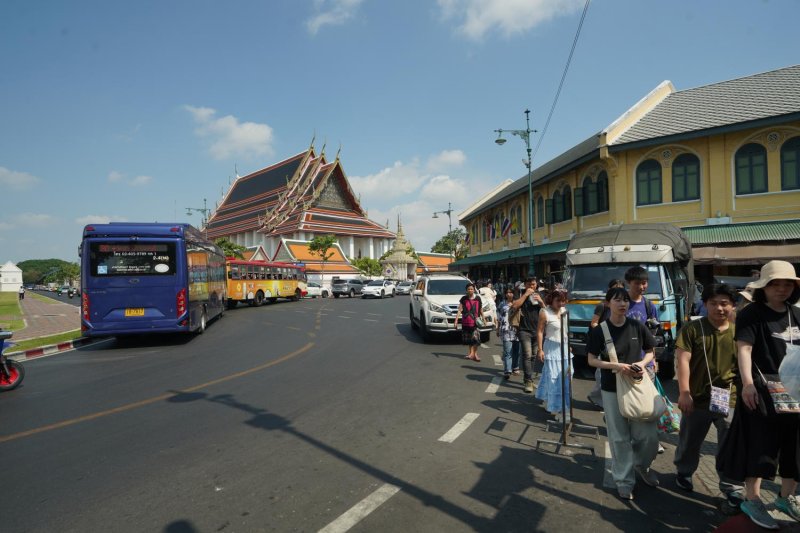
Experts have warned that Thailand's tourism sector could incur losses of up to 17% of its revenue if the value of the Thai baht continues to rise to 30 baht per US dollar. This statement was made during the annual meeting of the Thailand Hotels Association, where Yuthasak Supasorn, the former president of the Tourism Authority of Thailand, indicated that this situation could lead to a significant decline in the number of tourists coming to the country.
At the same time, the Thailand Hotels Association predicted that bookings during this year's Songkran holiday would decrease by 5-10% compared to last year, due to concerns over rising travel costs and fuel shortages.
Details of the Event
During the meeting, three potential scenarios were presented regarding the impact of the strong baht on Thai tourism. Yuthasak pointed out that the worst-case scenario involves the baht rising above 30 baht per dollar, which would make Thailand less competitive in the global tourism market. This could lead to a decline in the number of tourists coming from distant countries, as travel costs would become more expensive.
Yuthasak also added that tourists from nearby countries might prefer other destinations such as Vietnam, the Philippines, and Indonesia, which would increase pressure on the Thai tourism sector. However, the current exchange rate between 30 and 32 baht per dollar is still considered favorable for visitors seeking unique tourism experiences.
Background & Context
Historically, the tourism sector is one of the main pillars of the Thai economy, contributing significantly to the GDP and providing job opportunities for many citizens. This sector has seen remarkable growth over the past years, making it a preferred destination for tourists from around the world.
However, global economic challenges, including political and economic crises in various regions, may negatively impact tourism activity. In this context, Thailand must enhance its tourism offerings and provide unique experiences to attract tourists, especially amidst increasing competition from other countries.
Impact & Consequences
If the value of the baht continues to rise, it could lead to a significant decline in tourism revenue, which may negatively affect the Thai economy as a whole. Additionally, a drop in bookings during the Songkran holiday could impact hotels, restaurants, and other tourism-related activities, potentially leading to job cuts in this sector.
At the same time, hotels may be forced to refrain from raising room rates and might offer additional services to attract customers, which could affect profit margins. If the baht weakens to 32-34 baht per dollar, this could be a positive point to encourage more tourists to visit the country.
Regional Significance
The tourism sector in Thailand is a preferred destination for many Arab tourists, as many travel there to enjoy beautiful beaches and rich culture. With rising costs, Arab tourists may turn to other less expensive destinations, which could affect tourism flow between Arab countries and Thailand.
Therefore, Thailand needs to enhance its marketing strategies to attract Arab tourists by focusing on providing unique experiences that meet their needs and expectations.