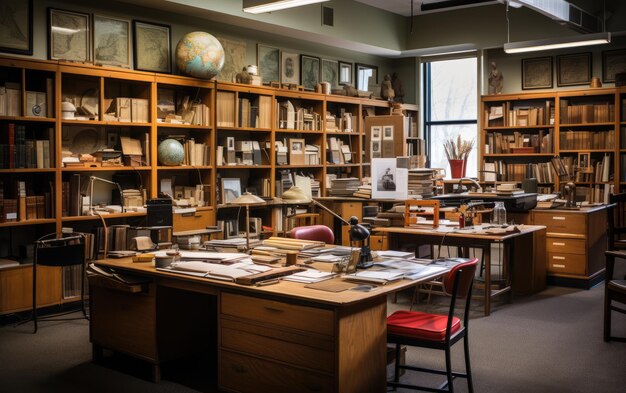
The archives in Algeria are a vital symbol for recovering national memory, housing a collection of documents from the French colonial era. These archives are not merely repositories of memories; they are rich sources of information relied upon by researchers in the fields of humanities, social sciences, and arts.
Algerian archives are distributed across several historical buildings, each holding stories and events that have shaped the country's history. These documents, whether produced in Algeria or sent to France, are essential materials for research and study, reflecting the importance of archives in understanding national history.
Details of the Archives
The Algerian archives encompass a wide range of documents, including official correspondence, civil records, and historical maps. These documents are considered vital tools for researchers seeking to understand the impact of colonialism on Algerian society. Furthermore, the archives are utilized in academic studies addressing various aspects of social and cultural life in Algeria.
Academic institutions in Algeria strive to enhance the use of these archives by organizing workshops and scientific conferences aimed at highlighting the importance of historical documents. These efforts are part of Algeria's endeavors to reclaim its cultural and historical identity.
Background & Context
The history of archives in Algeria dates back to the French colonial period, during which many facilities were established to collect and preserve documents. With Algeria's independence, these archives became a central focus in efforts to rebuild national identity. Over time, the archives have transformed into research centers utilized in academic studies.
Algerian archives are considered part of the country’s cultural heritage, containing information about the history of resistance, popular culture, and national identity. This heritage is fundamental to understanding the challenges faced by Algeria during and after the colonial period.
Impact & Consequences
The impact of archives on Algerian society extends across multiple fields, as they are used to enhance historical awareness among new generations. Through research and studies based on historical documents, youth can gain a deeper understanding of their history, contributing to the strengthening of national identity.
Moreover, the archives play an important role in promoting cultural dialogue between Algeria and other countries, as historical documents are used in cultural events and exhibitions that highlight Algeria's history. This dialogue is seen as a means to enhance mutual understanding among peoples.
Regional Significance
Algeria's experience in preserving archives serves as a model for other Arab countries. Many nations face challenges in preserving their national history, making the Algerian experience an example that demonstrates the importance of archives in enhancing national identity.
The Algerian archives illustrate how historical documents can be used as tools for social and cultural change, underscoring the significance of efforts to preserve cultural heritage in the Arab region.
In conclusion, the archives in Algeria are more than just repositories of memories; they are vital tools for reclaiming national identity and enhancing historical understanding. By leveraging these documents, Algerians can draw inspiration from their past to build a better future.