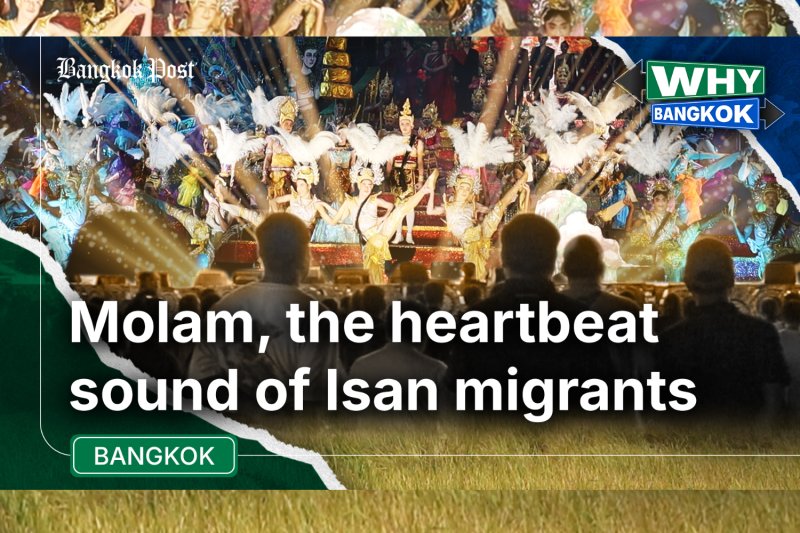
Molam music, a traditional art form from northeastern Thailand, has found its roots in Bangkok, where the Isan community represents the largest migrant population in the city. This genre has evolved from rural folk art to a modern sound that captivates a wide audience, as it is performed in bars and cafes, attracting younger generations.
In a new episode of the "Why Bangkok" program, the Bangkok Post explored how the rhythms of molam intertwine with the cultural fabric of the city by speaking with a group of artists and professionals in the field, all contributing to the growth of this music in the capital.
Details of the Migration Event
The mass migration of northeastern Thais to Bangkok began in the 1960s when the Thai military, led by Sarit Thanarat, launched the first national economic development plan. This period required a large workforce, prompting Isan residents, who were perceived as living in dry and underdeveloped areas, to seek job opportunities in the capital.
Many migrants found jobs in construction sites and factories or worked as taxi and tuk-tuk drivers, leading to the formation of new communities in Bangkok. This migration not only brought an increase in population but also the cultural and spiritual identity of the Isan people, reshaping the social fabric of the city.
Background & Context
The first official molam band in Bangkok was established in 1956, known as Morlam Sinthravipoom, founded by Sunthorn Apisontaranakorn, and it was associated with the government. However, its presence did not mean full acceptance, as there were negative stereotypes among Bangkok residents towards Isan culture.
Nevertheless, the sound of molam that continues in the city is considered a vital link connecting migrants to their homeland. Arthit Molsarn, an academic specializing in Isan culture, states, "We take any sound that seems enjoyable and make it our own."
Impact & Consequences
Molam concerts have become a popular choice among many audiences, including younger generations. However, performances have been modified to fit urban constraints and attract city crowds. In Isan, molam concerts typically take place at temple festivals, starting at 9 PM and continuing until morning.
In Bangkok, however, the timings must change to accommodate work schedules, with performances usually starting at 6 or 7 PM and lasting until midnight. Viraphong Wongsin, a molam artist and founder of the Khane Molam Futhai band, explains, "The band has to adjust the entire script, speeding everything up to attract the audience as quickly as possible."
Regional Significance
Molam music exemplifies how migration impacts culture and the arts, a theme that can be echoed in many Arab countries that have experienced internal and external migrations. Just as molam music contributes to enhancing the cultural identity of migrants, Arab arts can play a similar role in strengthening ties between diverse communities.
In conclusion, molam music represents more than just an art form; it embodies the cultural spirit of the Isan people and opens new horizons for folk arts worldwide.