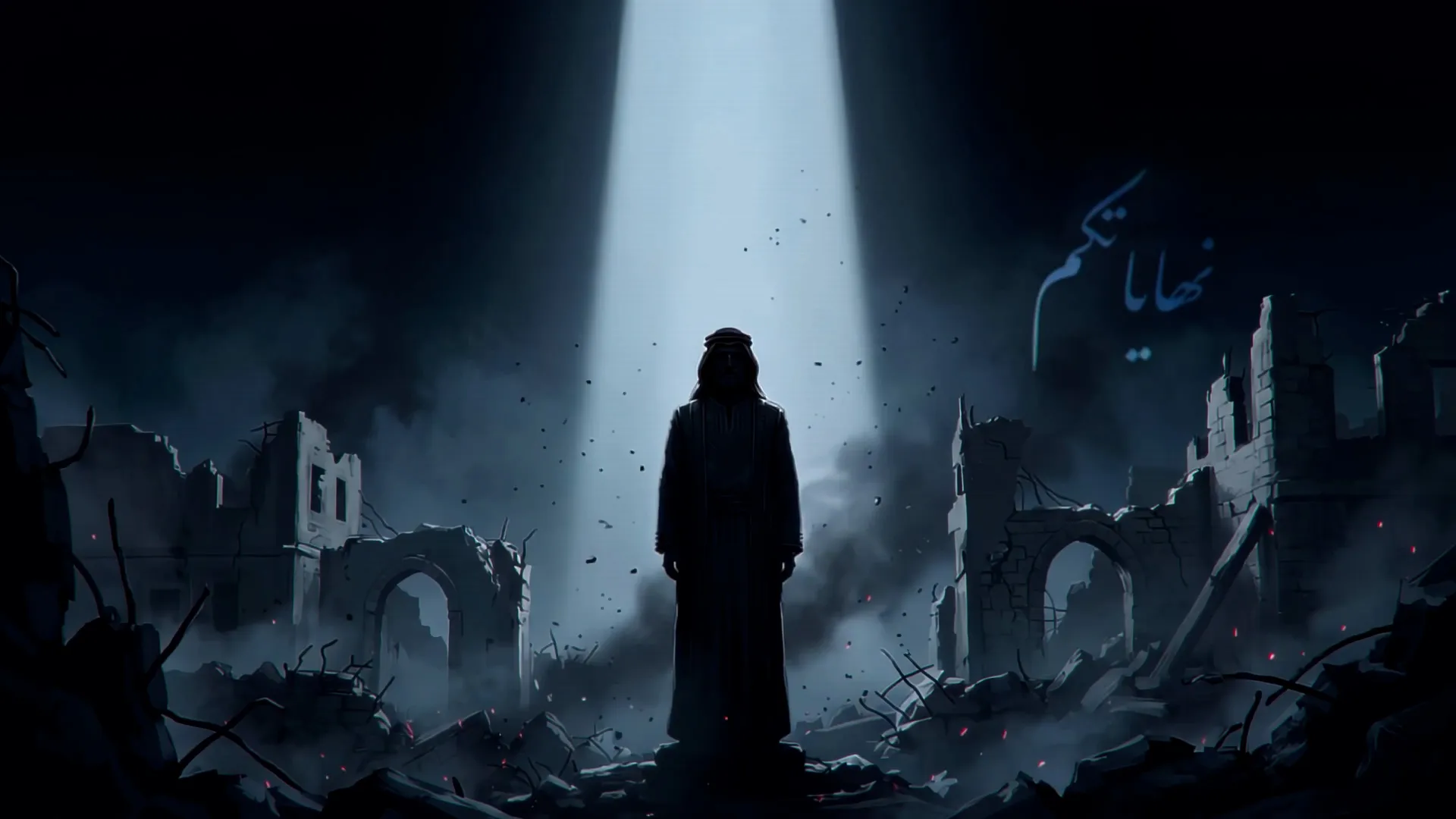
The program 'With Tamim' showcased a poem by Palestinian poet Tamim Barghouti on May 26, 2026, exploring themes of love, homeland, and freedom. The poem merges personal feelings with deep meanings concerning Palestinian identity, referencing historical and religious symbols such as Jaffa and Jerusalem.
The poem begins with an emotional language that reflects the poet's sentiments, then expands to address issues of identity, memory, and resilience. Barghouti's words convey a powerful expression of belonging and dignity, making it a reflection of the Palestinian spirit in the face of challenges.
Event Details
The poem includes strong phrases like: "Your ends are an illusion, and for the sun, this moonlit night," reflecting the poet's perspective on the Palestinian reality. It also speaks of the "Sea of Jaffa," which symbolizes victory and hope, stating: "On the Sea of Jaffa, where victory has a temporary yet eternal joy." These words carry a call to hold onto hope despite difficulties.
Through a poetic performance filled with imagery and meanings, Barghouti effectively delivers a powerful message about dignity and freedom, making the poem not just an expression of feelings but a call to reflect on identity and belonging.
Background & Context
This poem emerges at a sensitive time for the Palestinian cause, where challenges to Palestinian identity are increasing amid current political and social conditions. Poet Tamim Barghouti, regarded as one of the prominent poetic voices in Palestine, uses his words as a tool to convey the suffering of the Palestinian people and their rich history.
Historically, Jaffa and Jerusalem have been cultural and artistic centers in Palestine, significantly affected by conflicts and struggles. Poems addressing these cities carry the memories and pains of previous generations, making them part of the collective memory of the Palestinian people.
Impact & Consequences
Barghouti's poem emphasizes the importance of culture and art in reinforcing Palestinian identity, where words play a crucial role in uniting the people and enhancing the spirit of resistance. Poets like Tamim Barghouti contribute to keeping the Palestinian cause alive in global memory.
This poem also reflects the impact of literature on social and political awareness, serving as a source of inspiration for new generations in the struggle for freedom and dignity. In this case, poetry becomes a means of expressing hope and defiance.
Regional Significance
Tamim Barghouti's poems are part of the Arab literary movement that seeks to revive humanitarian and social issues. Amid the challenges faced by many Arab countries, poetry emerges as a means to express pain and hope.
These literary works contribute to enhancing Arab solidarity, as many find in Barghouti's words a resonance of their feelings and experiences. Arab poets play a vital role in shaping collective consciousness and reinforcing cultural identity.
In conclusion, Tamim Barghouti's poem stands as a testament to the power of words in expressing identity and belonging, making it an integral part of the Palestinian and Arab struggle.