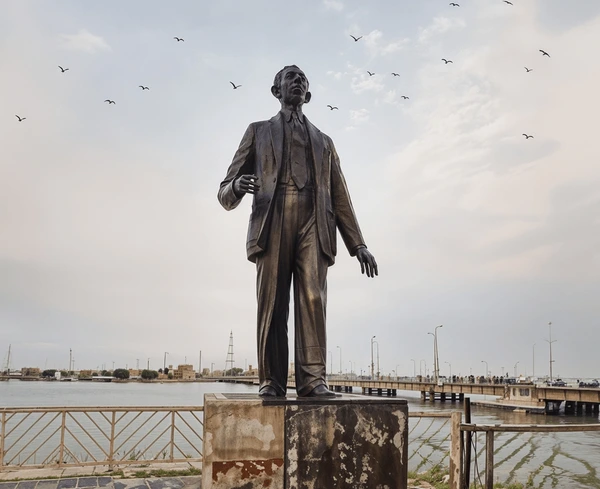
The use of symbols and myths in modern Arabic poetry represents a radical shift from classical patterns, where poetry is no longer merely a direct expression of emotion or a record of events. Instead, it has become a cognitive and aesthetic act that seeks to reinterpret existence, self, and history. In this context, both Adonis and Badr Shakir al-Sayyab emerge as the most influential poets in this field.
Adonis has contributed to the development of the concept of poetry by integrating symbols and myths into his texts, adding a new depth to the poetic experience. Meanwhile, al-Sayyab is considered a pioneer who introduced myth into his poetry, using it as a means to express human suffering and the Arab historical narrative.
Significance of Symbols and Myths in Modern Arabic Poetry
The importance of symbols and myths in modern Arabic poetry is evident through their ability to embody complex ideas and emotions. Adonis, regarded as one of the most prominent contemporary Arab poets, has innovatively used symbols to express issues of identity and belonging. On the other hand, al-Sayyab, known for his poetry filled with powerful imagery, has utilized myth to highlight the suffering of the Iraqi people amidst political and social crises.
In Adonis' poetry, ancient myths intertwine with modern experiences, drawing inspiration from the Arab cultural heritage and reinterpreting it in a way that reflects contemporary changes. Meanwhile, al-Sayyab, through his poems, emphasizes the struggle between the individual and society, making him a symbol of human suffering.
Background & Context
Historically, Arabic poetry has undergone significant transformation since the early 20th century, transitioning from traditional forms to more modern expressions. This shift has resulted from multiple influences, including colonialism, wars, and social changes. Within this framework, Adonis and al-Sayyab have emerged as symbols of this change, each using myth and symbol as tools to express a complex reality.
Their works have been influenced by numerous literary and intellectual movements, contributing to the formation of a new poetic identity that transcends traditional boundaries. Adonis, considered a pioneer of free verse, has added new dimensions to poetic language, while al-Sayyab, known for his committed poetry, has used myth as a means to critique social and political realities.
Impact & Consequences
The influence of Adonis and al-Sayyab on modern Arabic poetry is profound, inspiring many new poets. The use of symbols and myths has created a rich poetic language that reflects contemporary challenges. This influence extends beyond poets to encompass literature, art, and culture in general.
Literary studies show that the use of symbols and myths has helped enhance cultural awareness among readers, leading to a reevaluation of the Arab literary heritage. This new direction in Arabic poetry reflects a desire to search for a new identity that aligns with social and political changes.
Regional Significance
The impacts of Adonis and al-Sayyab extend beyond poetry into other areas of Arab culture. Amidst the political and social crises faced by many Arab countries, their works remain a mirror reflecting challenges and hopes. The use of symbols and myths in poetry can be seen as a call for reflection and contemplation on identity and belonging.
Ultimately, modern Arabic poetry, through the employment of symbols and myths, serves as a means of expressing contemporary issues, reflecting the depth of human experience in the face of challenges.