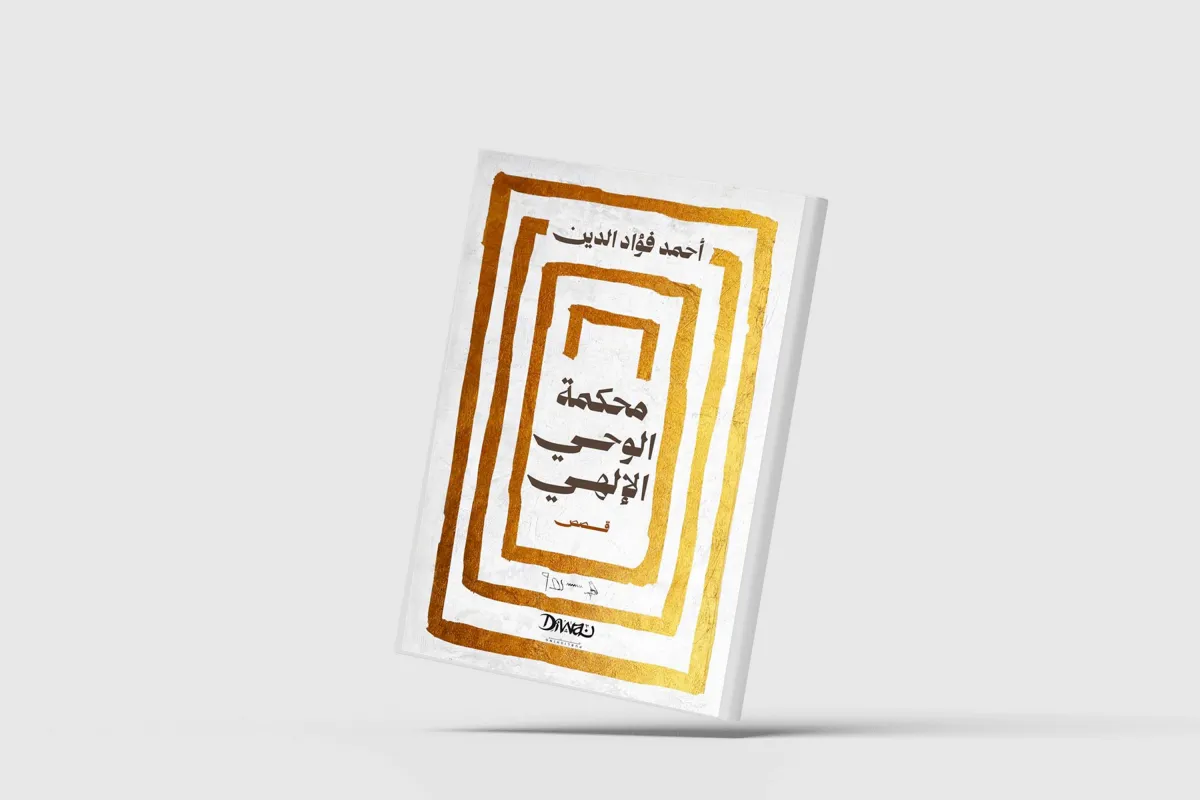
The short story collection "The Court of Divine Revelation" by Egyptian writer Ahmed Fouad El-Din, published by Diwan Publishing House, delves into themes of time, justice, and human relationships through narratives that intertwine dreams and reality.
In this collection, the author does not invoke time as a complete entity; instead, he addresses a troubled history, where it is linked to the right of choice and the question of justice, raising inquiries about the possibility of choice under certain circumstances. One of the story's protagonists questions: "Can the monsters choose?" reflecting the state of fragmentation and the search for identity that the characters experience.
Event Details
The duality of father and son in Ahmed Fouad El-Din's stories manifests as a complex relationship that transcends traditional family ties. The writer reexamines this relationship, which is not only built on extension but also on repetition and the retrieval of old wounds in new representations. This duality transforms into a trilogy that includes the father, son, and grandson, reflecting the sequence of roles, cruelty, and exclusion as punishment for attempting to escape the father's shadow.
These tensions peak in the story "The Court of Divine Revelation," where the father leaves a long message requesting the disavowal of his son, justifying it as a form of ingratitude and rebellion. In his message, the father recalls his piety towards his own father, reflecting the generational gap.
Background & Context
Ahmed Fouad El-Din's stories go beyond mere narration of events; they address issues of identity and the psychological tensions experienced by individuals. In the story "Echo of the Voice," the protagonist suffers from the loss of his voice, raising the obsession with identity and the connection of voice to the father. Here, the voice becomes a coercive structure that the father reproduces within the son, reflecting the tension between generations.
Dreams intertwine with reality in this collection, serving as an alternative space to test human relationships. Dreams become a realm for embodying postponed confrontations, allowing the writer to explore the depths of the human psyche.
Impact & Consequences
The effects of family relationships are evident in the collection "The Court of Divine Revelation," showcasing how complex intergenerational relationships can influence individual identity. The author expresses these complexities through the use of natural elements, such as the sycamore tree, which represents a temporary refuge for characters in moments of vulnerability.
These dynamics are highlighted in the story "Beyond the Plants," where the father and son come together in a daily ritual based on sensory knowledge, before the story concludes with a sharp paradox of the son losing his father. These events illustrate how family relationships can be a source of both suffering and healing simultaneously.
Regional Significance
The collection "The Court of Divine Revelation" articulates profound human issues that transcend geographical boundaries, making it relevant to contemporary Arab realities. The stories reflect the psychological and social tensions individuals face in their communities, opening the door for discussions about identity and justice.
In closing this collection, Ahmed Fouad El-Din demonstrates how narrative can be a means of understanding oneself and the world around us, prompting the reader to reflect on their personal relationships and history.