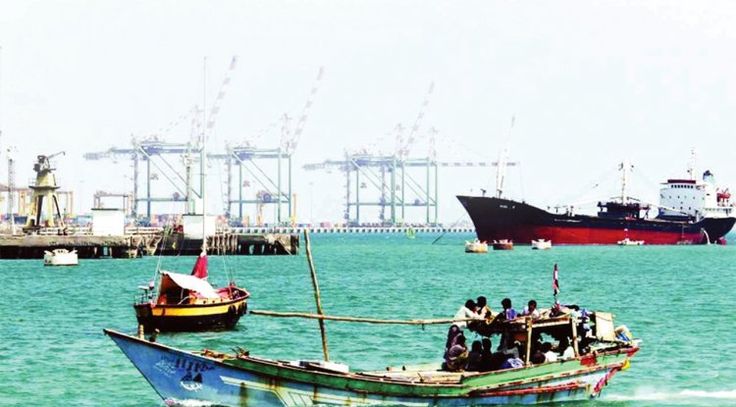
The British Maritime Trade Operations reported early Sunday that a powerful explosion targeted a commercial ship near the shores of Sharjah in the United Arab Emirates. The agency stated that the incident occurred due to an unidentified projectile in the Arabian Gulf, approximately 15 nautical miles (about 28 kilometers) north of Sharjah city.
The agency confirmed in an official statement that all crew members of the tanker that was attacked were unharmed and did not sustain any injuries. Meanwhile, relevant authorities in the UAE have begun a comprehensive investigation to understand the circumstances of this incident, which reflects the rising turmoil in these strategic waters.
This event comes amid escalating regional tensions, as the Middle East faces military confrontations following a series of disputes and conflicts between Iran on one side, and the United States and Israel on the other. The relationship between these parties has been significantly impacted by military actions that began on February 28, resulting in heightened tensions.
Former U.S. President Donald Trump previously gave Iran a 48-hour ultimatum to ensure the opening of the Strait of Hormuz to international shipping, threatening to use force against Iranian installations should the strait remain closed. The Strait of Hormuz is considered one of the most important maritime passages in the world, through which about 20% of global oil trade transits. On the other hand, the Iranian Central Command has stated that Tehran will be compelled to respond to any aggression targeting its energy infrastructure, including through actions against U.S. and Israeli infrastructure.
Concerns regarding maritime security in this strategic region are multiplying, especially following recent attacks on several vessels. Recently, there was an attack on a commercial ship off the coast of Ras Laffan in Qatar, and another near the port of Khor Fakkan in the UAE. This series of incidents indicates a need for additional measures to ensure the security of shipping routes in these waters.
It is expected that matters will become more complicated with ongoing military and political pressures exerted by major powers on Iran, along with the resulting implications for countries in the region, which may require stronger coordination among the concerned states to ensure security and stability. These incidents emphasize the importance of the Strait of Hormuz as a geographical and geopolitical hub, making it a focal point for international parties during crises.
In light of this scenario, the question remains on how these events will impact the economic situation in the region. Instability can lead to a rise in oil prices and increase risks to maritime security, potentially overshadowing global trade.
A careful analysis of this situation compels us to consider the ramifications of these events, not only in terms of international relations but also how they can influence the power dynamics of states in the region.