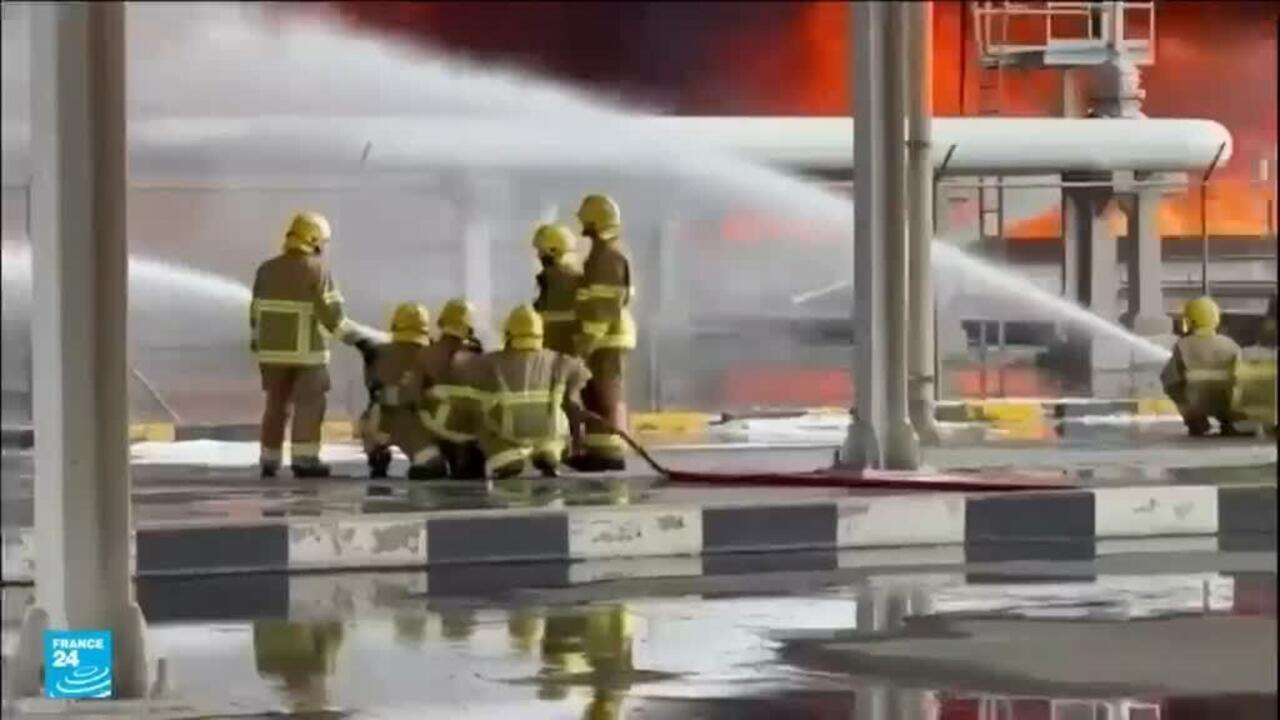
Multiple explosions were heard in the Saudi capital Riyadh on Tuesday, raising concerns in the region amid escalating Iranian attacks. These explosions come at a sensitive time as tensions between Iran and Gulf countries are increasing, further destabilizing the region.
In this context, UN Assistant Secretary-General Abdullah Al-Dardari announced that Middle Eastern countries have lost approximately 186 billion dollars due to one month of war that began with an attack by the United States and Israel on Iran. These losses reflect the significant economic impact that armed conflicts impose on the affected countries.
Details of the Incident
The explosions that occurred in Riyadh are part of an ongoing escalation by Iran, targeting several sites in the Saudi capital. Media reports suggest that the attacks may be a response to the military and political pressures Iran faces from the United States and its allies in the region.
These attacks are considered part of Iran's strategy to respond to what it perceives as existential threats, as it seeks to bolster its regional position through military force. These events have elicited widespread international reactions, with many leaders calling for restraint and avoidance of military escalation.
Background & Context
Historically, relations between Iran and Gulf countries have been marked by ongoing tensions, especially following the Islamic Revolution in Iran in 1979. These tensions have significantly increased in recent years, with the escalation of conflicts in Syria and Yemen, where Iran supports armed groups in both countries.
These events coincide with rising tensions between Iran and the United States, particularly after the U.S. withdrawal from the Iranian nuclear deal in 2018. This withdrawal led to the imposition of strict economic sanctions on Iran, exacerbating tensions in the region.
Impact & Consequences
These events significantly affect regional stability, as fears of an all-out war in the area grow. The economic losses reported by the United Nations indicate the devastating impact of armed conflicts on the economies of the involved countries.
Governments in the region are under increasing pressure to address these challenges, as they strive to achieve economic and political stability under difficult circumstances. These events may lead to changes in the domestic and foreign policies of the affected countries.
Regional Significance
These developments serve as a wake-up call for Arab countries, which must enhance security and economic cooperation to face common challenges. Additionally, military escalation could impact regional security and increase the suffering of civilians in the affected areas.
In conclusion, the situation in the region remains sensitive and requires careful monitoring. The continuation of military escalation could lead to catastrophic outcomes, necessitating international intervention to ensure peace and stability in the Middle East.