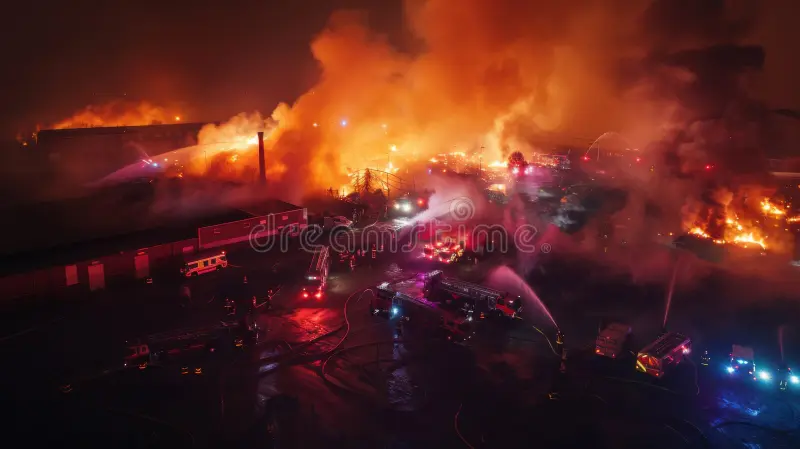
Firefighters in Bogor, Indonesia, faced extreme exhaustion after a grueling seven-hour effort to extinguish a massive fire at a plastic factory. The fire, which erupted in the Gong Putri area, began at 3:30 PM local time and was brought under control by 10:10 PM following intensive efforts.
The head of the Bogor Fire and Rescue Department, Yudi Santosa, confirmed that firefighters encountered significant challenges during the extinguishing process, as conditions were difficult due to the flammable materials that were burning, resulting in thick smoke. He also noted that some firefighters suffered from severe exhaustion and received medical care, including the use of oxygen tanks.
Details of the Incident
Approximately 50 firefighters were deployed, supported by ten fire engines, in addition to rescue units and self-contained breathing apparatus. Teams of volunteers, along with the military and police, contributed to speeding up the extinguishing process and ensuring the safety of the surrounding area. Santosa explained that the focus was on controlling the fire and preventing its spread, given the nature of the flammable plastic materials.
After gaining control of the fire, firefighting teams began the cooling process to prevent reignition. Currently, the situation at the fire site is under control, with no serious injuries reported among the firefighters, who managed to get some rest after their strenuous efforts.
Background & Context
Factory fires are common incidents in many countries, especially those reliant on heavy industries or flammable materials. In Indonesia, fire incidents have increased in recent years, necessitating improved safety procedures in factories and better training for firefighting teams. The fire at the plastic factory in Bogor is yet another example of the challenges faced by firefighting teams in dealing with such incidents.
Historically, Indonesia has witnessed numerous devastating fires that have resulted in loss of life and property, highlighting the importance of preparedness and good planning to address such crises. Previous incidents have also influenced government policies regarding industrial safety.
Impact & Consequences
Factory fires require a swift and effective response, as they can lead to significant loss of life and property. The recent fire in Bogor underscores the urgent need to improve fire prevention and response strategies. Repeated incidents are expected to increase pressure on local authorities to enhance safety standards in factories.
These incidents also impact the local economy, as they can lead to production halts and job losses. Therefore, improving safety in factories is not only a humanitarian necessity but also an economic imperative.
Regional Significance
While the incident in Bogor may seem distant from the Arab region, the lessons learned from such incidents can be of great value. Many Arab countries face similar challenges in industrial safety, especially in sectors that rely on flammable materials. Therefore, enhancing safety standards and training for fire response can positively impact the protection of lives and property.
In conclusion, the fire at the plastic factory in Bogor serves as a reminder of the importance of preparedness and good planning to face crises. Local authorities and factories must work together to ensure the safety of workers and surrounding communities.