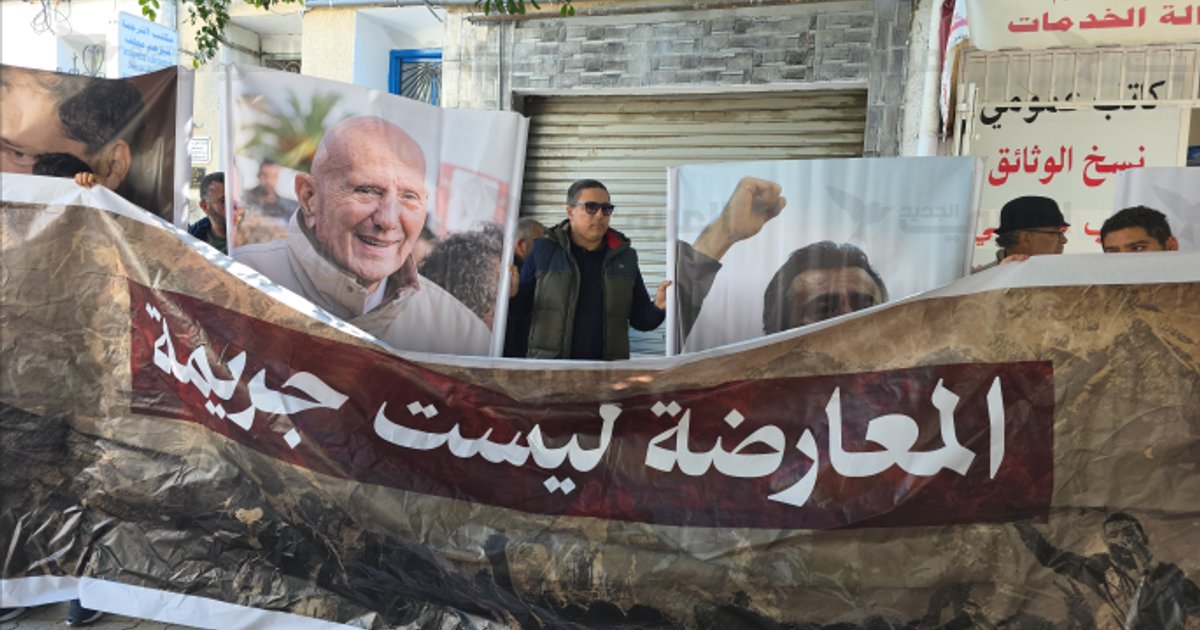
On Tuesday, families of political prisoners in Tunisia organized a protest in front of the Ministry of Justice, where dozens of family members and supporters gathered to demand the release of all detainees. This demonstration comes amid growing concerns about the conditions of the prisoners, especially as some have entered a hunger strike to protest their detention conditions.
The protesters raised slogans calling for freedom and justice, emphasizing the need to respect human rights and the necessity of releasing political prisoners whom they consider victims of arbitrary detention. The protest saw significant attendance from local and international human rights organizations, which expressed their support for the families' demands.
Details of the Protest
The protesters gathered in front of the Ministry of Justice in the capital, Tunis, where they distributed press releases outlining their demands and the reasons for the protest. Speakers at the demonstration pointed out that many detainees have been held without trial or clear charges, increasing families' anxiety about their fate.
It was also highlighted that some detainees are suffering from poor health conditions, necessitating intervention from the authorities to alleviate their suffering. The families expressed their determination to continue protesting until their demands are met.
Background & Context
This protest comes at a time of increasing tension in Tunisia's political landscape, particularly following a series of arrests targeting opposition political figures and human rights activists. These arrests have sparked widespread reactions from civil society, which views them as violations of human rights.
Historically, Tunisia has witnessed numerous protests and demonstrations calling for the release of political prisoners, especially following the Tunisian revolution in 2011. However, the current situation reflects new challenges facing the country in its path towards democracy.
Impact & Consequences
The continued detention of politicians and activists could exacerbate the situation in Tunisia, potentially negatively impacting political and social stability. These events may also affect Tunisia's image in the international community, especially in light of trends towards enhancing human rights.
Concerns are growing that these protests could lead to greater escalation, which may reflect on the economic and social conditions in the country. If authorities continue to ignore the protesters' demands, we may witness an escalation in popular protests.
Regional Significance
The issue of political prisoners in Tunisia is part of a broader phenomenon occurring in many Arab countries, where numerous regimes are facing internal and external pressures to respect human rights. What is happening in Tunisia could have implications for protest movements in other countries, as citizens seek justice and freedom.
As Arab governments continue to face challenges related to rights and freedoms, Tunisia stands out as a model to be emulated in the pursuit of democracy, despite the challenges it faces.