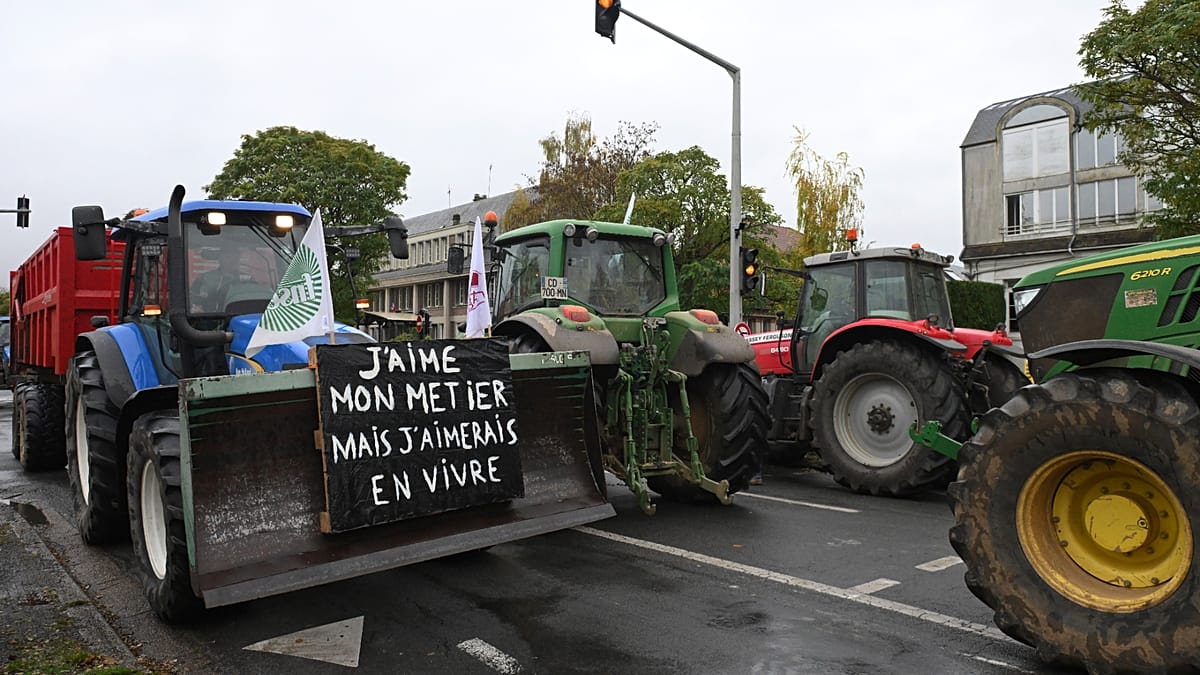
Around 50 farmers gathered in the Lyon region of France on Monday in response to a call from the 'Rural Coordination' union to protest against rising fuel prices that have significantly impacted the agricultural sector. The demonstration began with a traffic blockade using approximately 20 tractors near the TotalEnergies refinery in the city of Vienne.
The protesters then moved onto the A7 highway towards the Rhône department under police escort, causing significant traffic disruptions in the area. Despite a local authority order prohibiting any demonstration in the area, the farmers insisted on expressing their demands.
Details of the Protest
The 'Rural Coordination' union pointed out that production costs have risen dramatically, making many farms unable to continue without tangible government support. The union stated that 'production costs are higher than ever, and prices are not keeping pace,' warning that farmers' incomes are under increasing pressure.
In statements made by Cédric Archer, co-president of the union, he said: 'We do not want to die with our mouths open,' referring to the difficult conditions faced by farmers. A farmer from the Côte d'Ardèche region confirmed that agricultural diesel prices have 'almost doubled' since the onset of the crisis in the Middle East.
Background & Context
These protests come at a sensitive time, as fuel prices have surged across Europe due to geopolitical crises, including conflicts in the Middle East. On April 21, the French government announced an emergency support package worth €20 million for struggling farmers, which included a temporary increase in agricultural diesel rebates.
However, agricultural unions deemed these measures insufficient, with France's largest agricultural union, FNSEA, demanding fuel assistance of up to €0.30 per liter. The union's president, Arnaud Rousseau, emphasized that 'the program is still largely inadequate.'
Impact & Consequences
These protests indicate a broader crisis in the French agricultural sector, where farmers are experiencing increasing pressures due to rising production costs. This situation reflects the challenges faced by agriculture in many European countries, where calls for greater government support to address these crises are growing.
If these pressures continue, they could lead to a decline in agricultural production in France, potentially affecting food security in the country and prices in local markets.
Regional Significance
The protests highlight the economic challenges facing the agricultural sector in France and its potential impact on food security. The farmers' demands for government intervention underscore the urgent need for policies that address the rising costs affecting their livelihoods.
As the situation evolves, it remains crucial for stakeholders to engage in dialogue to find sustainable solutions that support farmers and ensure the stability of the agricultural sector.