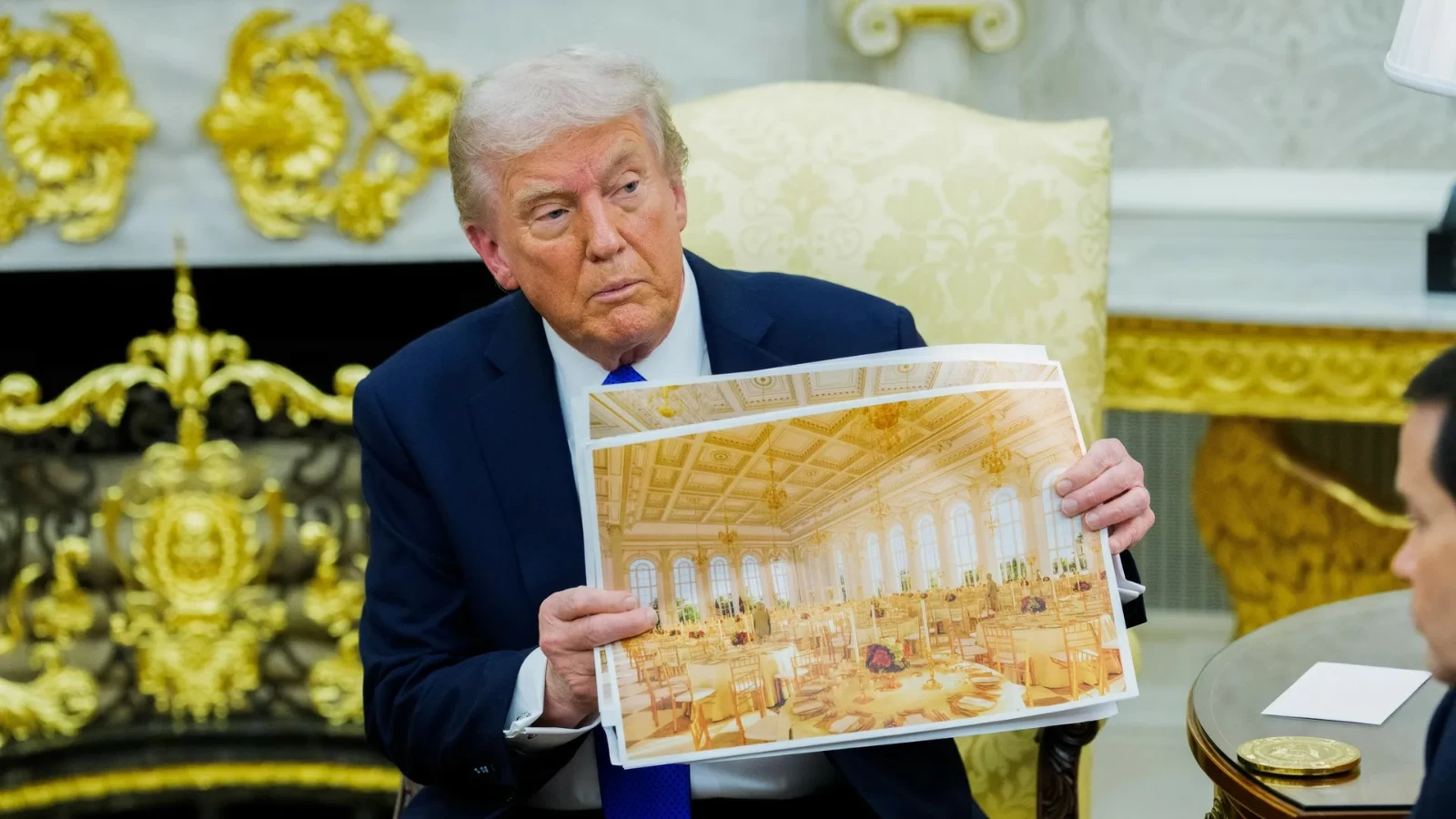
A U.S. federal judge has issued a ruling to temporarily halt the project to construct a grand event hall inside the White House, which President Donald Trump intended to implement, due to non-compliance with necessary legal procedures before the commencement of the project.
The decision came after a lawsuit was filed by the National Trust for Historic Preservation, an organization dedicated to protecting historic sites. Judge Richard Leon confirmed in his 35-page ruling that the project cannot proceed "unless Congress grants explicit legal approval," emphasizing the need to immediately cease construction activities.
Details of the Ruling
The judge clarified that the President, while being responsible for the stewardship of the White House for future generations, "is not its owner," referring to the limits of his constitutional powers. The ruling indicates that the U.S. administration did not obtain the necessary legal authorization and failed to meet essential requirements, such as submitting project plans to relevant authorities or conducting an environmental assessment, in addition to not securing Congressional approval. The lawsuit is based on the premise that the U.S. Constitution grants Congress the sole authority to manage and regulate state properties.
The project aimed to create a massive ballroom at an estimated cost of $400 million, funded by donors, expanding capacity from 500 to approximately 1,350 guests. This plan followed the demolition of the White House's East Wing, built in 1902, to make way for the new project.
Context and Background
This case arises at a sensitive time for the U.S. administration, as President Trump seeks to implement new projects that reflect his vision for the White House. However, legal issues surrounding historic preservation and public properties remain a contentious topic in the United States, where legal considerations intersect with political desires.
Historically, there have been numerous projects that sparked controversy over how public properties are managed, reflecting the tension between the executive and legislative branches. This ruling serves as a reminder that there are clear limits to authority, and adherence to laws and procedures is a matter that cannot be overlooked.
Implications and Effects
This decision is expected to have significant implications for the U.S. administration's plans, potentially requiring a reassessment of future projects related to historic preservation. This ruling may increase pressure on the administration to present more transparent plans and collaborate with Congress before embarking on any new projects.
Additionally, President Trump may face further legal challenges in the future, as this case could encourage other organizations to take legal action against similar projects. This ruling may influence how the administration addresses environmental and historical issues moving forward.
Impact on the Arab Region
Although this event pertains to the United States, it reflects broader issues related to cultural heritage and public administration that may resonate with Arab countries. Many Arab nations face similar challenges in preserving cultural and historical heritage, especially amid the rapid changes occurring in the region.
This case can serve as a lesson for Arab countries on the importance of adhering to laws and procedures when implementing major projects, and how such decisions can affect relationships between governments and their citizens. It also highlights the need for a balance between development and the preservation of cultural heritage.
In conclusion, this judicial ruling represents a turning point in how major projects are managed at the White House, reflecting the importance of compliance with laws and procedures across all domains.