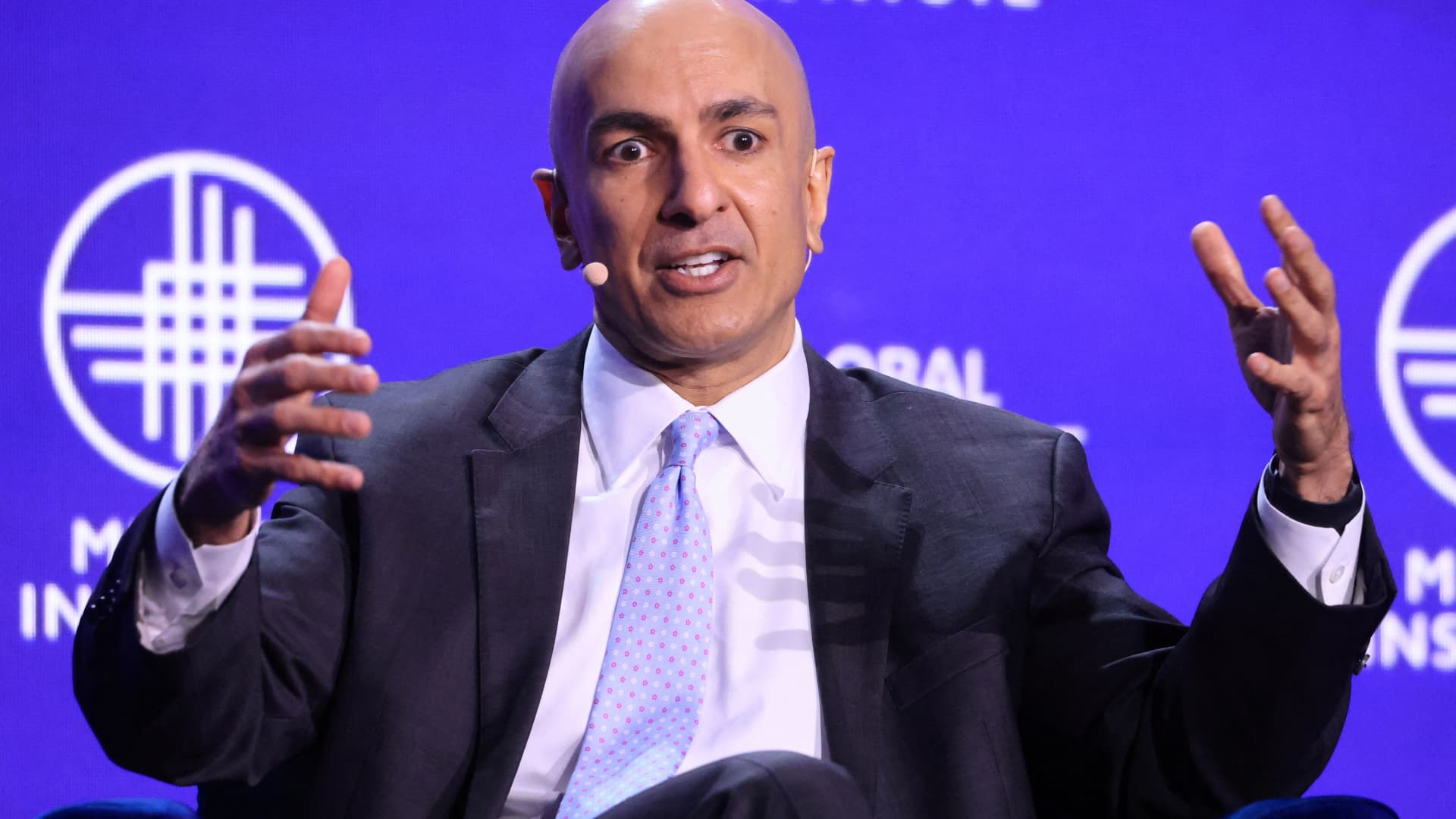
Neel Kashkari, President of the Federal Reserve Bank of Minneapolis, reaffirmed that combating inflation in the United States remains a top priority for the central bank, warning that consumer prices are still 'very high.' This statement was made during an interview with CNBC at the Bank of Japan-IMES conference, where he highlighted the importance of maintaining a balance between price stability and full employment.
Kashkari pointed out that inflation has exceeded the Federal Reserve's target of 2% for more than five years, although the labor market is currently in 'good' condition. He explained that he is heavily focused on inflation but does not overlook the labor market, as attention must be paid to both sides.
Event Details
Kashkari stated, 'Inflation is very high, and we need to take steps to ensure that inflation expectations do not slip to higher levels.' He emphasized that prolonged inflation could lead to a deviation in inflation expectations, requiring a more aggressive response from the central bank. He clarified that inflation in the United States reached 3.8% in April, with a 0.4% increase in the core Consumer Price Index and 2.8% respectively.
Kashkari also noted that global inflationary pressures have been affected by the COVID-19 pandemic, tariffs, the war in Ukraine, and recently the conflict in Iran. When asked about the main factors contributing to rising inflation, he pointed out that rising energy and fertilizer prices have had a significant impact.
Background & Context
Historically, the United States has experienced periods of high inflation, but what distinguishes the current situation is the interplay of several factors, including global health and economic crises. Since the onset of the COVID-19 pandemic, many countries, including the United States, have faced significant challenges in price stability, leading to an increase in the cost of living.
The Federal Reserve's policy to combat inflation is part of broader strategies aimed at achieving economic stability. These policies can present significant challenges amid changing economic conditions, as the central bank must balance achieving economic growth with combating inflation.
Impact & Consequences
The Federal Reserve's policies directly affect the U.S. economy and can have widespread implications for global financial markets. If inflation rates continue to rise, the Federal Reserve may need to take more stringent actions, which could lead to an increase in interest rates.
This situation could impact investments and raise borrowing costs, negatively affecting economic growth. Additionally, rising interest rates may impact emerging markets, as many of these countries rely on financial flows from the United States.
Regional Significance
Arab countries are significantly affected by global economic changes, including inflation in the United States. Rising energy and fertilizer prices could impact the economies of Arab nations that depend on these resources. Furthermore, any increase in interest rates could lead to a reduction in foreign investments in the region.
Ultimately, the current situation requires Arab nations to take proactive measures to address potential economic challenges, including enhancing economic diversification and reducing reliance on single resources.