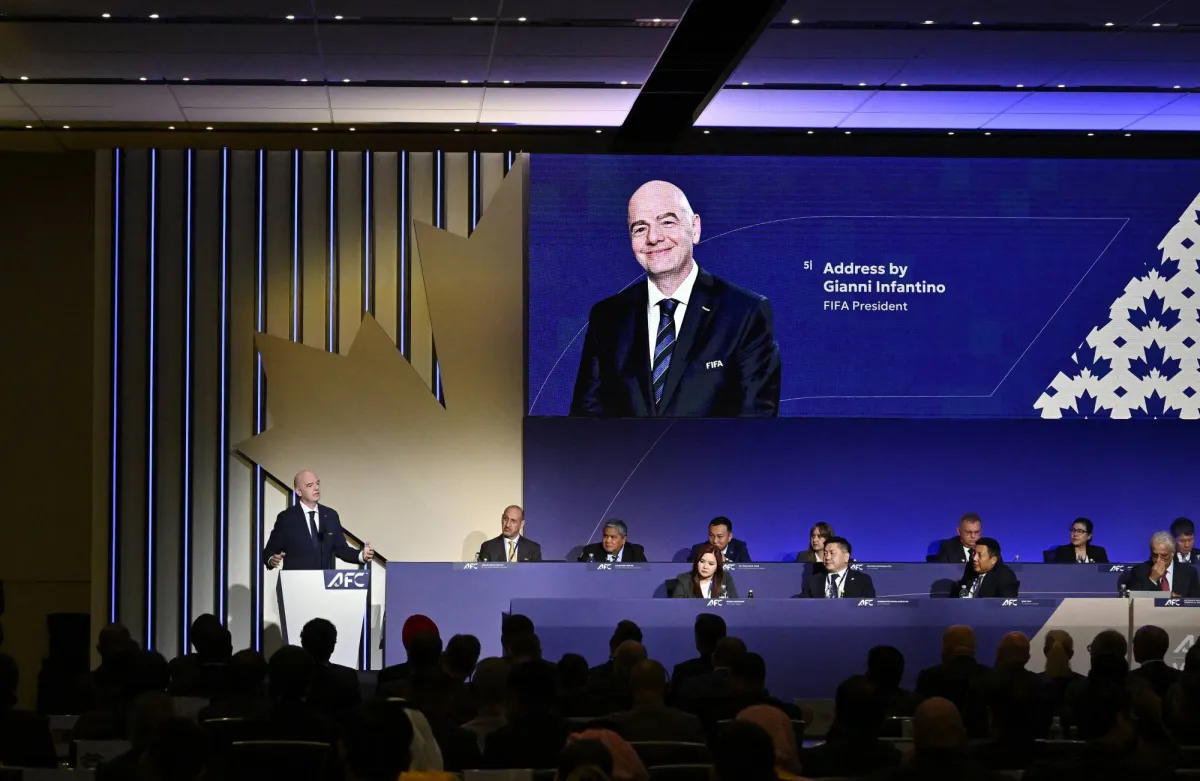
The local member associations of the International Football Federation (FIFA) are preparing to meet in Vancouver next Thursday for their annual general assembly. This meeting comes at a critical time, with less than two months remaining until the kickoff of the 2026 World Cup, which will feature 48 teams for the first time in the tournament's history.
The upcoming World Cup is set to be the largest in history, taking place across three countries: the United States, Canada, and Mexico, from June 11 to July 19. However, the costs associated with hosting the tournament are raising concerns among many associations, as it involves long-distance travel and coordination with various tax systems.
Event Details and Concerns
There is growing anxiety among some participating nations that teams may struggle to cover their expenses unless they achieve good results in the tournament. The European Football Association (UEFA) has conveyed these concerns to FIFA, which is expected to highlight the unprecedented commercial power of the tournament.
In this context, FIFA has indicated its readiness to increase financial prizes and participation payments, reflecting its commitment to a broader redistribution of funds, rather than just rewarding the stronger teams. FIFA asserts that the increase in the number of teams and matches will lead to a greater influx of funds into development programs for the global game.
Background & Context
The participation of the Iranian national team is a sensitive issue on the agenda of the general assembly, as Iran has qualified for the World Cup. However, security concerns regarding their matches in the United States have prompted officials in Tehran to seek guarantees and alternative venues. Nevertheless, FIFA has confirmed that the match schedule will not be altered, presenting new challenges for the teams.
At the same time, the Palestinian Football Association has faced obstacles in entering Canada to attend the meeting, with officials being denied entry. However, FIFA recently announced that the Deputy President of the Palestinian Federation, Susan Shalabi, and its President, Jibril Rajoub, have obtained the necessary visas, allowing them to participate in the general assembly.
Impact & Consequences
The logistical aspects of the 2026 World Cup remain a central topic, as teams and fans face unprecedented challenges due to the tournament being spread across three countries and multiple time zones. Some associations have expressed their concerns regarding these challenges, but FIFA believes that the model of joint hosting is essential for the success of the tournament.
The 2026 edition is expected to be the largest and most profitable in World Cup history, with projected revenues reaching approximately $13 billion. However, the challenge remains to ensure that FIFA's vision for the World Cup is both feasible and fair for all.
Regional Significance
These developments are particularly significant for the Arab region, as many Arab countries are participating in the qualifiers and aspire to reach the tournament. Additionally, the political issues related to team participation may affect relations between countries, highlighting the importance of sports as a means of communication and understanding among peoples.
In conclusion, the meeting in Vancouver remains an opportunity to shed light on the challenges facing global football and how federations can work together to ensure the success of the upcoming tournament.