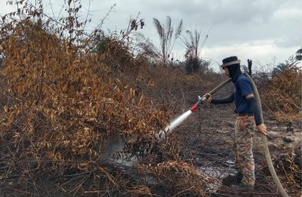
Firefighters in Malaysia have successfully contained a large fire that broke out in a palm oil plantation in Brombin, covering an area of up to 300 hectares. According to reports, around 60 hectares of the fire had been extinguished by 5 PM on Saturday, March 28.
The fire that ignited in the palm oil plantation raised concerns among local residents and authorities, prompting immediate dispatch of firefighting teams to the site to combat the flames. Helicopters were utilized to transport water to the affected areas, significantly aiding the firefighting efforts.
Details of the Incident
Reports indicate that the fire began early Saturday morning and spread rapidly due to strong winds and rising temperatures. More than 100 firefighters from various units were called in to participate in the firefighting efforts. Additionally, some roads near the fire site were closed to ensure the safety of citizens.
The palm oil plantation in Brombin is one of the largest in the region, making the swift control of the fire crucial to avoid environmental and economic damage. Officials noted that investigations are underway to determine the cause of the fire.
Background & Context
Malaysia is one of the largest producers of palm oil in the world, with this industry playing a vital role in the national economy. However, wildfires and plantation fires pose a constant threat, leading to environmental destruction and increased carbon emissions. The country has witnessed several similar fires in recent years, prompting the government to take stringent measures to mitigate this phenomenon.
Historically, palm oil fires have been linked to unsustainable agricultural practices, where land is burned for clearing. However, the Malaysian government is working to promote sustainable agricultural practices to reduce environmental risks.
Impact & Consequences
Estimates suggest that plantation fires can significantly affect agricultural production, leading to rising prices in the market. These fires also impact air quality and cause health issues for local residents. Should this phenomenon persist, Malaysia may face increased international pressure to comply with environmental sustainability standards.
Moreover, palm oil fires could result in the loss of biodiversity in the region, as natural habitats for many species are destroyed. Therefore, controlling these fires is essential for preserving the environment and the local economy.
Regional Significance
Although the fire occurred in Malaysia, its impact extends to Arab countries, particularly those that import palm oil. Arab nations are among the largest importers of palm oil, and any disruption in production could lead to price increases in Arab markets.
Furthermore, wildfires present a global environmental challenge, necessitating international cooperation to address this phenomenon. It is crucial for Arab countries to adopt strategies to mitigate the effects of climate change and move towards sustainable agriculture.
In conclusion, plantation fires represent a significant challenge that requires a swift and effective response from authorities. Continuous efforts must be made to promote sustainable agricultural practices and reduce environmental risks.