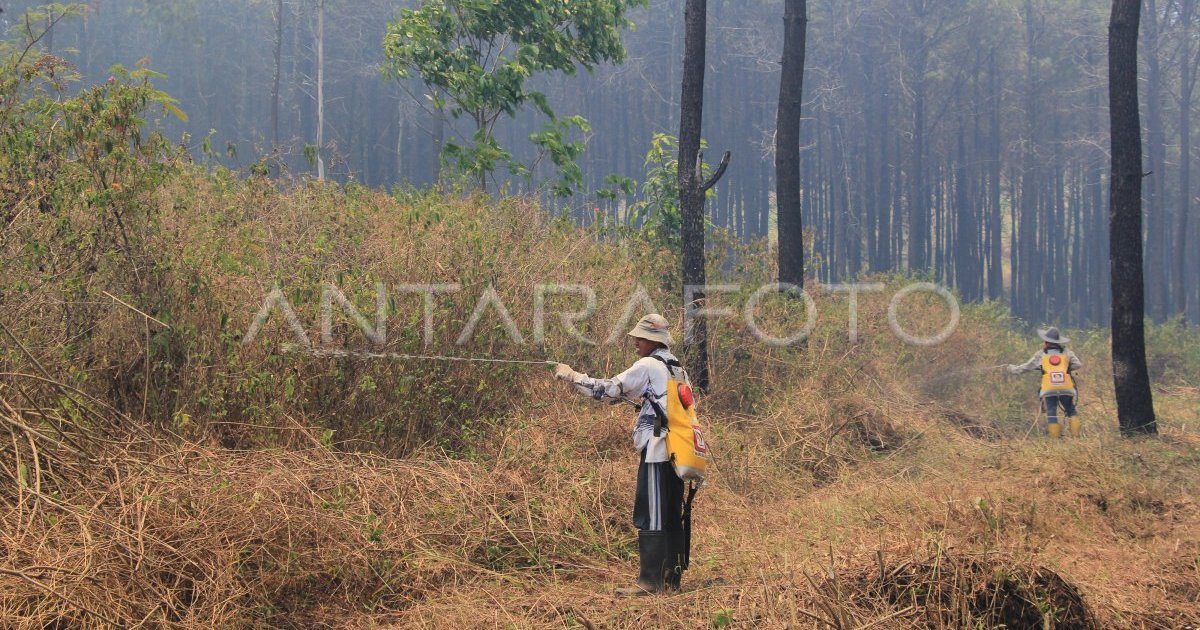
Joint firefighting teams in Indonesia have successfully controlled forest fires that swept through areas in East and West Kalimantan over the past two days, extinguishing the flames without any reported injuries. The National Disaster Management Agency (BNPB) confirmed that firefighting efforts resulted in the extinguishment of several fire hotspots in various regions.
In detail, Abdullah Mahari, head of the data, information, and communication center at the agency, announced that the first fire broke out in Empas Village, located in Kutai Barat district, last Sunday, affecting an area estimated at 1.5 hectares. The teams managed to completely control the fire, contributing to the absence of any injuries.
Incident Details
On the same day, another fire occurred in the Senkan area of Pasir district, where firefighting teams faced difficulties due to weather conditions, including strong winds and dense vegetation. Nevertheless, the teams were able to extinguish the fire that spread over an area of one hectare on the same day.
In Banjarmasin, South Kalimantan, another fire was extinguished over an area of 4.3 hectares, which had persisted since Saturday. Control of this fire was also confirmed on Sunday.
Background & Context
Forest fires in Indonesia are a recurring problem, especially during the dry season, causing environmental destruction and affecting public health. In recent years, the country has witnessed an increase in the number of forest fires, prompting the government to take stricter measures to combat this phenomenon.
The areas surrounding Kalimantan are significantly affected by these fires, as the forests are an important source of biodiversity and natural resources. Reports have indicated that some regions, such as Sumatra and Papua, remain at risk of fires due to prevailing weather conditions.
Impact & Consequences
Forest fires directly impact the environment and public health, increasing carbon emissions and degrading air quality. These fires also threaten wildlife and lead to the loss of natural habitats.
Moreover, the government's swift and effective response in controlling the fires reflects the importance of cooperation among various stakeholders, including local firefighting teams and communities. This collaboration can serve as a model for other regions facing the same issue.
Regional Significance
Forest fires are a global issue affecting all countries, including Arab nations that may face similar challenges in the future. With climate change, the likelihood of fires in dry areas increases, necessitating effective preventive measures.
Therefore, Indonesia's experience in combating forest fires may offer valuable lessons for Arab countries on how to address this phenomenon, through raising public awareness and developing effective strategies to mitigate risks.