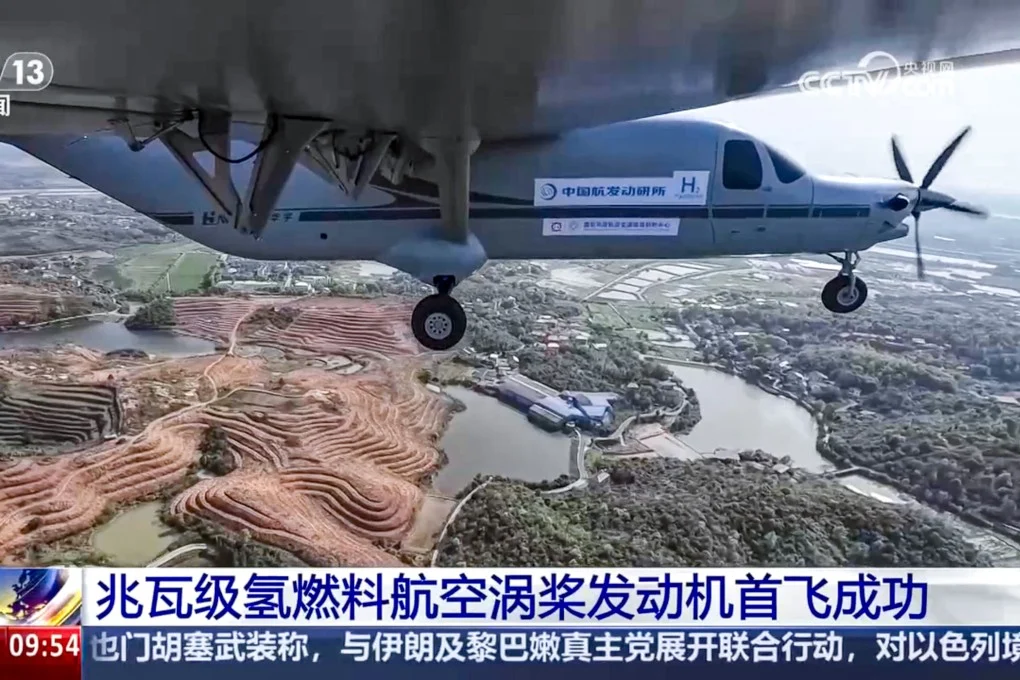
China has announced the successful completion of its first cargo flight powered by a hydrogen engine, marking a significant step towards green aviation. The aircraft, weighing 7.5 tons, completed a 16-minute test flight, during which the hydrogen engine demonstrated excellent performance. This achievement comes at a time when China is striving to enhance its efforts in sustainable energy and reduce carbon emissions.
The engine used in this aircraft is the most powerful of its kind in the world, capable of generating over 1 megawatt of power. The Chinese news agency Xinhua reported that the engine operated normally throughout the flight duration, reflecting the technological advancements that China has achieved in this field.
Event Details
The tested aircraft is an unmanned cargo plane and is part of a larger project aimed at developing new aviation technologies based on clean energy sources. This project aligns with China's vision to reduce reliance on fossil fuels and meet its environmental goals.
This aircraft serves as a model for green aviation, as China seeks to become a leader in this field. The hydrogen engine has been designed to be cost-effective and environmentally friendly, making it an attractive option for airlines in the future.
Background & Context
Over the years, there has been a growing global interest in renewable energy technologies, especially in light of the environmental challenges facing our planet. As the largest emitter of carbon, China recognizes the importance of transitioning to clean energy sources and has implemented multiple strategies to achieve this goal.
Historically, China has heavily relied on coal and oil to meet its energy needs, but with increasing environmental awareness, the government has begun investing more resources in developing renewable energy, including solar and wind energy, and now hydrogen aviation.
Impact & Consequences
The success of this aircraft is a significant step towards achieving China's goals in sustainable aviation. If China can further develop this technology, it could have a profound impact on the global aviation industry, potentially leading to a substantial reduction in carbon emissions.
This achievement may also encourage other countries to invest in clean aviation technologies, contributing to the realization of global climate goals. The development of hydrogen-powered aircraft could represent a revolution in the aviation industry, potentially leading to lower operational costs and increased efficiency.
Regional Significance
Looking at the Arab region, the transition to clean energy sources is vital, especially given the environmental challenges it faces. Arab countries can benefit from China's experiences in developing hydrogen aviation technologies, which could open new horizons in air transport.
Moreover, investing in renewable energy technologies can contribute to sustainable development in the region, enhancing the ability of Arab countries to address environmental and economic challenges.