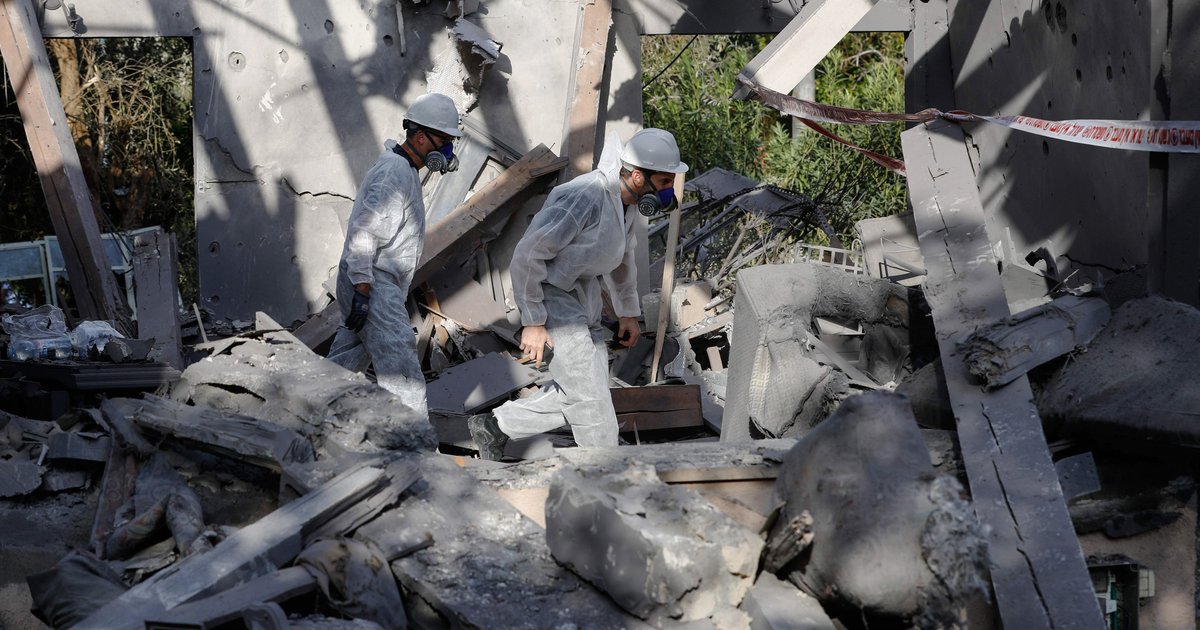
Five Israelis sustained varying injuries in Bnei Brak, located in the suburbs of Tel Aviv, due to a double rocket attack carried out by Iran and Hezbollah in the early hours of Thursday. The attack, which occurred after approximately five hours of relative calm, resulted in significant damage to buildings and vehicles, as well as damage to the water network in the area.
Al Jazeera's correspondent confirmed that the recent attack involved the use of cluster munitions, indicating a notable escalation in military operations by Iran and Hezbollah. This attack followed a series of Iranian strikes in the region on Wednesday, which included the launch of ballistic and shrapnel rockets.
Details of the Incident
According to Israeli sources, shrapnel from the cluster rockets fell in 11 different locations in the Greater Tel Aviv area, causing substantial material damage in areas such as Ramat Gan, Bnei Brak, and Tel Aviv. Israeli radio reported that there was destruction to the water network and a large number of vehicles due to the falling shrapnel, while the Hebrew site "Walla" confirmed damage to a building in the city of Shfa'amr in the Galilee as a result of a rocket barrage launched from Lebanon.
On the northern front, the Lebanese Hezbollah announced the shelling of Israeli occupation infrastructure in the Kiryat Ata area east of Haifa with rockets. This announcement coincided with the sound of sirens in Akko, Haifa Bay, and wide areas in the Upper Galilee, in addition to Tel Aviv and West Bank settlements, prompting the Israeli home front to urge residents to stay close to shelters.
Background & Context
These developments come at a sensitive time, as the region witnesses a notable escalation in military tensions between Israel and both Iran and Hezbollah. Reports indicated that Hezbollah managed to carry out 150 operations within the past 24 hours, reflecting a high level of coordination and capability to execute complex operations. Long-range rocket launches have also been recorded, increasing concerns about security conditions in the region.
It is worth noting that the Israeli Broadcasting Authority confirmed that the rate of rocket launches by Iran and Hezbollah has intensified significantly during the Jewish Passover, raising fears of a larger escalation in military operations during this period.
Impact & Consequences
The recent attack reflects a serious escalation in the conflict between Israel and its allies on one side, and Iran and Hezbollah on the other. This escalation could lead to reciprocal military reactions, increasing the likelihood of a comprehensive confrontation in the region. Additionally, the use of cluster munitions indicates a shift in attack strategies, which may multiply human and material damages.
At the same time, these events could impact regional and international relations, as major powers closely monitor the situation. The military escalation may attract the attention of the international community, potentially leading to diplomatic or military interventions in the near future.
Regional Significance
These events are part of the broader conflict in the region, which affects security and stability in neighboring Arab countries. The escalation between Iran and Hezbollah on one side and Israel on the other could have negative repercussions for Arab states, especially those suffering from internal conflicts or tensions with Israel.
In conclusion, the situation in the region remains tense, with increasing fears of a larger escalation that could impact regional security. It is crucial to closely monitor developments, as any further escalation could have dire consequences for all parties involved.