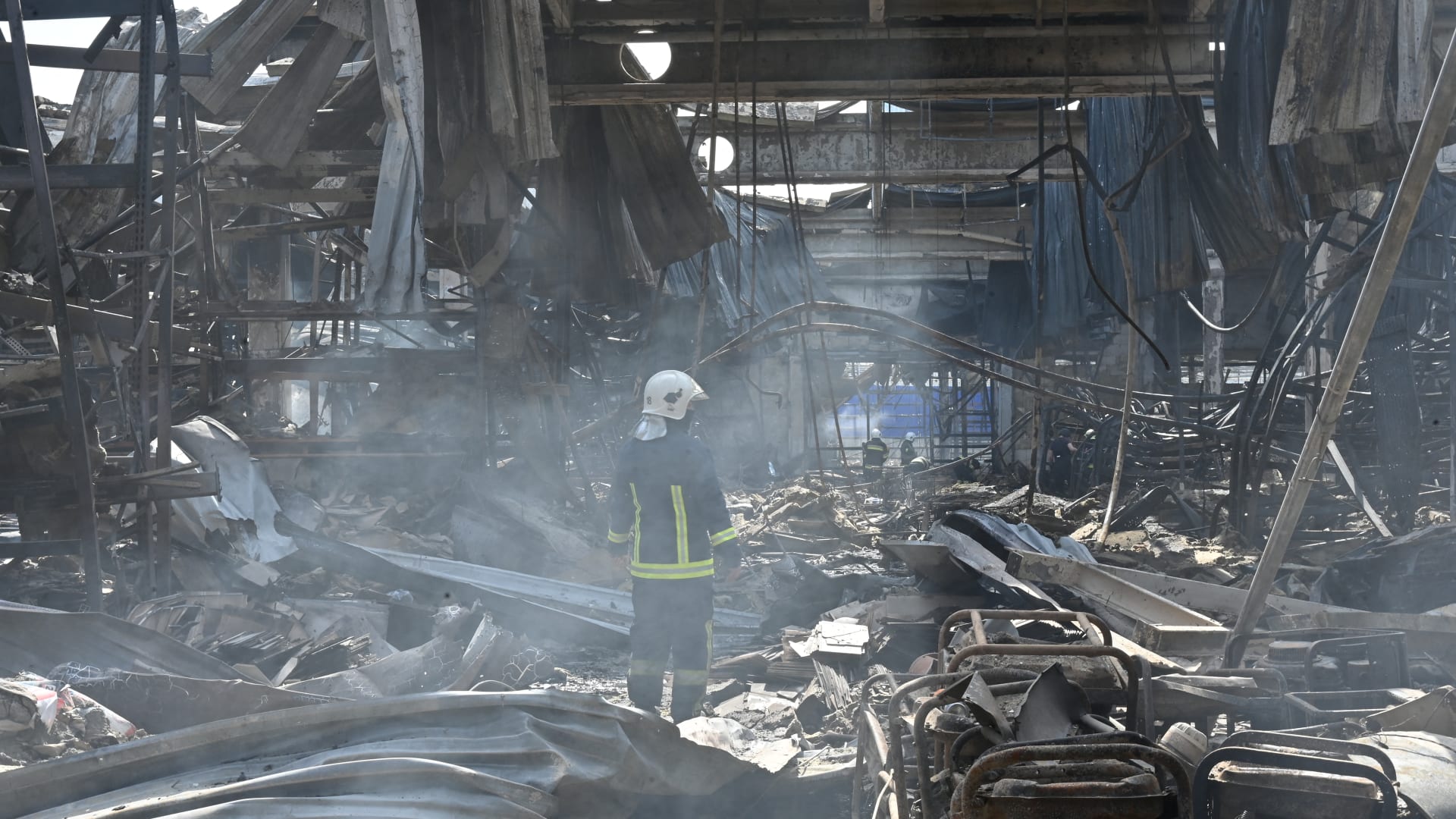
Five people were killed in violent Russian attacks on Ukraine, where intense airstrikes targeted several regions across the country. These attacks, considered among the worst in ten days, came after warnings from Ukrainian President Volodymyr Zelensky regarding an imminent assault. The strikes caused significant damage in eleven regions, including Kharkiv, Zaporizhzhia, Kherson, and Poltava.
In the details of the attacks, a 61-year-old woman was killed when a missile struck an electric train in Kharkiv. Additionally, two people were reported dead and 12 others injured in Poltava due to the targeting of residential buildings and a hotel. In Kherson, a civilian was killed when their home was shelled. An elderly woman was injured in the Dnipropetrovsk region, while a bus driver sustained injuries from a drone attack in Sumy.
Details of the Attacks
Russia launched an intensive aerial assault on Ukraine, utilizing seven ballistic missiles, 23 cruise missiles, and 392 drones. Ukrainian air defense units managed to intercept 25 missiles and 365 drones, reflecting Ukraine's ongoing efforts to protect its territory. Sirens were sounded across the country, indicating the state of emergency Ukraine is experiencing amid these repeated attacks.
President Zelensky, in his statements, emphasized the urgent need to bolster air defenses to protect lives from Russian attacks, noting that the recorded figures highlight the necessity for continued support for Ukraine. He pointed out that such attacks have become almost weekly or every ten days, raising concerns about Ukrainian national security.
Background & Context
These attacks come at a time when Ukraine is witnessing an escalation in the conflict with Russia, as the pace of Russian advances in eastern Ukraine has significantly slowed. The Ukrainian president indicated that Russia might exploit the conflict in the Middle East to intensify its attacks on Ukraine, reflecting growing concerns about the impact of regional conflicts on the Ukrainian struggle.
On another front, the Moldovan government condemned the attacks on energy infrastructure in the Odesa region, which led to the cutting of the main power line connecting Moldova to Europe. Moldovan President Maia Sandu warned that the situation remains fragile, pointing out that Russia is responsible for these attacks that threaten regional security.
Impact & Consequences
These attacks underscore the rising tensions in the region, with increasing concerns about the impact of the Ukrainian conflict on European security. The attacks directly affect civilian lives, causing casualties and significant material damage. This escalation serves as a reminder to the international community of the need for effective action to stop the violence and achieve peace in the region.
At the same time, Ukraine continues to seek international support to enhance its defensive capabilities, as fears grow that the conflict may last longer than expected. Zelensky noted that negotiations with the United States on how to end the Russian invasion are still ongoing, but face significant challenges.
Regional Significance
The events in Ukraine indirectly affect the Arab region, contributing to rising energy prices and essential goods. The Ukrainian conflict may also impact food security in some Arab countries that rely on Ukrainian grains. Under these circumstances, Arab countries must closely monitor developments and consider strategies to address potential crises.
In conclusion, the situation in Ukraine remains tense, with ongoing Russian attacks and their consequences for civilians. The need for effective international support to protect lives and achieve peace has become more urgent than ever.