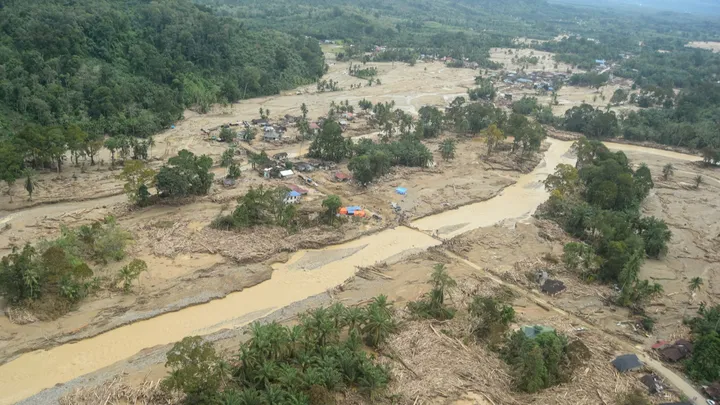
Heavy rainfall in Indonesia has caused flooding that has affected approximately 400 families in the Tabacholi district, located on the northern island of Sumatra. According to reports from the National Disaster Management Agency (BNPB), the flooding began last Saturday, resulting in water levels rising in the affected areas by 10 to 20 centimeters.
The most affected areas include Tabian Nauli II village in the Tabian Nauli region, as well as Bondok Batu village and Pasir Bidang village in the Sarudik area. Local emergency teams have assessed the situation and provided necessary assistance to those affected.
Details of the Incident
Abdul Mahari, head of the data and information center at the agency, reported that the floods have submerged many homes, prompting emergency teams to intervene and provide support. Efforts have been coordinated with local authorities to ensure the safety of residents and rehabilitate the affected areas.
Although the water levels have started to recede, emergency teams remain on-site to monitor the situation and ensure a safe return for residents to their homes. Abdul Mahari confirmed that the situation is improving, with residents beginning to return home starting Sunday.
Background & Context
Indonesia is one of the countries that frequently experiences flooding, especially during the rainy season. This is due to its geographical location, which includes many rivers and mountains, making it susceptible to climate changes. In recent years, the country has witnessed an increase in the severity of natural disasters, necessitating improved disaster management strategies.
Historically, Indonesia has faced numerous natural disasters, including earthquakes and floods, impacting millions of lives. Therefore, enhancing community awareness on how to deal with natural disasters has become essential.
Impact & Consequences
These floods underscore the urgent need to strengthen infrastructure to cope with natural disasters in Indonesia. The economic and social impacts of such disasters can be devastating, leading to property loss and crop destruction, which increases the suffering of local populations.
The rapid response from local authorities reflects the importance of effective planning and disaster management. The Indonesian government must work on developing effective strategies to mitigate the impacts of natural disasters, including improving the early warning system and providing necessary support to affected communities.
Regional Significance
Although the flooding in Indonesia may seem distant from the Arab region, the climate changes leading to these disasters affect the entire world. Climate change results in increased severity of natural disasters, requiring Arab countries to also enhance their strategies to face these challenges.
It is crucial for Arab countries to collaborate with other nations to exchange knowledge and experiences in disaster management, as climate challenges know no borders. Strengthening regional and international cooperation can contribute to improving responses to natural disasters and protecting communities from their negative impacts.