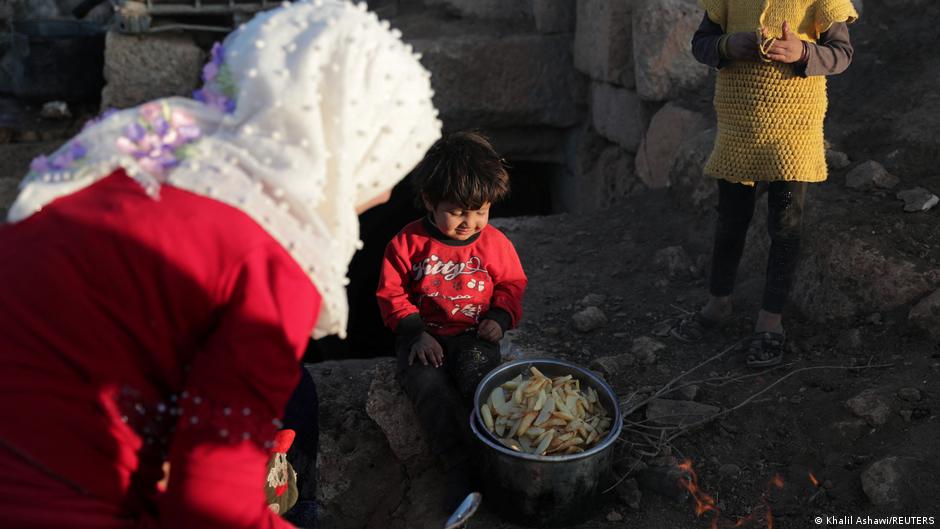
Idlib's camps in northwestern Syria are in a state of chaos and destruction after floods swept through the area, leading to the destruction of many tents and the loss of essential belongings for the displaced. The displaced individuals, who are already suffering from harsh humanitarian conditions, now face a real nightmare as their nights have turned into continuous suffering.
Nuhida Al-Hussein, one of the displaced women, recounts how she had to leave with her children under difficult circumstances in search of a safe place, stating: "Almost everything was damaged: tents, clothes, and blankets." Her story reflects the tragedy of thousands of displaced individuals living in fragile camps, where climatic conditions change rapidly, threatening their lives daily.
Details of the Event
In the "Abad Al-Rahman" camp in the Sarmada area, Raed Abu Tamer, the camp manager, confirmed that the waters swept away most of the tents, forcing residents to seek refuge in mosques and old cars. Hussein Abu Al-Jawad, one of the residents, noted that what they witnessed exceeds everything they have experienced during years of displacement, as the waters completely flooded the camp, leaving children and women stranded amid the floods.
This incident is part of an escalating crisis, as the camps suffer from weak infrastructure and a lack of effective drainage systems, making them vulnerable to natural disasters. The recent floods have highlighted the fragility of life in the camps, where every rainfall leads to the destruction of tents and the displacement of residents, in addition to exacerbating diseases and psychological pressures.
Background & Context
Idlib has been under the burden of ongoing conflict for more than ten years, resulting in the displacement of millions of residents. Humanitarian conditions in the camps are deteriorating, with displaced individuals lacking adequate shelter and healthcare. Moreover, poor planning and a lack of logistical support make the camps highly susceptible to natural disasters.
The health and psychological risks are increasing under these conditions, as stagnant water and humidity contribute to the spread of diseases, further increasing the suffering of displaced individuals who have lost their homes for years.
Impact & Consequences
These conditions require urgent intervention from the international community to provide sustainable solutions. Humanitarian organizations are calling for improvements in drainage networks and the provision of flood-resistant housing. Additionally, enhancing local readiness to face any future flood waves is essential to avoid repeating this tragedy.
The Syrian Civil Defense teams have conducted extensive rescue operations, carrying out more than 500 field operations, including opening waterways and pumping rainwater from homes. However, there remains an urgent need for greater support to address these disasters.
Regional Significance
This crisis highlights the humanitarian challenges faced by conflict-affected areas in the Arab world. The camps in Idlib are not the only ones suffering from these conditions; they are a model of larger problems confronting displaced individuals in various countries. Ignoring these crises could exacerbate humanitarian conditions, necessitating a swift and effective response from the international community.
In conclusion, the stories of the displaced in Idlib stand as a testament to the fragility of life in the camps, and with each new wave of rain, their suffering is renewed, making the hope for safe shelter and a dignified life more urgent.