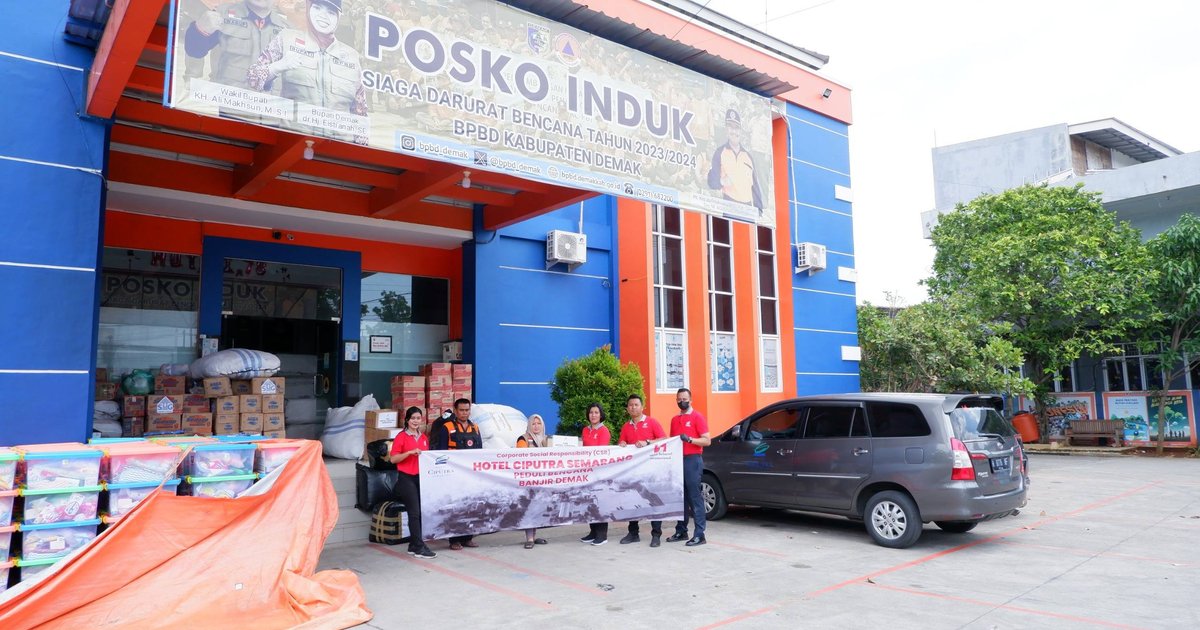
The Indonesian National Disaster Management Agency (BNPB) announced that the number of displaced individuals due to flooding in the Demak region has risen to 2839. This increase is attributed to the heavy rainfall that the area has experienced, which caused the Tuntang River to overflow and led to the collapse of several dams, resulting in many villages being submerged.
Abdullah Mahari, the head of the Data, Information, and Communication Center at the agency, stated that the displaced individuals are spread across several locations, including the Babel Rohim Mosque, which is hosting 200 people, and the Rodotul Janah Mosque, which accommodates 500 people, in addition to other shelters such as municipal offices and schools.
Details of the Incident
So far, the floods have impacted eight villages across four districts: Guntur, Karang Tengah, Wonosegoro, and Kebonagung. Reports indicate that the dams in the Guntur area, particularly in the Trimoli village, have collapsed at two points, causing water levels in some areas to rise to 150 centimeters.
Mahari also noted that some of the displaced individuals are suffering from health issues, and necessary care has been provided by the local health department. The situation in the affected villages requires a rapid response to assist those impacted.
Background & Context
Flooding in Indonesia is a recurring phenomenon, especially during the rainy season. Historically, the country has experienced numerous natural disasters that have led to population displacement and property destruction. The current floods in Demak remind us of past incidents where heavy rainfall caused significant damage across various regions, necessitating improvements in infrastructure to tackle these challenges.
These situations require cooperation between local governments and national and international agencies to ensure that necessary assistance is provided and protection is offered to affected populations. Immediate responses should also include long-term plans to adapt to climate change.
Impact & Consequences
The floods are affecting the daily lives of residents, hindering movement, destroying crops, and leading to the loss of livelihoods. Additionally, the health situation may deteriorate due to the increase in diseases resulting from contaminated water. It is crucial for authorities to provide food and medical assistance to the displaced individuals.
This crisis demands a swift response from the Indonesian government, as the head of the National Disaster Management Agency has been tasked with coordinating with local authorities to identify urgent needs. Teams from the agency have also been dispatched to the affected areas to provide support and assistance.
Regional Significance
Natural disasters such as floods are global issues that affect many countries. In the Arab region, some countries face similar challenges due to climate change, which necessitates enhanced regional cooperation to address these crises. Arab nations can benefit from Indonesia's experiences in disaster management and flood preparedness.
In conclusion, the floods in Demak highlight the urgent need to strengthen disaster preparedness and provide necessary support to those affected, reflecting the importance of international and regional cooperation in addressing these challenges.