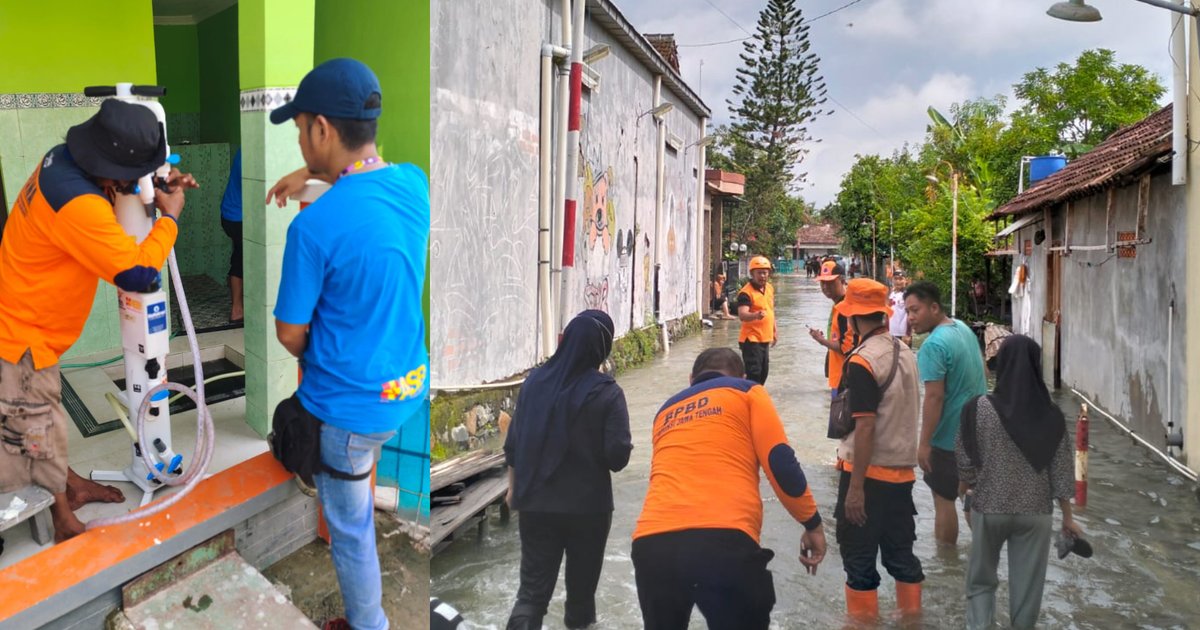
Heavy rainfall in Indonesia has resulted in widespread flooding in Demak, where 671 hectares of agricultural land across nine villages have been affected, prompting the evacuation of over 2800 people from their homes. The floods are attributed to river water overflow and dam failures at several locations, exacerbating the plight of local residents.
Agus Sukiyono, the head of the disaster management agency in Demak, stated that the water levels in agricultural areas vary from one region to another, complicating the situation further. Additionally, 2116 homes, 29 places of worship, and 18 schools have been impacted by the flooding, highlighting the scale of the disaster facing the region.
Details of the Incident
The villages of Trimulyo and Sidoharjo have been particularly affected, with the damaged area in these two villages alone amounting to approximately 660 hectares. This agricultural land is primarily used for rice cultivation, with the affected plants being around 30 days old, suggesting that losses may be less severe compared to a full agricultural season.
Agus Herwan, the agricultural director in Demak, added that the government will provide assistance to affected farmers, including the provision of new seeds for planting in the event of significant losses. Reports of dam failures at various sites have also surfaced, worsening the situation in the area.
Background & Context
Flooding in Indonesia is a recurring phenomenon, with the country experiencing heavy rainfall seasons annually. However, climate change and increased human activity have contributed to the exacerbation of these events. In recent years, the country has witnessed an increase in the severity of floods, negatively impacting agriculture and the local economy.
Historically, Indonesia has relied heavily on agriculture as a primary source of livelihood, making flooding a significant threat to food security in the country. As the population grows, the need to improve infrastructure to address these challenges becomes increasingly urgent.
Impact & Consequences
The floods in Demak have had negative repercussions on the local community, as residents face difficulties returning home after evacuation. The damage to schools and public facilities further complicates the situation, requiring children to wait extended periods before resuming their education.
Economically, flooding can lead to a decline in agricultural production, affecting farmers' incomes and increasing poverty rates in the region. The demand for humanitarian aid will also rise, potentially placing additional pressure on government resources.
Regional Significance
The floods in Indonesia exemplify the challenges faced by many developing countries in addressing climate change. In the Arab region, some countries face similar challenges, such as droughts and floods, necessitating effective strategies to adapt to these phenomena.
Arab nations can learn from Indonesia's experiences in managing natural disasters by enhancing infrastructure and improving emergency response capabilities, which can help mitigate the damage caused by natural disasters.