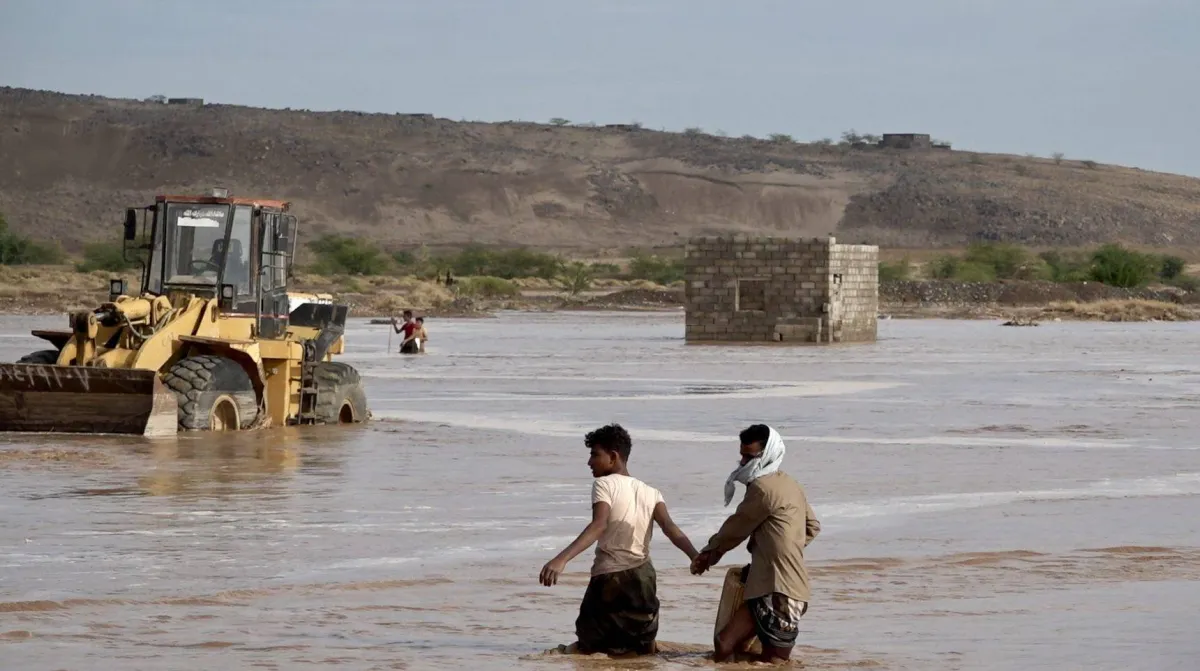
Heavy rainfall and flash floods in the western coast of Yemen have led to the deaths of 22 people, including children and women, marking a new humanitarian disaster for the country. These floods have caused widespread destruction of homes and infrastructure, while the landmines left by the Houthis have complicated the situation, endangering the lives of residents and hindering relief efforts.
More than 430 homes have been damaged, with 38 homes completely destroyed, while over 400 homes suffered partial damage. Families have lost their livelihoods after approximately 460 livestock perished and another 600 went missing. This disaster has also impacted agricultural lands, as the floods washed away soil and crops, increasing the suffering of residents who rely on farming as their primary source of income.
Details of the Incident
The floods swept through the districts of Al-Mokha, Mawza, and Al-Wazi'ah in Tai'z Governorate, with the most severe damage occurring in Al-Mokha, particularly in the neighborhoods of Al-Najiba and Al-Gharafi. Areas such as Al-Hamli, Al-Safaliya, and Al-Mafraq in Mawza experienced varying degrees of property damage. Currently, 5 individuals are still missing, and the bodies of two children swept away by the floods were found in the Al-Sabala area, reflecting the magnitude of this humanitarian catastrophe.
More alarmingly, the floods have caused the movement of landmines and explosive devices, increasing the risks to civilian lives. Anti-tank mines and explosive devices have been discovered in residential and agricultural areas, raising concerns about the recurrence of such incidents with any new rainfall.
Background & Context
This disaster comes at a time when Yemen is suffering from a severe humanitarian crisis, with approximately 22.3 million people in need of some form of humanitarian assistance. The situation has worsened due to the ongoing conflict and difficult economic conditions, making humanitarian responses more complicated. Additionally, landmines pose a constant threat to the population, having caused numerous fatal incidents in the past.
Engineering teams are currently working to survey the affected areas to locate mines and secure safe pathways for residents, in an effort to avoid further casualties. At the same time, government agencies have intensified their efforts to provide humanitarian aid, sending relief convoys that include food supplies and clean water to affected families.
Impact & Consequences
This disaster underscores the urgent need for immediate humanitarian support, especially given the difficult conditions faced by the population. The continued presence of landmines complicates relief efforts and increases the risk of new incidents occurring. Government entities have expressed their readiness to intensify their efforts, but field challenges remain significant.
In light of these circumstances, a comprehensive response from the international community is required to ensure the necessary funding is available to assist those affected. Furthermore, the need for improved management and equitable distribution of aid remains essential to ensure it reaches those in need.
Regional Significance
The humanitarian situation in Yemen serves as a stark example of the crises faced by many Arab countries. As humanitarian needs in Yemen continue to rise, other nations are encountering similar challenges, necessitating greater coordination between Arab states and the international community to effectively address these crises.
In conclusion, the situation in Yemen requires urgent attention, as humanitarian challenges are escalating amid ongoing conflict and natural disasters, prompting swift action from all concerned parties.