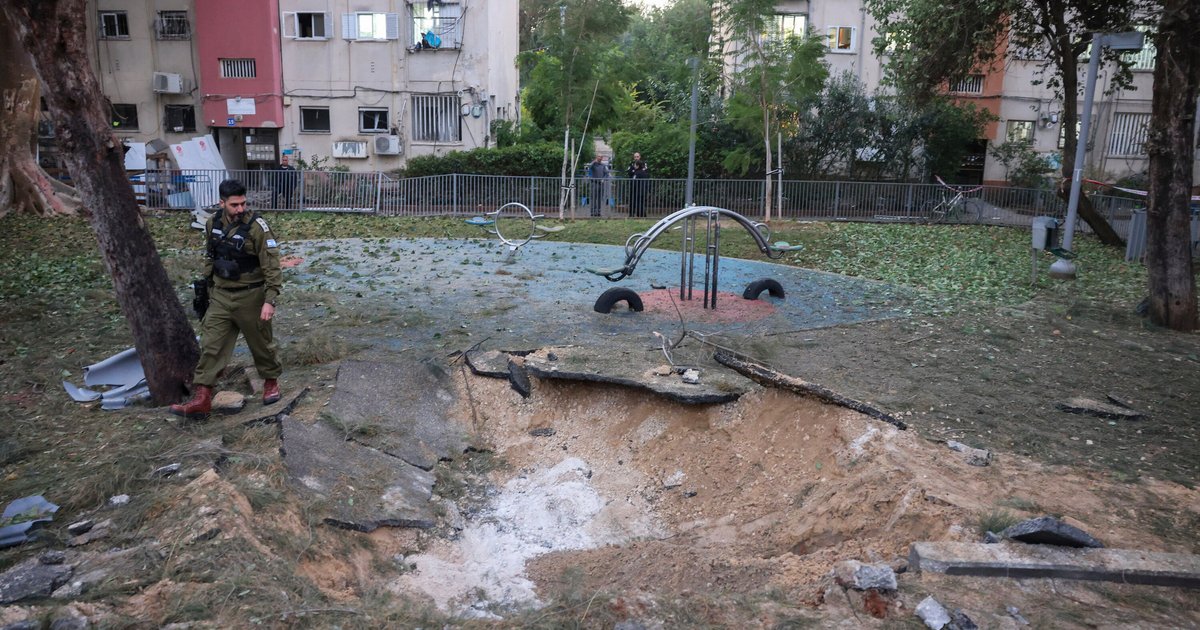
Floodwaters inundated the streets of the Bnei Brak area in Tel Aviv after the sewage system was damaged by shrapnel from cluster missiles fired from Iran in the early hours of Thursday morning. This incident comes amid escalating tensions between Iran and Israel, with the latter experiencing one of the widest waves of missile attacks since the beginning of the confrontation.
The open-source unit of "Al Jazeera Net" verified the authenticity of the circulated footage that the Israeli military censorship allowed to be published, which showed water flowing in the streets, confirming the extent of the damage to the infrastructure.
Details of the Incident
The Israeli newspaper "Haaretz" reported that the damage to the sewage network led to streets being flooded with water, while the newspaper "Maariv" noted that flooding occurred in the area due to damage to the water infrastructure. Israeli accounts also indicated property damage as a result of the missile strikes, with the ambulance service announcing that five people sustained varying injuries in the Bnei Brak area.
Israeli radio reported that shrapnel from cluster missiles fell in 11 locations within the greater Tel Aviv area, causing material losses in Ramat Gan, Bnei Brak, and Tel Aviv. This attack coincided with Hebrew reports of damage to the water network, in addition to significant damage to numerous vehicles in the same area.
Background & Context
Relations between Iran and Israel are experiencing increasing tension, with missile attacks being part of the ongoing conflict between the two parties. Israeli Channel 14 confirmed that this attack represents the largest escalation of its kind since the beginning of the war, as Tehran launched ten ballistic missiles towards Israeli cities for the first time.
At the same time, a report from the Israeli army radio described what happened as exceptional, noting that most of the missiles were equipped with cluster warheads that scattered over wide areas, increasing the risk of collateral damage to civilians.
Impact & Consequences
The consequences of this bombardment extend beyond material damage, as these events raise significant concern within Israeli society, forcing residents to remain in shelters for extended periods of up to 20 minutes. This situation reflects a state of heightened security alert amid escalating threats.
Moreover, these attacks could impact regional relations, potentially leading to reactions from neighboring countries and increasing tensions in the area. At the same time, they may bolster military positions on both sides, raising the likelihood of future escalation.
Regional Significance
These events are part of the broader conflict in the region, reflecting the tensions between Iran and Israel and their impact on regional security. Such attacks may increase divisions among Arab countries, especially amid existing political tensions.
The escalation of attacks could also reflect on the security policies of neighboring Arab states, necessitating enhanced security cooperation to address the growing threats. Ultimately, these events serve as a reminder that stability in the region remains fragile, and escalation could lead to dire consequences for all involved.