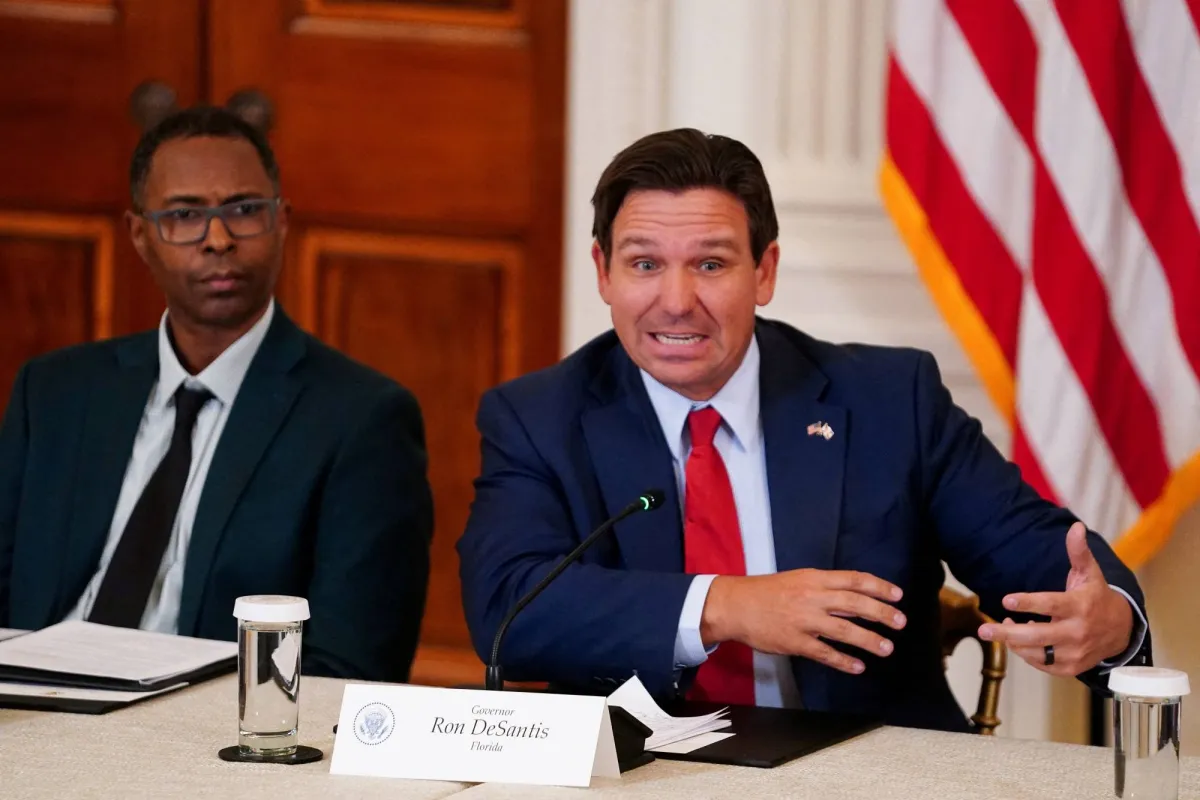
In a controversial move, Florida Governor Ron DeSantis has signed a new law granting local authorities the power to classify any group as a 'terrorist organization.' This law comes at a time when concerns are rising about its impact on freedom of expression and individual rights, as it allows for the expulsion of students from their educational institutions if they are deemed to support groups classified as terrorist.
The new law, signed on Monday, gives the law enforcement commissioner, the governor, and state government broad powers to determine any organization involved in extremist activities. Once a group is classified as a terrorist organization, it can be forcibly dissolved, and government funding allocated to it can be frozen, raising questions about the potential impact on political and social activities within the state.
Details of the Legislation
This law follows DeSantis's earlier executive order last year that classified the Council on American-Islamic Relations (CAIR) as a foreign terrorist organization. This order sparked strong reactions from human rights groups, which viewed this classification as a violation of individual rights and a restriction on freedom of expression. The council filed a lawsuit challenging this classification, which was later halted by a judge.
In a statement, the CAIR described the new law as 'repressive' and unconstitutional, indicating that this move could lead to the marginalization of communities that express their opinions peacefully. They also warned that this law could open the door for targeting specific groups based on their political or religious beliefs.
Background & Context
Historically, the United States has witnessed numerous debates regarding the limits of freedom of expression, particularly in the context of counter-terrorism. Some laws in the past have been used to justify repressive measures against certain groups, raising concerns among rights defenders. This law is seen as part of a broader trend pursued by DeSantis, aimed at enhancing government powers in the face of what he perceives as threats to national security.
Concerns are mounting that these policies could lead to the marginalization of communities that express their opinions peacefully, threatening the cultural and religious diversity in the country. Additionally, this law may impact students seeking to express their views on college campuses, exacerbating tensions within academic environments.
Impact & Consequences
This law could have far-reaching implications for freedom of expression in the United States, potentially leading to increased surveillance of political and social activities. It may also contribute to heightened feelings of fear and anxiety among diverse communities, which could exacerbate social divisions.
Moreover, students expressing support for certain groups may face significant pressures, impacting their educational experience. Critics argue that this law could create an unsafe environment for students from diverse cultural and religious backgrounds.
Regional Significance
In the context of the Arab region, these policies may raise concerns about how they will affect relations between the United States and Arab countries. They could reinforce negative perceptions of U.S. policies in the region, increasing tensions between governments and their populations.
Furthermore, classifying groups as terrorist organizations may influence how Arab countries deal with human rights issues, as some governments might use this law as a pretext to suppress dissent. Thus, this move could have profound implications for the political landscape in the region.
In conclusion, the law classifying groups as terrorist organizations in Florida represents a controversial step that may impact freedom of expression and individual rights. As concerns about its implications grow, the question remains about how these policies will affect American society and international relations.