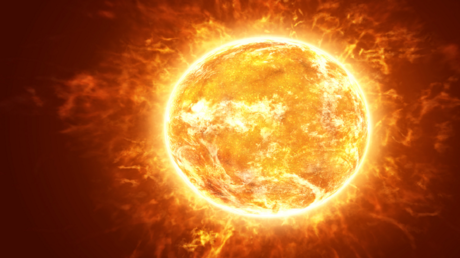
Russian astronomer Alexander Alekseev, a researcher at the Physics and Astronomy Department of the Tsialkovsky Museum of Contemporary Art, has unveiled intriguing predictions regarding solar activity. He noted that the sun is expected to experience a gradual decline in its activity by 2030, which may affect the climate and Earth in general.
These predictions include the possibility of sporadic solar flares, which could have varying effects on our planet. Although these solar phenomena are expected to be less intense than in previous periods, they remain a concern for scientists, as they can disrupt communication systems and modern technology.
Details of the Event
Alekseev explained that solar activity follows a natural cycle lasting about 11 years, characterized by alternating high and low activity. However, studies suggest that the upcoming cycle may be less active than its predecessor, indicating that Earth could face a period of solar calm.
This decrease in solar activity could have ramifications for the climate, as the sun plays a crucial role in regulating temperatures on Earth. Therefore, any change in solar activity could influence weather patterns and global climate.
Background & Context
Historically, Earth has experienced periods of both high and low solar activity, with some of these periods linked to notable climate changes. For instance, during the 17th century, Europe endured a period known as the Little Ice Age, which is believed to have been associated with reduced solar activity.
In recent years, research has intensified regarding the sun's impact on climate, as scientists strive to understand how changes in solar activity affect Earth. These studies are vital for comprehending current and future climate changes.
Impact & Consequences
If Alekseev's predictions come to fruition, the decline in solar activity could lead to changes in weather patterns, potentially affecting agriculture and water resources. Countries reliant on agriculture may face new challenges amid these changes, necessitating new adaptation strategies.
Moreover, fluctuations in solar activity could impact renewable energy sources, such as solar energy, prompting a reevaluation of energy strategies in the region.
Regional Significance
For the Arab region, a decrease in solar activity may mean alterations in weather patterns, which could influence agriculture and water availability. Nations dependent on farming might encounter new challenges due to these changes, requiring innovative strategies for adaptation.
Additionally, variations in solar activity could affect renewable energy resources, such as solar power, necessitating a reassessment of energy strategies in the area.
In conclusion, it remains crucial to monitor developments in this field, as understanding solar activity and its impacts can aid in making informed decisions to address future challenges.