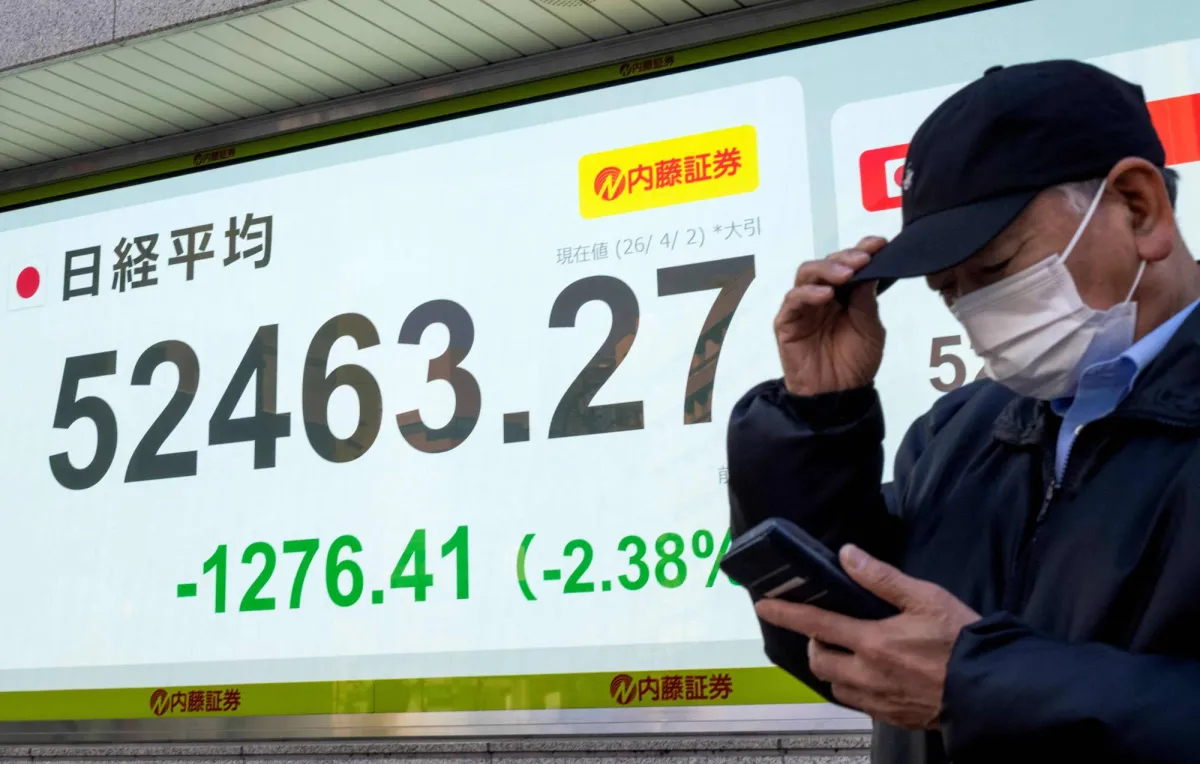
Japanese stocks recorded the largest weekly outflow of foreign capital in two decades, with total sales by foreign investors reaching 4.45 trillion yen ($27.92 billion) during the week ending March 28. This decline comes amid rising oil prices, which have heightened fears regarding global growth and corporate profits.
As financial markets faced a sharp downturn, foreign investors sold approximately 8.35 trillion yen worth of Japanese stocks since the onset of the war in Iran on February 28. Statements from U.S. President Donald Trump regarding potential military strikes on Iran have fueled these concerns, negatively impacting market performance.
Market Performance Details
Japanese stock prices fell significantly on Thursday, with the Nikkei index dropping by 2.38% to close at 52,463.27 points, after having gained earlier in the session. The broader Topix index also declined by 1.61%, closing at 3,611.67 points. Trump's comments, in which he indicated that the U.S. military might conduct further strikes on Iran, affected investor sentiment, prompting them to sell stocks to realize profits.
In a related context, Japanese bonds also experienced outflows, with sales reaching 6.81 trillion yen, marking the largest weekly exit since December 2022. Foreign investors abandoned long-term bonds worth 2.65 trillion yen and short-term bonds worth 4.16 trillion yen, reflecting concerns about the global economic situation.
Background & Context
These developments come at a sensitive time, as the global economy grapples with the repercussions of the war in the Middle East, which has significantly impacted oil prices and financial markets. Japanese markets have witnessed their worst monthly performance since the 2008 global financial crisis, increasing pressure on investors.
Moreover, rising oil prices have heightened inflation fears, prompting investors to reassess their investments in Japan. Some analysts have indicated that uncertainty regarding the future of the war in Iran could lead to further declines in financial markets.
Impact & Consequences
Concerns are growing that instability in the Middle East could negatively affect global economic growth, which may reflect on the performance of Japanese companies. Some experts have noted that the continuation of these conditions could lead to a decline in foreign investments in Japan, adversely affecting the local economy.
Additionally, the rise in yields on Japanese government bonds, which have reached their highest level since February 1999, reflects a state of anxiety in the markets. This situation may increase pressure on the Bank of Japan to raise interest rates in the future, potentially impacting economic growth.
Regional Significance
Events in Iran directly affect the Arab region, where fears of escalating conflict in the Middle East have increased. The continuation of the war could exacerbate economic crises in neighboring countries, heightening political and social tensions.
Furthermore, rising oil prices due to the conflict may impact the economies of oil-producing Arab nations, potentially increasing revenues while simultaneously raising living costs in consuming countries.
In conclusion, the situation in Japanese financial markets remains contingent on developments in the Iran war, necessitating close monitoring by investors to assess available risks and opportunities.