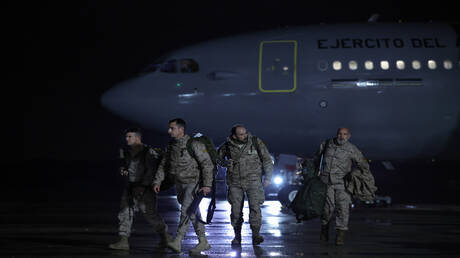
An Iraqi security source has announced that all foreigners present at the Joint Operations Command headquarters in Iraq have departed. This decision comes at a time when security situations are worsening and regional tensions are intensifying, indicating the possibility of significant changes in the country’s security and military strategies.
Questions arise regarding what this step reflects about the changing role of foreign forces in Iraq, which had significantly contributed to counter-terrorism operations and achieving relative stability following the war against the Islamic State. Moreover, this move has raised concerns among many local and international observers about the future of Iraqi security amid the complete withdrawal of foreign forces.
Details of the Departure
The departure of foreign personnel from the Joint Operations Command aligns with a broader plan aimed at reducing foreign military presence in Iraq. In this context, the source did not provide specific details about the number of foreigners who left or the direct reasons behind this withdrawal. Nevertheless, the repeated statements from the Iraqi government regarding sovereignty and foreign countries overstepping their roles reflect a general shift in Iraq's policy towards foreign support operations.
This withdrawal is seen as part of the government's efforts to regain full control over internal security, reflecting the current administration's desire to end its reliance on external support in confronting security threats.
Background & Context
Over the past years, Iraq has witnessed a profound impact from foreign interventions following the US invasion in 2003. The war against the Islamic State (ISIS) in 2014 imposed a central role for foreign military powers, especially American forces, which played a vital role in supporting Iraqi troops.
As time passed, there emerged a political will among Arab nations to eliminate foreign military presence and uphold national sovereignty. Despite the victories achieved against terrorist organizations, the security situation remains fragile in some areas, indicating the challenges Iraq faces in ensuring its stability.
Impact & Consequences
The departure of foreigners from the Joint Operations Command could create a gap in military expertise, which may affect the immediate response capabilities to security challenges. The Iraqi forces will have to rely more on themselves, which could increase the difficulty of combating extremist elements that may seek to exploit this transitional phase.
On the other hand, this development could represent an opportunity to enhance the government’s plans in building locally capable security forces. However, this process requires time and may face tests from armed organizations.
Regional Significance
The withdrawal of foreign troops from Iraq may have ramifications for political and security dialogues in the region at large. The conclusion of this phase could encourage other countries in the region to take similar steps to emerge from beneath the umbrella of external support.
Simultaneously, this situation may affect the policies of major regional powers such as Iran and Turkey towards Iraq, as these countries might seek to exploit the new circumstances to bolster their interests in the region.
In conclusion, the security situation in Iraq remains suspended in a circle of uncertainties, as both internal and external challenges increase, necessitating the Iraqi government to develop comprehensive strategies that ensure Iraq's stability in the upcoming phase.