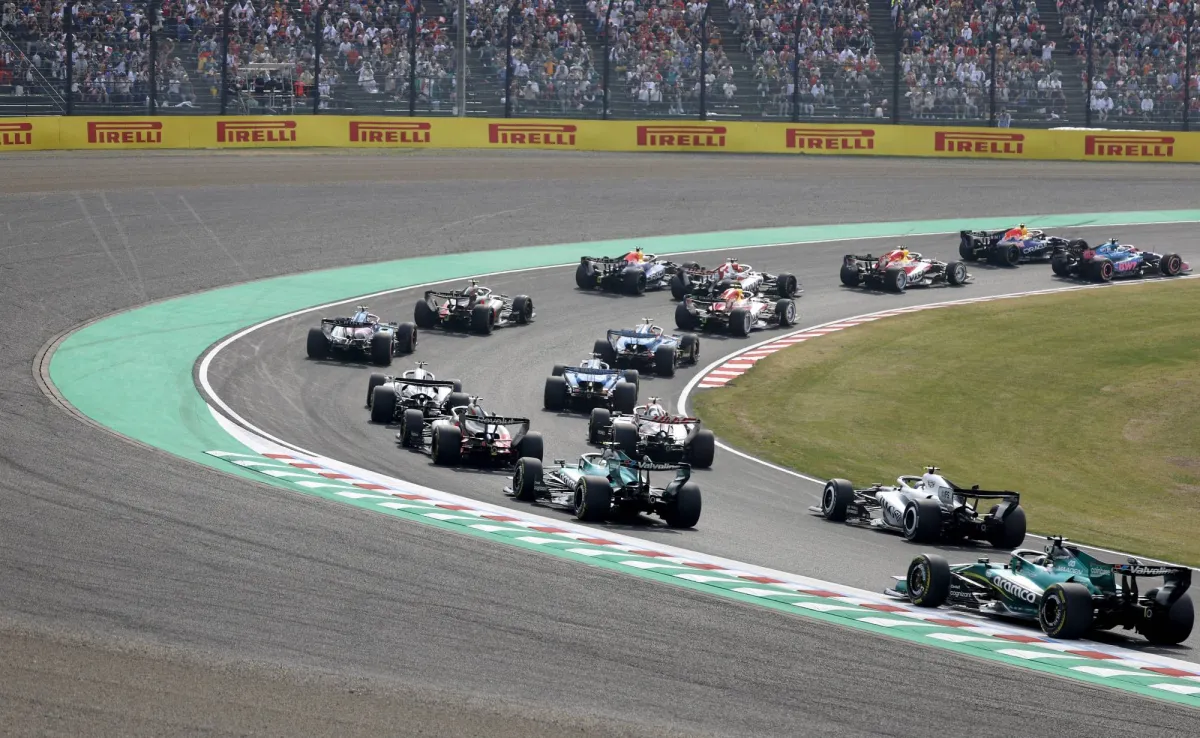
The Formula 1 World Championship has entered a mandatory five-week break after the conclusion of the Japanese Grand Prix, which highlighted numerous challenges that necessitate reflection and assessment following the implementation of new rules.
The third race in the era of new engines revealed shortcomings in the reforms described as the most comprehensive in the history of Formula 1, as these issues were not apparent in the previous races in Australia and China.
Event Details
With the introduction of hybrid power units, which are now distributed nearly 50-50 between electric power and combustion energy, a new dimension of energy management in races has emerged. This change requires drivers to slow down when entering corners to charge the battery, complicating their strategies during the race.
Additionally, drivers must contend with what is known as "excessive energy draw," where the power unit automatically directs energy from the engine to the battery, resulting in reduced speed despite full throttle. These new challenges have raised concerns among drivers, who expressed their frustration with these regulations.
Background & Context
The governing body of the Formula 1 World Championship announced that meetings will be held to evaluate the new rules during the break, especially after the cancellation of races in Bahrain and Saudi Arabia due to regional conflicts. The International Automobile Federation has made adjustments to the energy management regulations, aiming to enable drivers to perform at their maximum potential without energy constraints during qualifying sessions.
Four-time world champion, Max Verstappen, a driver for Red Bull, expressed his dissatisfaction with the performance in qualifying sessions, indicating that he is contemplating his future in the sport due to his lack of enjoyment driving the new cars. Meanwhile, Lando Norris, a driver for McLaren, noted that speed has significantly decreased, affecting the competitive spirit.
Impact & Consequences
Although the new rules have diminished excitement in qualifying sessions, they have added greater vibrancy to the races, which have seen continuous overtaking exchanges among drivers. However, incidents such as the one involving Oliver Behrman, who suffered a serious crash due to significant speed differences between cars, have highlighted safety risks in these races.
Reactions to these incidents have been strong, with many drivers, such as Carlos Sainz, calling for necessary changes to enhance safety. In contrast, Toto Wolff, head of the Mercedes team, pointed out that some reactions were exaggerated, while James Vowles, head of Williams, emphasized the need to inject excitement into qualifying sessions without compromising the essence of racing.
Regional Significance
Formula 1 is one of the most popular sports in the world and has a significant impact on sports culture in the Arab region. With increasing interest in racing in the Middle East, such as Bahrain and Saudi Arabia hosting Formula 1 races, changes in regulations may affect how fans receive this sport.
Highlighting safety and performance issues may prompt organizers in the region to consider how to improve the experience for both fans and drivers alike. Amid these challenges, there remains hope that future adjustments will contribute to enhancing excitement and safety in upcoming races.