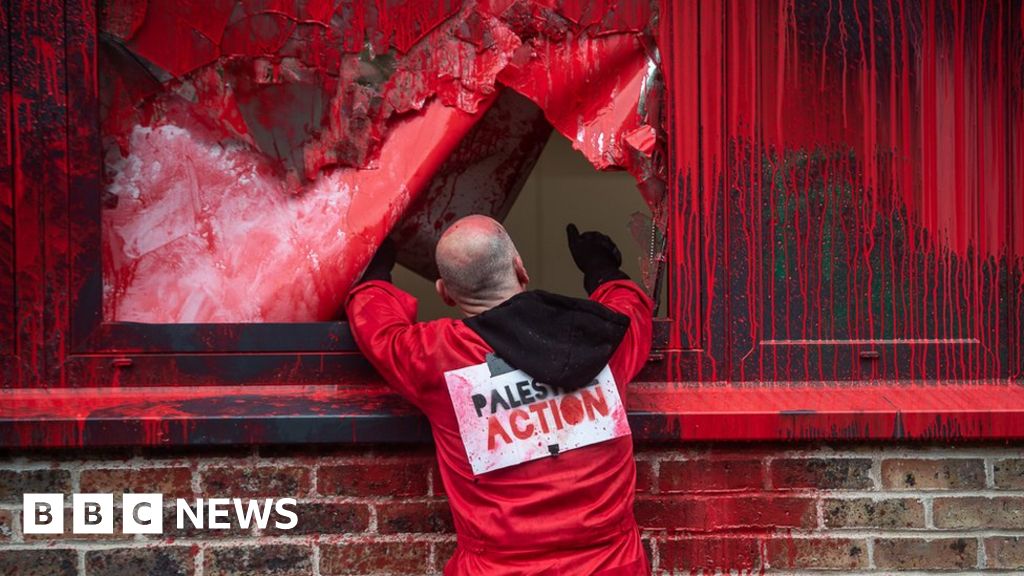
Four activists from the group 'Palestine Action' were convicted of vandalism at a factory owned by the Israeli defense company 'Elbit Systems', located near the city of Bristol in Britain. The incident occurred in August 2024, when the activists broke into the factory and destroyed property before clashing with security guards and police.
The four activists, identified as Charlotte Head (30 years old), Samuel Korner (23 years old), Leona Kamiwa (30 years old), and Fatima Rajwani (21 years old), used an abandoned prison van to gain access to the factory, where they vandalized equipment and devices valued at approximately one million pounds. Meanwhile, other activists were acquitted of the same charge.
Details of the Incident
During the trial, prosecutor Diana Hare indicated that the activists used tools such as chisels and hammers to destroy computers, equipment, and drones produced by the company. Their intention was to inflict as much damage as possible on the factory, which they believe manufactures military equipment used against Palestinians.
In the course of the incident, a police officer, Officer Kate Evans, sustained serious injuries when Korner struck her with a hammer, resulting in a broken spine. However, he was acquitted of the charge of grievous bodily harm with intent, as he asserted that he did not intend to harm anyone.
Background & Context
The group 'Palestine Action' was established to resist Israeli military activities, and recent years have seen a rise in protest activities against companies considered complicit in the Israeli-Palestinian conflict. The group was classified as a banned organization in July 2025, complicating the legal situation for the activists.
Palestinian activists abroad face increasing pressures, encountering legal and social challenges in their efforts to amplify their voices to the international community. The recent incident reflects escalating tensions between activists advocating for Palestinian rights and British authorities.
Impact & Consequences
This case illustrates how activists are seeking to employ unconventional methods to express their protests, raising questions about the limits of peaceful expression. The ruling against these activists may serve as a message to others considering similar actions.
At the same time, the case highlights discussions surrounding human rights in the Palestinian territories, where international support for Palestinian rights is crucial under current circumstances. The rise of protests in Western countries may contribute to increased awareness of the Palestinian cause.
Regional Significance
This incident is part of the larger picture of the Israeli-Palestinian conflict, as protests in Arab countries against Israeli policies are on the rise. Supporting Palestinian activists abroad may strengthen their position and increase pressure on Western governments to intervene.
Ultimately, the Palestinian cause remains at the heart of Arab concerns, as many seek to find peaceful and just solutions to the ongoing conflict. Events like this may enhance the fighting spirit among Arab youth and encourage them to engage in humanitarian issues.