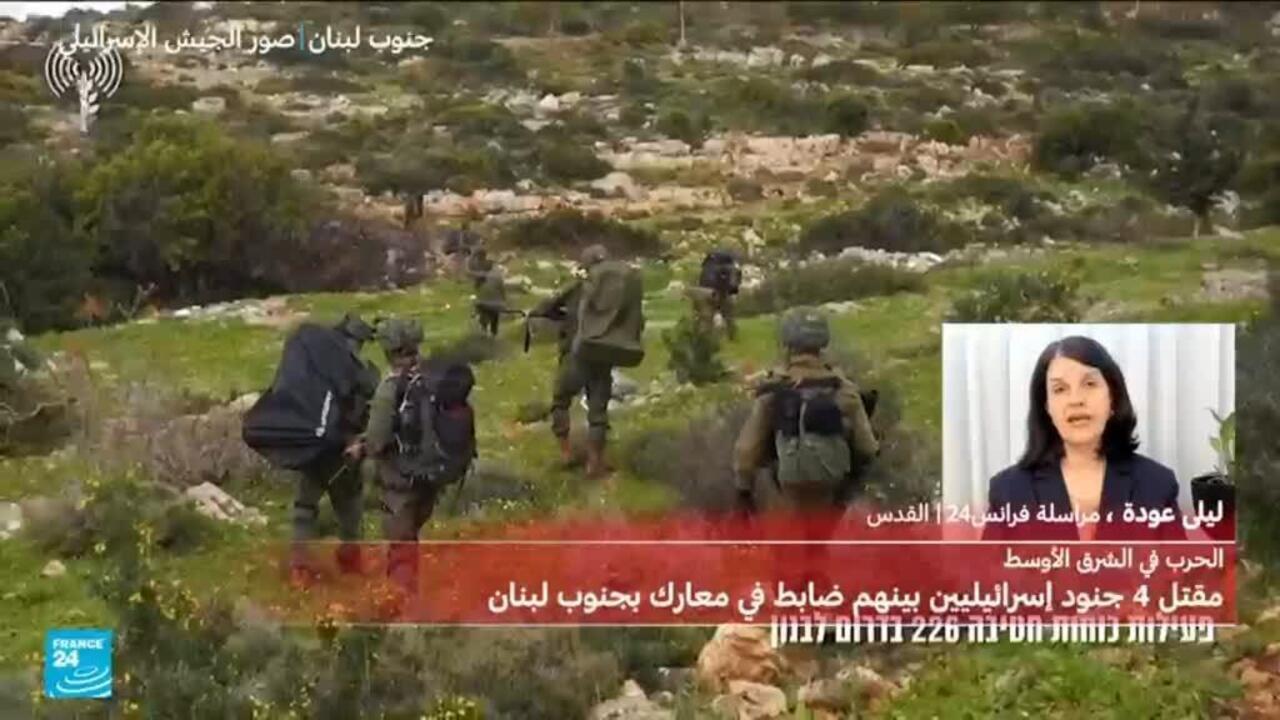
The Israeli army announced the death of four of its soldiers during clashes with Hezbollah fighters in southern Lebanon, bringing the total number of Israeli casualties since the resumption of hostilities on March 2 to ten. A statement from the army indicated that three of the deceased soldiers belonged to the same battalion, while the identity of the fourth soldier has not been disclosed.
These developments come at a time when southern Lebanon is witnessing an escalation of tensions between Israeli forces and Hezbollah, with clashes noticeably increasing. Military sources confirmed that the recent confrontations were among the most violent in a long time, reflecting the intensifying nature of the conflict in the region.
Details of the Incident
In detail, the Israeli army reported that the four soldiers were killed during fierce confrontations with Hezbollah fighters, who employed advanced weaponry. The names of three of the deceased soldiers have been identified, while the name of the fourth soldier remains unknown. These incidents are part of a continuing military escalation between the two sides, as each seeks to strengthen its positions in the area.
It is noteworthy that Hezbollah had previously announced targeting Israeli positions, leading to military responses from the Israeli side. This escalation is considered part of the ongoing conflict between Israel and Hezbollah, which has persisted for decades.
Background & Context
The roots of the conflict between Israel and Hezbollah extend back many years, with the region witnessing numerous wars and disputes. Since 2006, when the Second Lebanon War broke out, clashes between the two sides have not ceased, despite attempts at calming the situation. With rising tensions in recent years, the intensity of confrontations has increased, resulting in numerous casualties on both sides.
These clashes are part of a broader conflict involving regional and international powers, where political and military interests intersect in the area. Additionally, the situation in Syria and Iran's influence on Hezbollah complicate the landscape further.
Impact & Consequences
The repercussions of these events extend beyond Lebanese borders, affecting regional security and stability in the Middle East. These clashes could lead to a larger escalation, threatening the outbreak of a comprehensive war in the region. Furthermore, the increasing number of casualties on both sides may heighten national sentiments and influence domestic policies in both Israel and Lebanon.
Moreover, the military escalation could impact relations between major powers in the region, as some countries seek to achieve their interests by supporting one of the parties involved. These dynamics may lead to changes in regional alliances.
Regional Significance
The conflict between Israel and Hezbollah represents a sensitive issue for many Arab countries, as Arabs closely monitor the developments. Any escalation in the conflict could affect security and stability in neighboring countries, especially given the political and economic crises faced by some of these nations.
Recent events may also revive discussions surrounding the Palestinian issue, as many Arabs view the conflict with Israel as part of a larger battle against occupation. Thus, any escalation could activate popular movements in the region.
In conclusion, the situation in southern Lebanon remains tense, with expectations that clashes between Hezbollah and the Israeli army will continue, further complicating the security landscape in the region.