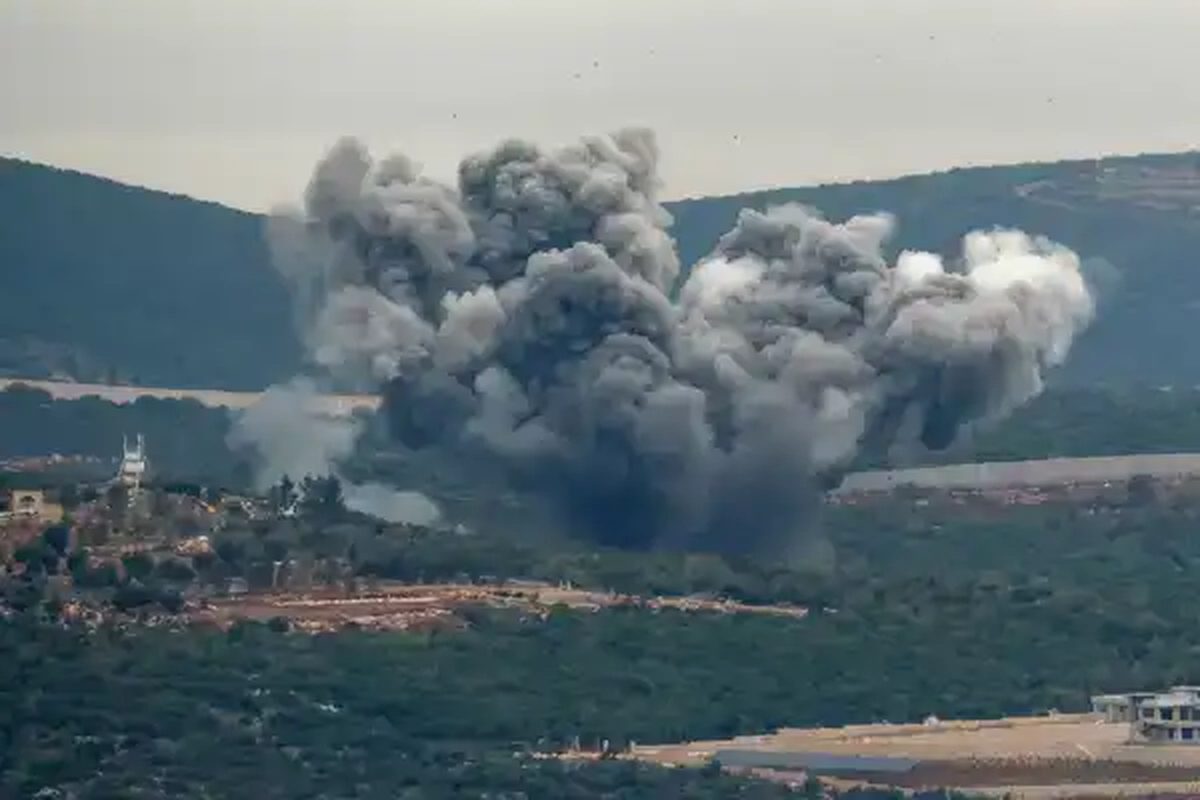
Four Lebanese civilians were killed in an Israeli airstrike targeting southern Lebanon, prompting widespread local and international reactions. This incident occurs amid rising tensions in the region.
The airstrike targeted a town near the border, where local sources reported that the victims were civilians. This escalation comes amidst increasing tensions between Lebanon and Israel, with both sides exchanging accusations of inciting violence.
Details of the Incident
According to security sources, the airstrike occurred late at night, with Israeli warplanes targeting several sites in southern Lebanon. The four martyrs were residents of the area and were transported to the hospital for treatment, but they succumbed to their injuries.
This attack follows a series of border clashes that have occurred in recent weeks, where tensions between the two sides have intensified. The Lebanese government condemned this attack, considering it a blatant violation of Lebanese sovereignty.
Background & Context
Historically, the Lebanese-Israeli border has witnessed numerous armed conflicts, with various armed factions present in southern Lebanon. The Israeli occupation of Lebanese territories in 1982 left deep scars on the relations between the two countries, leading to ongoing conflicts.
In recent years, tensions have escalated due to Israeli military operations against Palestinian factions in Gaza, affecting the security situation in Lebanon. Additionally, the internal political situation in Lebanon suffers from instability, complicating matters further.
Impact & Consequences
The recent attack could lead to greater escalation in the conflict between Lebanon and Israel, as armed factions are expected to respond to this airstrike. This incident may also provoke reactions from the international community, which might call for restraint.
The impact of this attack could extend to Lebanon's relations with other Arab countries, as some nations may express solidarity with Lebanon in the face of Israeli aggression. There are also concerns that this escalation could lead to a broader armed conflict in the region.
Regional Significance
The events in Lebanon are part of the larger picture of the Arab-Israeli conflict, affecting the stability of the entire region. The rise in violence in Lebanon could negatively impact neighboring countries, increasing instability in the Middle East.
International reactions may play a significant role in how events unfold. The international community, especially major powers, may intervene to curb the escalation, but the effectiveness of such efforts depends on the seriousness of the parties involved in reaching peaceful solutions.