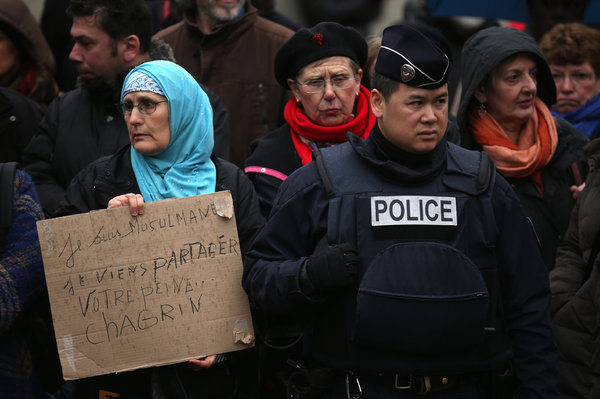
On Thursday, French authorities announced a ban on an annual Muslim gathering scheduled in the Paris area, citing public safety risks. This decision was made at the request of French Interior Minister Laurent Nunez, as Paris Police Chief Patrice Faure stated on the platform X that the measure was taken to protect public safety.
The gathering, known as the Annual Meeting of Muslims in France, was set to take place for its 40th edition and has sparked mixed reactions among political and religious circles in the country. Some viewed this decision as part of a policy of restricting religious freedoms, while others saw it as necessary to maintain security.
Details of the Event
The Muslim gathering in France is an annual event that attracts thousands of participants from across the country, where issues related to Islamic identity and the challenges facing the Muslim community in France are discussed. However, French authorities have expressed concerns that this gathering could be exploited by extremist elements.
In recent years, France has experienced several terrorist attacks, prompting the government to adopt a strict policy towards public gatherings, especially those involving Muslim communities. This decision was made following a comprehensive assessment of the security situation in the country, with police confirming that there are potential risks associated with the gathering.
Background & Context
France is one of the largest European countries with a significant Muslim population, estimated at around 5 million people. Relations between the French government and the Muslim community have seen increasing tensions in recent years, particularly following a series of terrorist attacks that targeted the country.
Concerns are growing that such decisions may exacerbate feelings of exclusion among Muslims in France, which could negatively impact social cohesion. Human rights organizations have called for the need to respect freedom of expression and the right to assemble, emphasizing that these rights should be upheld even in challenging security conditions.
Impact & Consequences
This decision may spark widespread debate within French society, as it is seen as a restriction on freedom of expression and assembly. It could lead to heightened tensions between the government and the Muslim community, potentially affecting social and political relations in the country.
Moreover, this decision could be viewed as a negative message to Muslim communities in Europe, indicating that governments may be more willing to restrict their rights under security conditions. This situation could worsen feelings of exclusion and discrimination, which may adversely affect social cohesion within French society.
Regional Significance
These events are particularly significant for the Arab region, as they highlight the challenges faced by Muslim communities in Western countries. Such policies may influence how Arab countries address human rights and religious freedoms, especially amid increasing tensions between different cultures.
Additionally, reactions from Arab countries may play a role in shaping European policies towards Muslims, as Arab governments may express concern over rising discrimination against Muslims in Europe, potentially leading to calls for policy changes or enhanced intercultural dialogue.
In conclusion, the question remains about how these decisions will impact the future of relations between Muslims in France and their government, and whether they will lead to further division or constructive dialogue.