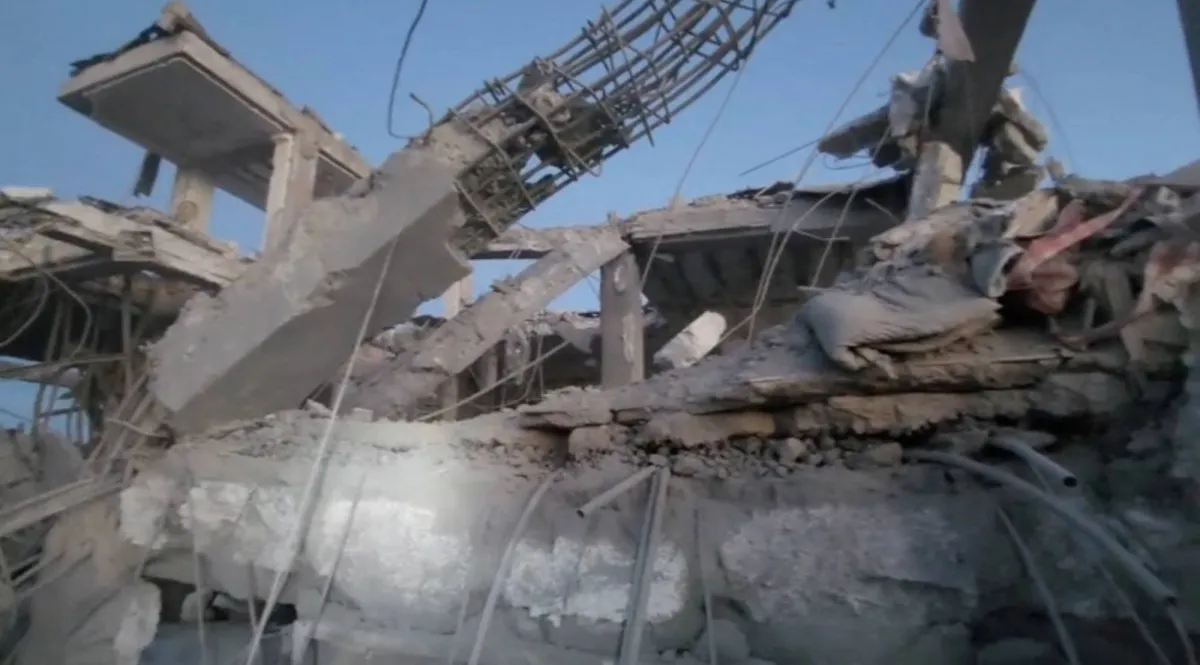
The French government has announced its steadfast position against the targeting of civil infrastructure in Iran, with Foreign Minister Jean-Noël Barrot warning that such actions could lead to unprecedented regional escalation. This statement comes amid rising tensions between the United States and Iran, which is causing significant concern in European circles.
In an interview with the news channel France Info, Barrot strongly opposed any strikes targeting civilian facilities, noting that his country has repeatedly condemned Russian strikes on Ukraine, reflecting its commitment to the principles of international law.
Details of the Incident
Barrot's remarks come at a sensitive time, as tensions between the United States and Iran escalate, with calls from Washington for its European allies to engage in military efforts against Tehran. Several European countries, including France, the United Kingdom, and Spain, have expressed their rejection of American plans, indicating a division within the NATO alliance.
Barrot clarified that targeting civilian facilities could provoke retaliatory reactions from Iran, complicating the security situation in the region. He also pointed out that any escalation could negatively impact the global economy, necessitating cautious measures.
Background & Context
Historically, relations between Iran and Western countries have been marked by increasing tensions, especially following the United States' withdrawal from the nuclear agreement in 2018. This withdrawal prompted Iran to enhance its uranium enrichment, raising fears of its potential development of nuclear weapons.
In this context, France aims to maintain regional stability by advocating for dialogue and negotiation rather than military escalation. Barrot emphasized that military solutions are ineffective, and negotiation is the only way to address outstanding issues.
Impact & Consequences
Paris warns that any military escalation could destabilize the Gulf region, potentially affecting global energy supplies. Furthermore, escalation could exacerbate humanitarian crises in the area, prompting urgent action from the international community.
On another front, France seeks to enhance its role as a mediator in regional conflicts, hoping that its efforts will contribute to achieving peace and stability in the Middle East. It has stressed the importance of cooperation with neighboring countries, such as Oman and Iran, to ensure freedom of navigation in the Strait of Hormuz.
Regional Significance
France's stance on Iran is part of a broader strategy aimed at enhancing security and stability in the Arab region. Any military escalation could impact neighboring countries, particularly those reliant on energy supplies from the Gulf.
Additionally, Paris's position may contribute to strengthening Arab-European cooperation in addressing security challenges, reflecting the importance of coordination among nations to ensure regional stability.
In conclusion, hope remains pinned on diplomacy as a means to resolve conflicts, as military escalation will only exacerbate crises, and the international community must work to avoid this.