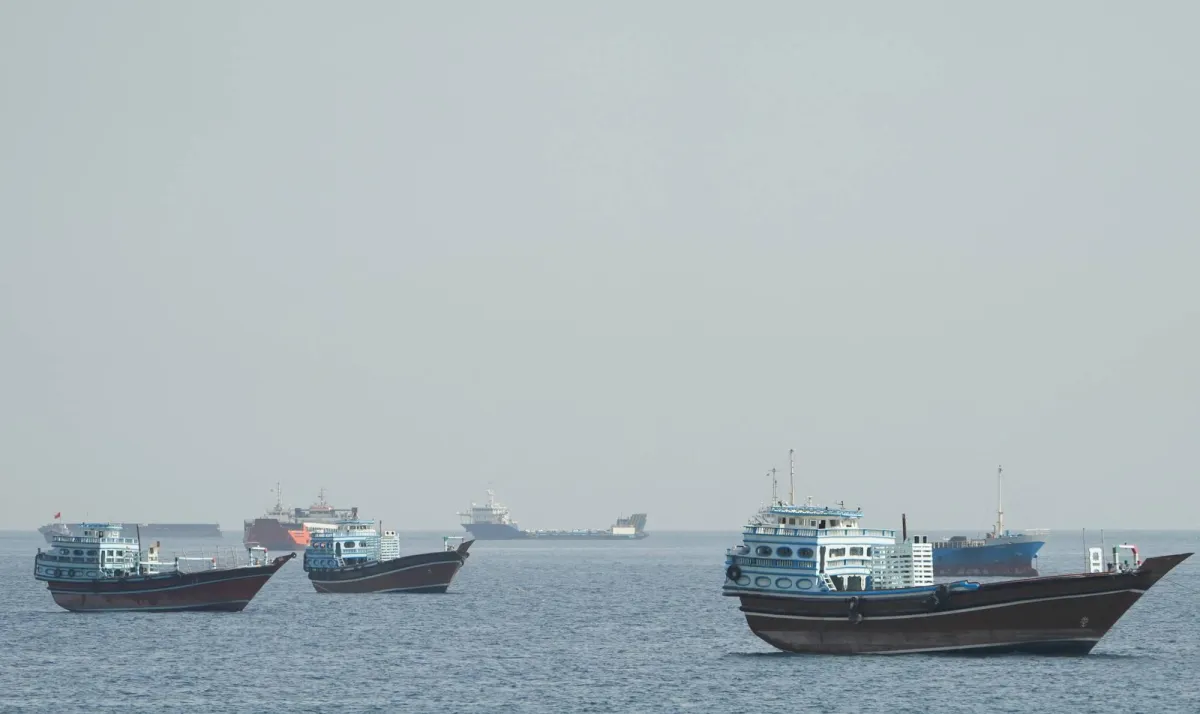
The French Foreign Ministry reported today that it has prepared a draft resolution in the UN Security Council aimed at forming an international mission to restore navigation in the Strait of Hormuz. This announcement comes at a time when the United States faces challenges in presenting a text for voting that Russia and China may consider biased against Iran.
The Strait of Hormuz is a vital artery for global energy trade, with its closure leading to a significant rise in oil prices. Control over this strait represents a major obstacle in the talks aimed at ending the war that erupted three months ago between the United States and Iran.
Details of the Event
Discussions regarding a US-Bahraini resolution concerning the strait have been ongoing for over two weeks, with voting on it postponed several times. China and Russia have expressed their readiness to use their veto power against this resolution. According to Reuters, the US-Bahraini draft resolution demands that Iran cease attacks and mine-laying in the strait. China and Russia previously vetoed a similar US-backed text in April, deeming it biased against Tehran.
Despite this, two European diplomats reported that Washington has garnered support from around 140 countries for its proposal, in an attempt to avoid a veto. In contrast, France, which holds veto power, has yet to endorse the US text.
Background & Context
French Foreign Ministry spokesperson Pascal Confavreux stated that there is a draft resolution between the United States and Bahrain under discussion, which forms the basis for the current negotiations. The date for voting has not yet been announced.
In a related context, French President Emmanuel Macron expressed Paris's intention to propose a new initiative at the United Nations as part of its efforts to solidify French-British cooperation to form an international mission to open the strait, following consultations with Washington and Tehran.
Impact & Consequences
US Secretary of State Marco Rubio spoke of slight progress in ongoing talks with Tehran, mediated by Pakistan, expressing uncertainty about the possibility of reaching an agreement or resuming the war. This came during meetings of NATO foreign ministers in Sweden.
At the same time, Rubio warned that Iran would not voluntarily reopen the strait, indicating the need for an alternative plan should negotiations fail. He also informed European countries of the necessity to prepare an alternative plan to assist in forcibly opening the Strait of Hormuz if the war continues.
Regional Significance
Concerns are growing about the impact of these developments on global energy markets, with oil prices rising significantly. The International Energy Agency has warned that energy markets could enter a "danger zone" during the summer months.
In this tense atmosphere, the future of the Strait of Hormuz remains a major point of contention in negotiations, with warnings that the global economy could be further affected as oil inventories decline. Meanwhile, Iran continues to impose restrictions on navigation in the strait, complicating the situation further.