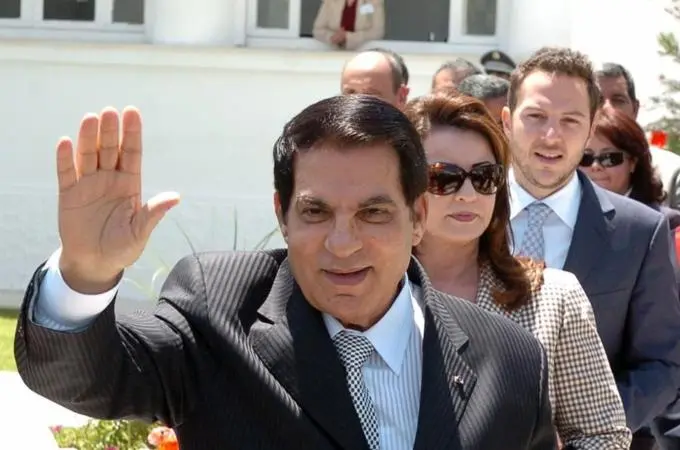
The French government has announced its refusal to extradite the daughter of late Tunisian President Zine El Abidine Ben Ali, a decision that has sparked widespread debate in Tunisian political circles. This comes at a time when Tunisia is grappling with a political and economic crisis, as the Tunisian government seeks to recover embezzled funds from the previous regime.
The French authorities justified their decision by stating that there is insufficient evidence to support the extradition request, noting that there are complex legal procedures governing this matter. This decision has elicited mixed reactions in Tunisia, with some viewing it as support for the corruption that plagued the previous regime, while others see it as a reflection of France's commitment to international laws.
Details of the Event
Ben Ali's daughter, who has been living in France since her father's ousting in 2011, faces allegations of corruption and money laundering in Tunisia. The Tunisian government has submitted an official request to France for her extradition, but Paris has confirmed that it will adhere to local and international laws regarding this issue.
This decision comes at a sensitive time for Tunisia, where the current government is striving to bolster its authority and regain public trust after years of political chaos. The decision raises questions about the Tunisian government's ability to hold corrupt individuals accountable and recover embezzled funds.
Background & Context
Zine El Abidine Ben Ali ruled Tunisia from 1987 until his ousting in 2011 during the Jasmine Revolution. Following the revolution, Tunisia experienced a period of political and economic instability, leading to a deterioration in the living conditions of its citizens.
The current Tunisian government aims to recover billions of dollars that were smuggled abroad. However, these efforts face significant challenges, including a lack of cooperation from some countries in extraditing wanted individuals.
Impact & Consequences
France's decision may affect relations between Tunisia and Paris, as Tunisia is considered one of France's allies in the region. Additionally, this decision could strengthen the position of opposition political parties in Tunisia, which may use it as evidence of the current government's failure to achieve justice.
Moreover, this decision could exacerbate the economic and social crises in Tunisia, as citizens feel frustrated by the government's inability to deliver justice and hold corrupt individuals accountable.
Regional Significance
This decision is part of the challenges facing Arab countries in their efforts to achieve transitional justice following revolutions. Many Arab nations still suffer from the repercussions of previous regimes, making it difficult to attain political and economic stability.
The lack of cooperation from Western countries in extraditing wanted individuals may hinder Arab nations' efforts to recover embezzled funds, widening the gap between governments and their citizens.
The decision by France not to extradite Ben Ali's daughter reflects the significant challenges Tunisia faces in its pursuit of justice. The question remains about how to recover embezzled funds and hold corrupt individuals accountable under the current circumstances.