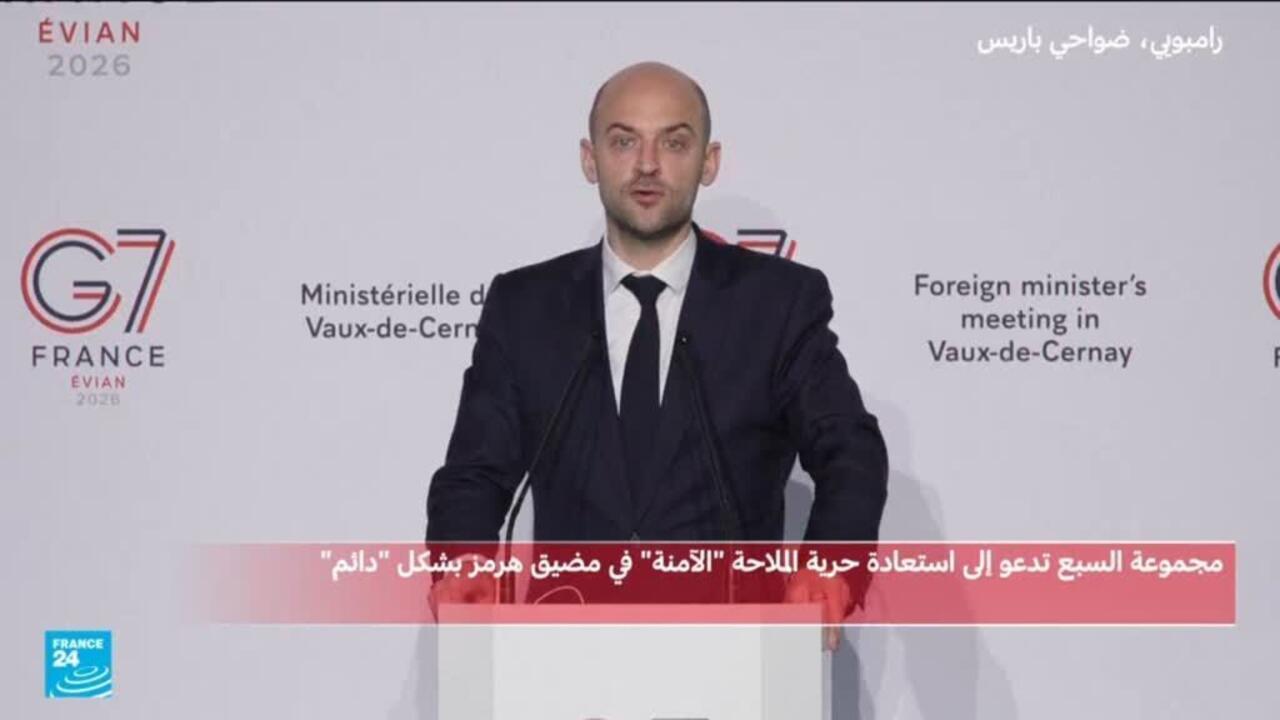
French Foreign Minister Jean-Noël Barrot stated on Friday that his country supports the U.S. objectives related to neutralizing Iranian ballistic capabilities and restoring freedom of navigation in the Strait of Hormuz. This statement was made during his remarks on the sidelines of the G7 meeting in France, where he highlighted the alignment of views between Paris and Washington on this matter.
Barrot said, "I will not speak on behalf of U.S. Secretary of State Marco Rubio, but I would like to point out the public statements he made recently, which align with the discussions we had today regarding the announced military objectives of the United States, including neutralizing Iranian ballistic capabilities."
Event Details
Barrot's remarks come at a sensitive time for the region, where concerns over Iranian military activities, particularly in the field of ballistic missile development, have increased. The United States had previously announced its strategy aimed at reducing these capabilities, which aligns with French objectives.
The Strait of Hormuz is one of the most critical maritime passages in the world, through which about 20% of total global oil exports pass. Therefore, any threat to freedom of navigation in this strait directly impacts the global economy, making it essential to take effective measures to protect this vital corridor.
Background & Context
Historically, the Strait of Hormuz has witnessed recurring tensions between Iran and Western countries, especially after the United States withdrew from the Iranian nuclear agreement in 2018. These tensions have escalated with the increase of Iranian military activities in the region, prompting Western countries, including France, to adopt firmer stances towards Tehran.
Moreover, relations between Iran and Western countries have been significantly affected by its nuclear program, which the West views as a threat to regional and international security. These circumstances have led to enhanced cooperation between France and the United States in addressing security challenges in the region.
Impact & Consequences
Barrot's statements serve as a clear message to Tehran that the international community will not tolerate the threats posed by its military capabilities. Additionally, this cooperation between France and the United States may lead to increased pressure on Iran, potentially affecting its regional policies.
Furthermore, any escalation in tensions could have negative impacts on global oil markets, raising concerns about economic stability in the region. Thus, the concerned countries are closely monitoring the situation, as any uncalculated moves could lead to further escalation.
Regional Significance
The Arab countries neighboring Iran, such as Saudi Arabia and the United Arab Emirates, are among the most affected by the tensions in the Strait of Hormuz. These countries rely heavily on this passage for transporting their oil exports, placing them in a sensitive position regarding any potential threats.
Additionally, cooperation between France and the United States may strengthen the position of Arab countries in facing security challenges and provide them with additional support in their policies towards Iran. Therefore, these statements could have positive implications for regional security if handled with caution.
In conclusion, the situation in the region remains under scrutiny, as the current circumstances require effective international coordination to address security challenges and ensure the stability of navigation in the Strait of Hormuz.