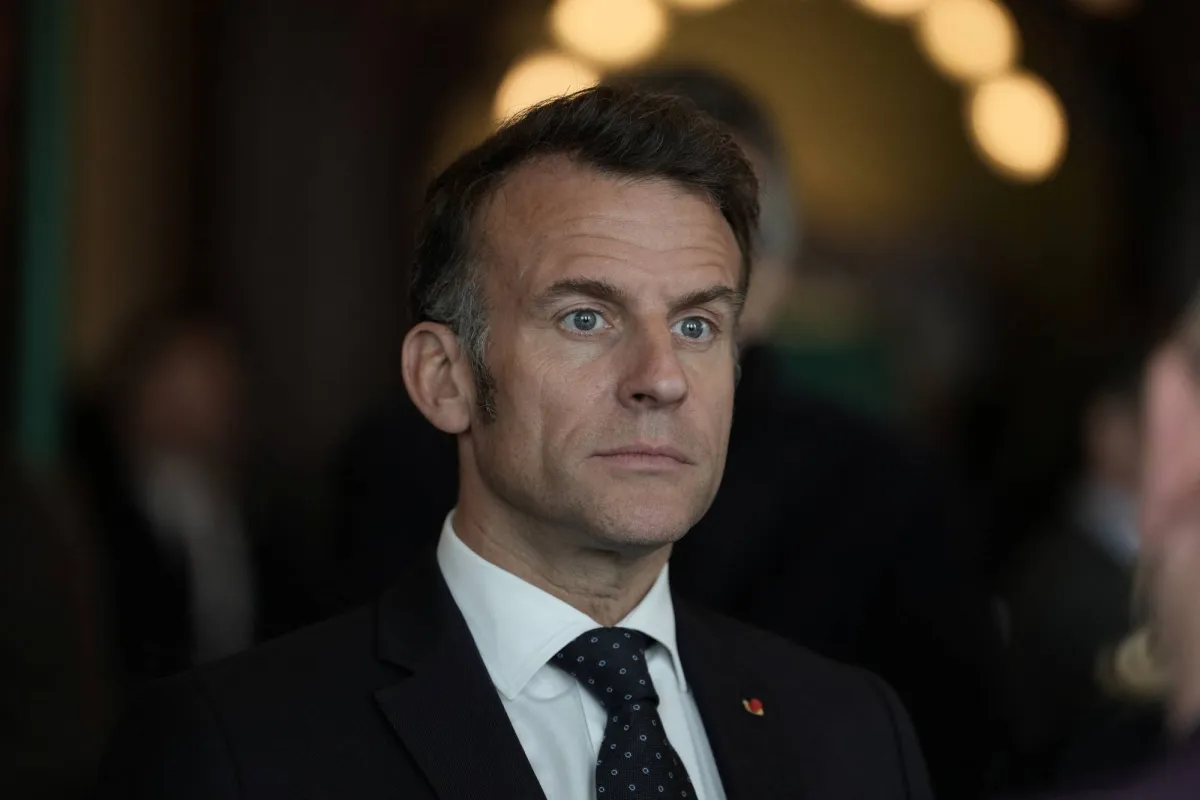
France has expressed its astonishment at the statements made by U.S. President Donald Trump, who criticized Paris's ban on military flights heading to Israel from flying over its territory. The French government confirmed that this position has been part of its official policy since the beginning of the war on Iran, according to reports from Reuters.
The office of French President Emmanuel Macron stated, "We are surprised by this post. France has not changed its position since day one of the conflict, and we reaffirm this decision."
Details of the Event
Trump, who shared his criticisms via his platform "Truth Social," described France as "never cooperative," indicating that the United States "will remember" this. The French military clarified on March 5 that France would not allow U.S. aircraft to use French bases if they participated in attacks on Iran, but it would permit this "temporarily" if it was to support the defense of France's allies in the region.
In a related context, the European Union's Energy Commissioner, Dan Jansen, announced that the EU is preparing a set of measures for member states to deal with the repercussions of the war in Iran, anticipating prolonged disruptions in energy markets. He noted that 30 days of conflict have added €14 billion to the EU's fossil fuel import bill.
Context and Background
These statements come at a time when relations between the United States and its European allies are increasingly strained due to the war on Iran. Trump previously criticized NATO partners in Europe earlier this month, describing them as uncooperative in the ongoing war. Sources have reported that France and Italy have rejected some U.S.-Israeli military operations, reflecting divisions within NATO.
At the same time, Spain defended its decision to completely close its airspace to U.S. aircraft participating in attacks on Iran. The Spanish Defense Minister stated that Madrid would only allow the use of its bases for the purpose of "collective defense" of NATO partners, noting that this ban has been in effect since the outbreak of the war on February 28.
Consequences and Impact
These events highlight the increasing tensions between the United States and its European allies, as positions diverge on how to handle the conflict in Iran. This division indicates new challenges facing Washington in strengthening its traditional alliances, especially amid rising geopolitical tensions.
Moreover, these statements could affect the United States' strategy in the region, as it may find itself compelled to reassess its relationships with European countries that adopt independent stances. This also reflects the growing concern over the impact of the war on global energy markets, which could lead to rising prices and increased fuel costs.
Impact on the Arab Region
These developments are particularly significant for the Arab region, as the conflict in Iran has direct implications for regional security and stability. Any escalation in the conflict could affect oil and gas prices, impacting Arab economies dependent on these resources.
In conclusion, these events underscore the need to enhance dialogue and cooperation among major powers to prevent exacerbating crises, especially given the current conditions in the region.