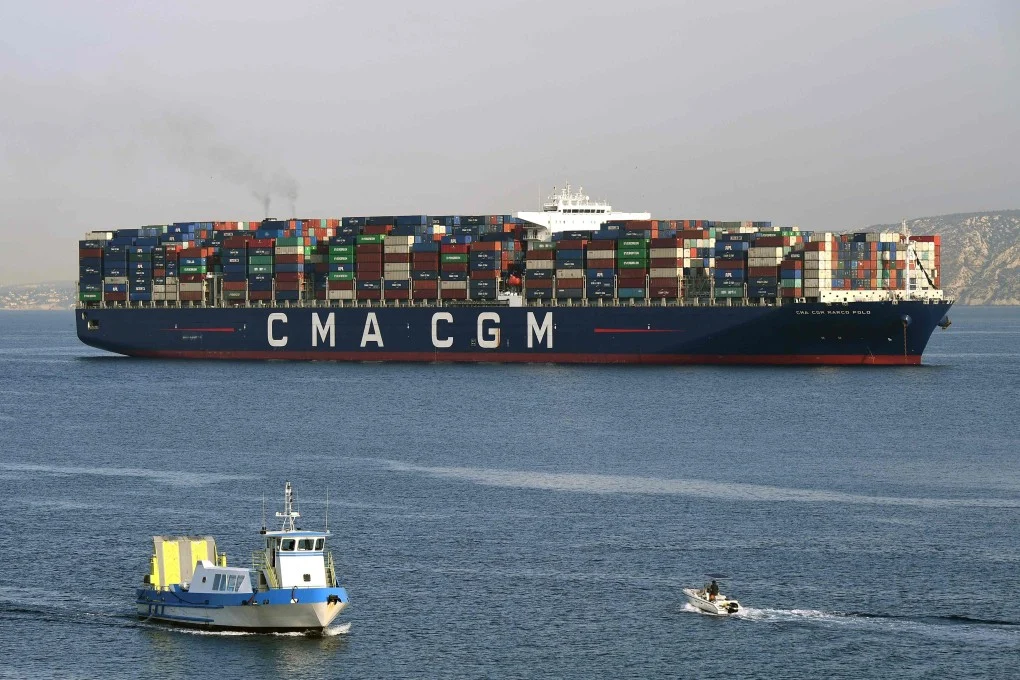
A French container ship and a Japanese tanker have crossed the Strait of Hormuz, marking the first such passage since the onset of the war in Iran. The CMA CGM Kribi, owned by a French company, left the strait last Friday, indicating an improvement in maritime traffic.
This incident is a significant milestone given the tense circumstances in the region, where the war in Iran has closed many vital maritime routes. These ships are the first to connect with Western Europe and traverse the strait since the conflict began over a month ago.
Details of the Event
According to ship tracking data collected by Bloomberg, the CMA CGM Kribi departed the Strait of Hormuz late on Friday. Reports also indicated that a Japanese tanker belonging to Mitsui OSK Lines also crossed the strait, suggesting a resumption of maritime traffic in an area considered one of the busiest waterways in the world.
These developments come at a sensitive time, as fears of escalating conflict in the region have impacted global trade. However, the crossing of these ships may send a positive message regarding the potential resumption of trade through this vital corridor.
Background & Context
The Strait of Hormuz is one of the world's most important waterways, through which approximately 20% of the world's total oil passes. Historically, the strait has witnessed numerous conflicts and disputes due to its strategic importance. Since the war in Iran began, the strait has been closed to many vessels, leading to increased tensions in the global market.
The war in Iran started over a month ago and has significantly affected maritime traffic and trade in the region. Many Western countries had issued warnings to their citizens against traveling through the strait, complicating the situation further.
Impact & Consequences
This step represents a glimmer of hope amid the difficult circumstances facing the region. The crossing of European and Asian ships may indicate an improvement in security conditions, potentially encouraging more companies to resume their commercial activities through the strait. This could lead to stability in oil prices in global markets.
However, the situation in the region remains unstable, and maritime traffic may face further challenges in the future. Continuous monitoring of political and military developments in Iran and its surroundings is required.
Regional Significance
The Gulf Arab states, particularly those reliant on oil exports, are the most affected by events in the Strait of Hormuz. Any escalation in the conflict could directly impact oil prices and trade movements in the region. Therefore, the resumption of maritime traffic through the strait is vital for the Gulf states.
In conclusion, attention remains focused on developments in the Strait of Hormuz, as any changes could significantly affect the global economy, especially given the heavy reliance on oil in the region.