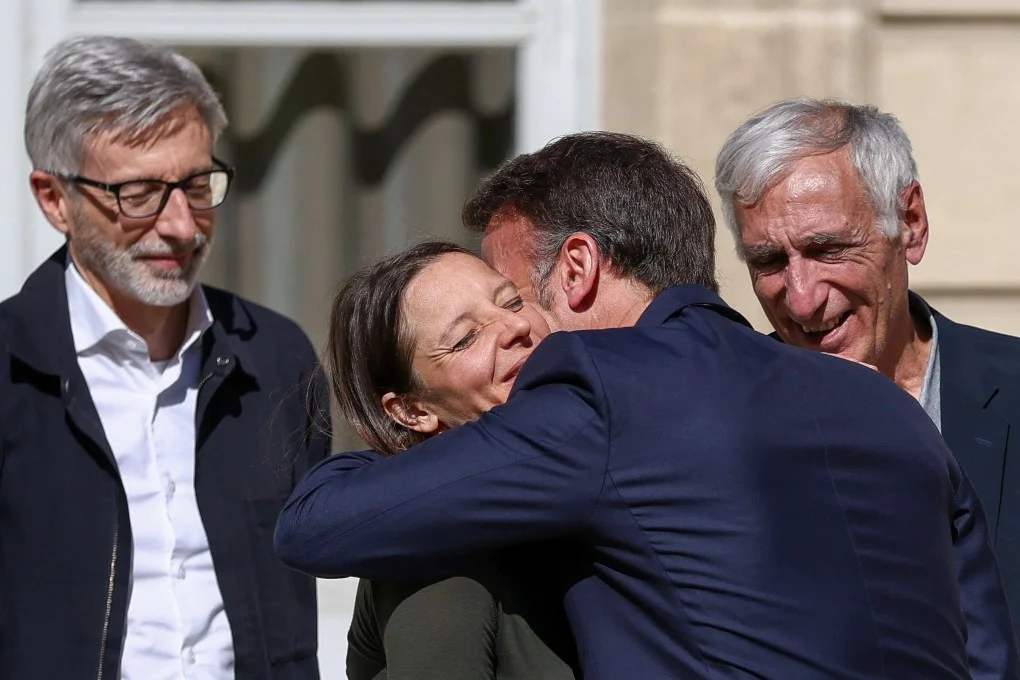
French President Emmanuel Macron welcomed two French citizens, Cécile Kohler (41) and Jacques Paris (72), at the Élysée Palace today after their return to Paris from Iran, where they spent nearly four years in Iranian prisons on espionage charges. Their flight landed at Charles de Gaulle Airport in the French capital before 9 AM, where they were greeted by officials from the French Foreign Ministry.
During the meeting, Macron expressed his relief at the return of the French citizens, praising the end of what he termed a 'horrific ordeal' they had endured. Kohler and Paris displayed mixed emotions of joy and gratitude, with signs of fatigue and anxiety evident after a long period of detention.
Details of the Event
Kohler and Paris arrived in Paris after a long journey, having been detained in Iran on espionage charges, which the French government has strongly denied. Their case garnered widespread attention in France, as the government deemed their detention unjustified. Macron held several discussions with Iranian officials in recent months, which contributed to expediting their release.
Upon their arrival, they were taken to the Élysée Palace where Macron welcomed them, emphasizing the importance of human rights and the need for their respect worldwide. He also noted that this case posed a significant challenge for the French government in its foreign policy.
Background & Context
The roots of this case date back to 2019 when Kohler and Paris were arrested in Iran on espionage charges. This case sparked widespread controversy in France, where the government asserted that these charges were unfounded and that the French citizens had been subjected to arbitrary detention. The French government repeatedly attempted to negotiate for their release, leading to strained relations between Paris and Tehran.
This case is part of broader tensions between Iran and the West, with increasing concerns over human rights violations in Iran. There have been growing calls from human rights organizations for the release of political prisoners in the country, reflecting the difficult conditions faced by many Iranian citizens.
Impact & Consequences
The return of Kohler and Paris to France is seen as a victory for the French government, reflecting its success in securing the return of its citizens after a prolonged period of detention. This case may also influence relations between France and Iran, as the French government might seek to reassess its policy towards Tehran in light of these events.
This situation could increase pressure on the Iranian government from the international community, particularly concerning human rights. Additionally, these events may contribute to raising awareness about human rights issues in Iran, potentially leading to future changes in Iranian policies.
Regional Significance
This case highlights ongoing tensions in the Middle East, where concerns over human rights violations are rising in many countries. The relations between Western nations and Iran remain a key focus in regional politics, impacting stability in the area.
These events serve as a reminder of the importance of human rights worldwide, as the international community must make greater efforts to ensure the protection of individual rights, especially in countries facing ongoing violations. Ultimately, the case of Kohler and Paris exemplifies the challenges governments face in addressing human rights issues within the context of international relations.