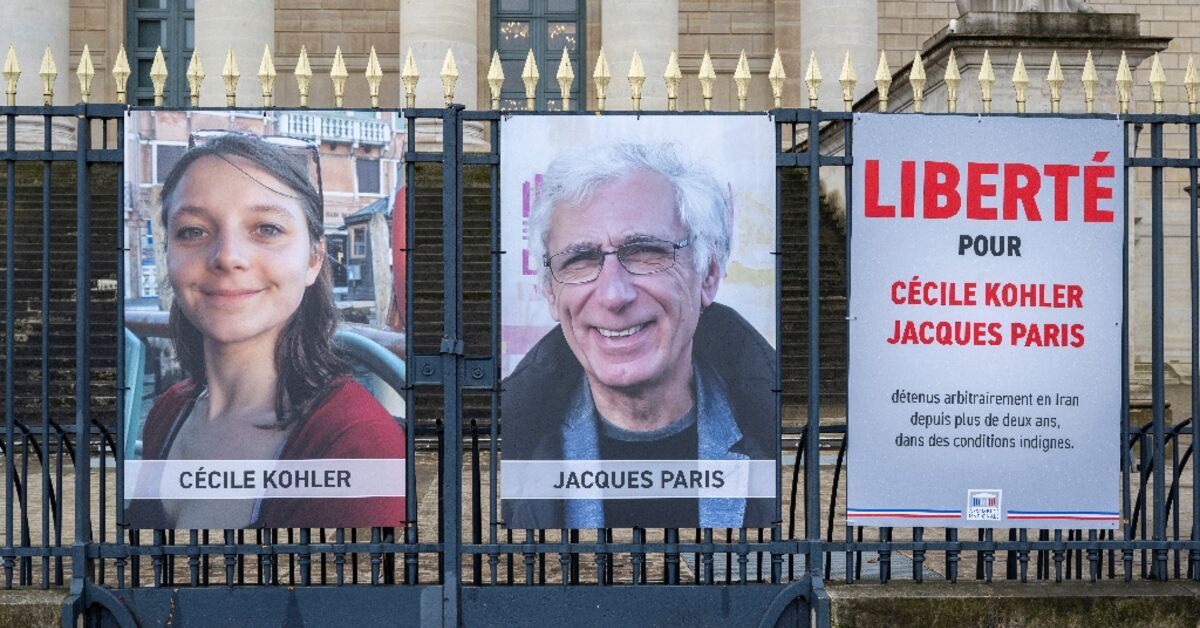
Cécile Kohler (41 years old) and Jacques Paris (72 years old) landed at Charles de Gaulle Airport in Paris on Wednesday morning after spending more than three years in Iranian prisons on espionage-related charges. They were welcomed by officials from the French Foreign Ministry at the airport's runway, where they are scheduled to meet President Macron later in the day at the Élysée Palace.
The return of Kohler and Paris comes at a sensitive time, as their case has garnered significant attention in France and is seen as a reflection of the increasing tensions between Western countries and Iran. Macron expressed relief at the return of the French citizens, noting that this moment marks the end of a 'terrible ordeal.'
Details of the Event
The flight that brought Kohler and Paris back home was a commercial one, landing in Paris before 9 AM local time. They had been detained in Iran since 2019, with Iranian authorities accusing them of espionage, a charge they vehemently deny. Their case has raised considerable concern within French political and media circles, frequently discussed in public debates.
During their detention, there were intensive diplomatic efforts by the French government to secure their release, with communication established with Iranian authorities on several occasions. This case is part of a broader pattern of tensions between Iran and Western nations, especially amid rising concerns regarding Iran's nuclear activities.
Background & Context
Historically, relations between France and Iran have experienced numerous fluctuations, with periods of cooperation and others marked by tension. Since the Islamic Revolution in 1979, the relationship between the two countries has become complicated, with France accusing Iran of supporting extremist groups in the region. In recent years, tensions have escalated due to Iran's nuclear program, leading to international sanctions against Tehran.
The case of Kohler and Paris is one of many involving Western citizens detained in Iran, where Tehran is believed to use them as leverage in international negotiations. These issues have raised questions about human rights in Iran and the extent to which foreign policy impacts individual lives.
Impact & Consequences
The return of Kohler and Paris may pave the way for further dialogue between France and Iran, especially under current circumstances that require enhanced cooperation in multiple areas. However, this case could also affect relations between Iran and Western nations, as it may be used to highlight human rights issues.
This return is expected to lead to a reassessment of French policies towards Iran, as the French government may seek to strengthen its position in negotiations concerning Iran's nuclear program. Additionally, this case could bolster the French government's internal standing, showcasing its success in bringing back its citizens.
Regional Significance
The case of Kohler and Paris is part of a broader context concerning relations between Iran and Arab states. The tensions between Iran and Western countries directly impact security and stability in the region. Furthermore, these issues may reflect how Iran utilizes its foreign policies to influence Arab nations.
Ultimately, the return of Kohler and Paris highlights the challenges faced by Western nations in dealing with Iran and underscores the importance of dialogue and diplomacy in resolving complex issues.