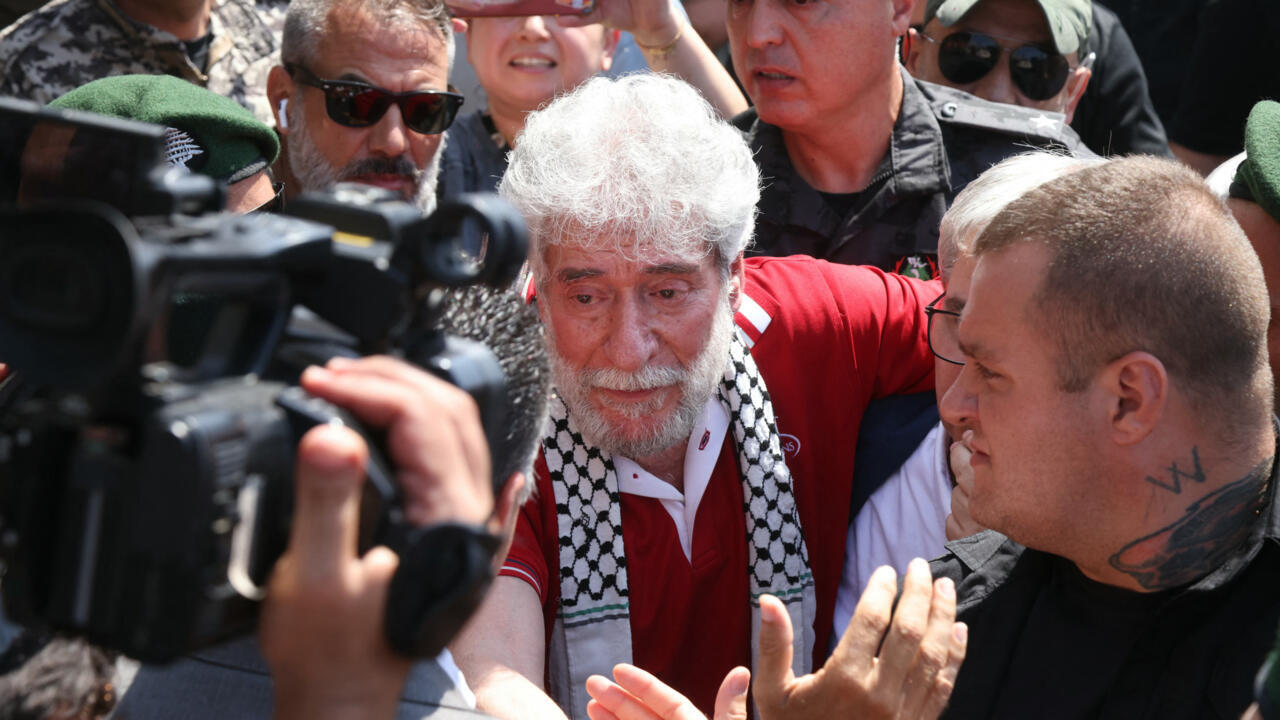
The French Court of Cassation announced on Wednesday the annulment of the conditional release granted to Lebanese activist and supporter of the Palestinian cause, George Ibrahim Abdullah, last July. This decision follows Abdullah's imprisonment for over forty years, during which he was sentenced to life imprisonment for complicity in the assassination of an American and an Israeli diplomat in 1982.
The court clarified that conditional release cannot be granted in cases of life sentences unless the convicted individual is placed under a partial release system, work outside prison, or electronic monitoring for no less than one year. It also confirmed that this condition applies to any foreigner who has not been subject to a deportation order.
Details of the Event
The Paris Court of Appeal had granted Abdullah conditional release on the condition that he leave French territory and not return, considering that he had no legal ties to France. However, the Court of Cassation rejected this interpretation, reflecting the complexities of the Lebanese activist's legal situation.
Although the Court of Cassation's decision is considered theoretical, Abdullah had returned to Lebanon after his release, where he has been living since July. Abdullah has denied his involvement in the assassinations for which he was convicted, emphasizing that he sees himself as a fighter against what he describes as "Israeli and American oppression."
Background & Context
George Ibrahim Abdullah is one of the longest-serving prisoners in France, having been arrested in 1984. He was sentenced to life imprisonment for complicity in the assassination of an American and an Israeli diplomat, which has sparked widespread controversy in human rights and political circles. Abdullah is viewed as a symbol of the Palestinian struggle by many and has received extensive support from human rights organizations.
Abdullah's history reflects the complex political struggles in the Middle East, where his case is seen as part of the broader conflict between Palestinians and Israelis, as well as the intricate relationships between Western and Arab countries. His case has been raised on numerous occasions as evidence of how Western systems handle issues of terrorism and the struggle for freedom.
Impact & Consequences
The annulment of Abdullah's release may affect relations between France and Lebanon, especially amid ongoing political tensions. It could also reopen discussions about the rights of political prisoners in Western countries and raise questions about how judicial systems handle issues of the struggle for freedom.
This decision may also lead to increased support for Abdullah from human rights organizations, which may see him as a symbol of injustice. Furthermore, this ruling could encourage more grassroots movements in Lebanon and other Arab countries to demand the rights of political prisoners.
Regional Significance
The case of George Abdullah is part of the larger picture of the Palestinian struggle, where he is viewed as a symbol of resistance against occupation. His case may enhance awareness of Palestinian issues in the Arab world, potentially stimulating further support for the Palestinian cause in the future.
Given the tense political conditions in the region, cases like Abdullah's may serve as evidence of the need to reconsider policies regarding political prisoners and how countries deal with issues of the struggle for freedom.
In conclusion, the case of George Abdullah remains central to discussions about human rights and the struggle for freedom in the Arab world. The annulment of his release reflects the ongoing challenges faced by human rights issues within Western judicial systems.