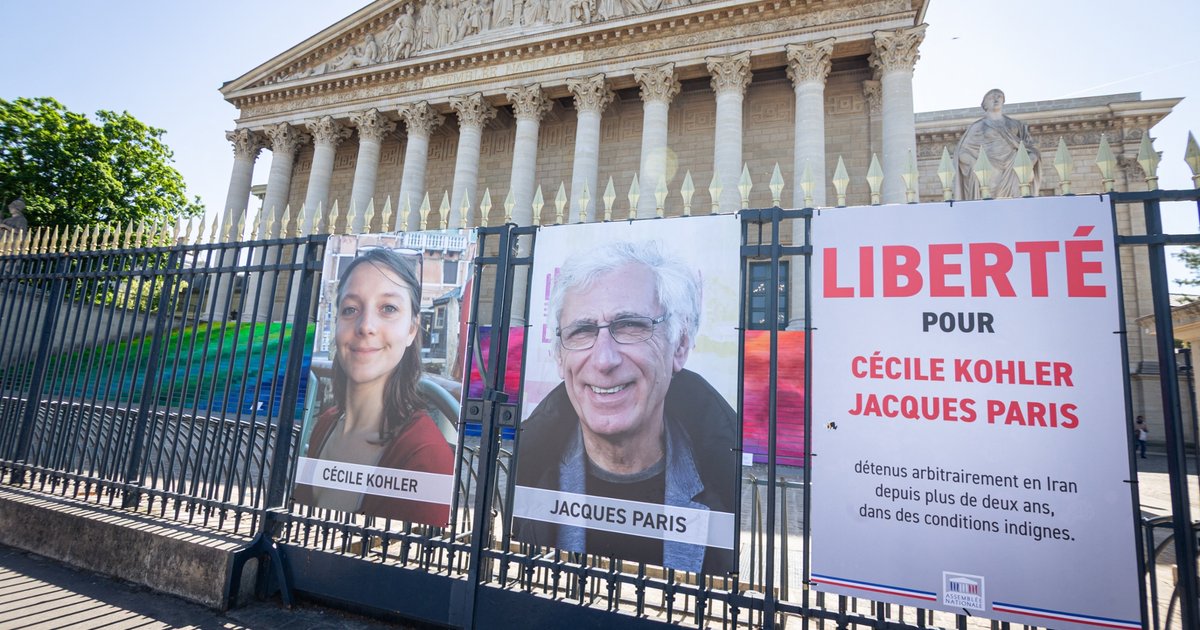
French teachers Céline Kohler and Jacques Paris returned to their homeland, France, on Wednesday after spending four years in captivity in Iran. Their return was facilitated through Azerbaijan, where they were transported under diplomatic protection from the French embassy in Tehran.
This return follows intensive diplomatic efforts by the French government, which worked to secure the release of the teachers. Their detention raised widespread concern in French political and media circles, as their case was seen as a symbol of the ongoing tensions between France and Iran.
Details of the Event
The teachers arrived at Charles de Gaulle Airport in Paris, where they were welcomed by several government officials and their families. French President Emmanuel Macron expressed his happiness at the teachers' return, affirming that the government would continue to work to protect its citizens abroad.
Kohler and Paris had been held in Iran since 2019, accused by Iranian authorities of espionage. The duo denied these allegations, stating that they were working as teachers in the country. Their case sparked significant debate in France, with many viewing it as an example of human rights violations in Iran.
Background & Context
The roots of tensions between France and Iran date back several decades, with the relationship between the two countries experiencing numerous fluctuations. These tensions have escalated in recent years due to Iran's nuclear program and Tehran's support for armed groups in the region. Additionally, human rights issues in Iran have always been a focal point for the international community, making the case of Kohler and Paris particularly prominent.
In recent years, Iran has witnessed an increase in political arrests, with many foreigners detained on charges related to espionage or conspiracy. These arrests have raised international concern, as many view them as a means to exert pressure on Western nations.
Impact & Consequences
The return of Kohler and Paris is seen as a positive step in French-Iranian relations, potentially opening the door for further dialogue between the two sides. However, tensions remain, as many unresolved issues continue to affect bilateral relations.
This case may influence France's policy towards Iran, as the French government might seek to strengthen its position in international forums regarding human rights issues. Furthermore, this return could bolster the French government's internal standing, as the case of Kohler and Paris is seen as a success of French diplomacy.
Regional Significance
The case of Kohler and Paris is part of a broader picture of tensions in the Middle East, where Iran plays a pivotal role in many conflicts. This issue could affect relations between Iran and Arab countries, especially those experiencing tensions with Tehran.
The return of the teachers may also strengthen the position of Western countries in pressuring Iran on human rights issues, potentially leading to changes in regional policies.
In conclusion, the return of Kohler and Paris represents a turning point in French-Iranian relations, opening the way for further dialogue on human rights issues and diplomatic cooperation.