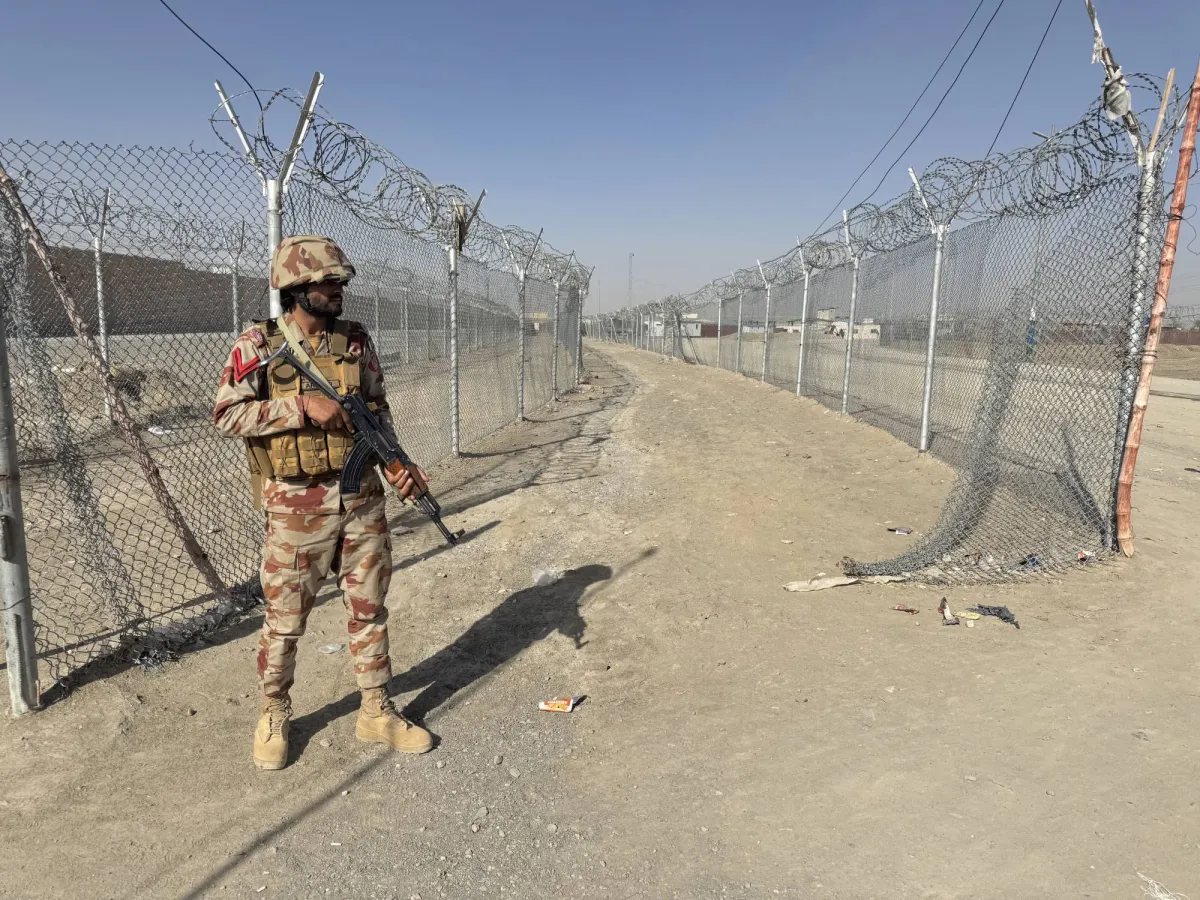
Afghanistan reported today (Tuesday) that fruitful talks took place in Urumqi, northwestern China, aimed at resolving the ongoing conflict with Pakistan. These discussions are part of China's efforts to mediate between the two countries, whose relationship has seen significant tension since the Taliban returned to power in Kabul in 2021.
China, which shares its western border with Afghanistan and Pakistan, seeks to end the worst conflict between the two nations that were once allies but have turned into adversaries. The dispute between Pakistan and Afghanistan has escalated since 2021, with Pakistan accusing the Afghan Taliban of harboring the Pakistani Taliban, which carries out deadly attacks within Pakistan.
Key Points of the Conflict
The main points of contention between Pakistan and Afghanistan revolve around the Durand Line, a historical border dispute. The border has witnessed repeated clashes and airstrikes, leading to heightened tensions and mutual accusations between the two sides. In this context, Chinese mediation comes as an important step towards achieving stability in the region.
The Chinese Foreign Ministry welcomed the proposal for a ceasefire between the United States and Iran, urging the involved parties to seize the opportunity for peace. In its statement, it emphasized its support for Pakistan's efforts to achieve peace, reflecting China's role as a regional mediator seeking to enhance stability in the area.
Background & Context
Historically, the relationship between Pakistan and Afghanistan has been marked by ongoing tensions, with the roots of the conflict stemming from border and security issues. Since the Taliban's return to power, concerns in Pakistan have increased that Afghan territory could become a safe haven for armed groups, prompting military actions along the border.
China is a key player in the region, aiming to enhance its influence through mediation in regional disputes. It has shown significant interest in stabilizing Afghanistan, viewing it as part of its broader strategy to promote the Belt and Road Initiative.
Impact & Consequences
If the talks between the Taliban and Pakistan succeed, they could lead to a reduction in security tensions in the region, contributing to greater stability in Afghanistan. Additionally, the success of Chinese mediation may enhance Beijing's role as a reliable mediator in regional conflicts, paving the way for increased economic and political cooperation among the involved countries.
On the other hand, these talks could affect relations between the United States and Iran, as both Washington and Tehran seek to achieve their interests in the region. Any settlement between the Taliban and Pakistan may lead to a shift in regional dynamics, necessitating a reassessment of policies by major powers.
Regional Significance
The developments in Afghanistan and Pakistan are of great importance to the Arab region, reflecting the security and political challenges faced by many countries. Furthermore, the success of Chinese mediation may encourage Arab nations to seek diplomatic solutions to regional disputes, thereby enhancing stability in the area.
In conclusion, the talks between the Taliban and Pakistan represent an important step towards achieving peace and underscore the significance of diplomacy as a means to resolve conflicts. There remains hope that these efforts will yield positive outcomes that benefit the peoples of the region.