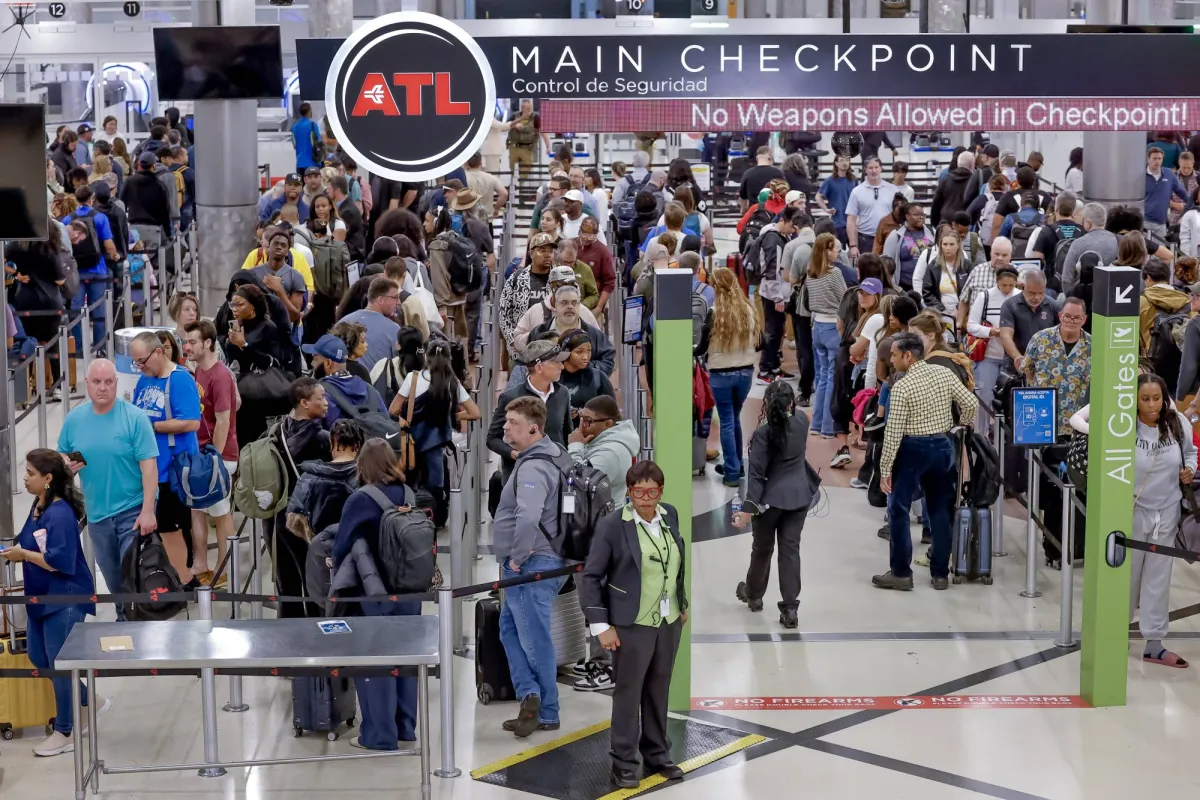
Signs of a breakthrough are emerging in the funding crisis of the U.S. Department of Homeland Security, as the situation has clearly affected American airports. Travelers have experienced significant congestion, with wait times exceeding four hours at some airports, prompting President Donald Trump to reconsider his previous refusal to negotiate any settlement with Democrats.
Following a meeting with Republican leaders at the White House, they emerged with cautious optimism, noting that Trump seemed open to a compromise that would ensure funding, excluding ICE operations related to immigrants, provided that it is passed in a separate bill that also includes provisions from the Save America initiative concerning electoral reforms.
Details of the Event
Republican Senator James Lankford expressed his optimism, stating, "We will not leave Washington until we secure funding for the Department of Homeland Security," referring to lawmakers' upcoming departure for spring break next week. On the other hand, Democrats welcomed this development, with Senator Peter Welch declaring that this move is very significant, indicating that the disagreement is over ICE practices rather than funding for airport security personnel or the Coast Guard or the Federal Emergency Management Agency.
If this plan materializes, it would represent a radical shift in Trump's positions, who had insisted on not negotiating or agreeing to any deal before the electoral reform bill was passed. This change is attributed to the severe congestion at airports, resulting from a large number of security personnel not receiving their paychecks, in addition to warnings of internal security vulnerabilities amid tensions with Iran.
Background & Context
Late Monday evening, the Senate confirmed the new Secretary of Homeland Security, Marquin Mullin, who is preparing to take office under challenging circumstances, following Trump's dismissal of former Secretary Kirstjen Nielsen due to her handling of the ICE issue. A total of 54 senators voted in favor of Mullin, while 45 opposed him, reflecting the deep political divisions in Washington.
In a related context, the U.S. Supreme Court has begun hearings in a case concerning states' rights to count late mail-in ballots. This case arises as Republicans, led by Trump, seek to deprive Democrats of their advantage in this area ahead of the upcoming midterm elections.
Impact & Consequences
The outcome of this case is expected to affect voters in 14 states and the District of Columbia, where there are grace periods for mail-in ballots. Additionally, 15 other states with more flexible deadlines for military and overseas voters may also be impacted. A ruling is anticipated by late June, which could influence the vote counting process in the midterm elections.
Although Trump seeks to cast doubt on the security of mail-in voting, evidence indicates that fraud is rare. This legal challenge is part of Trump's broader assault on mail-in voting processes, as pressure mounts on the U.S. government to find solutions to the funding crisis.
Regional Significance
These developments coincide with rising tensions in the region, particularly with Iran, as political and economic crises in the United States raise questions about their impact on U.S. foreign policy in the Middle East. Any potential settlement with Iran could directly affect U.S. relations with Arab countries, especially those concerned about Iranian influence in the region.
In conclusion, the situation in Washington remains under scrutiny, as everyone looks to see how negotiations regarding funding will evolve and whether they will lead to radical changes in U.S. policy towards domestic and foreign issues.