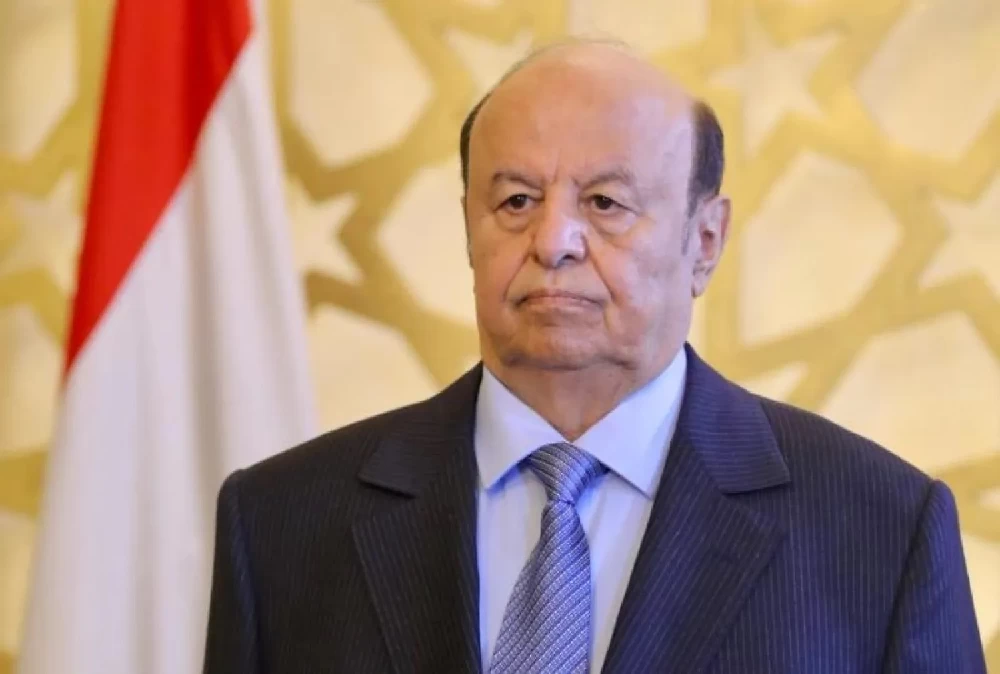
The funeral prayer for former Yemeni president Abd-Rabbu Mansour Hadi, may God have mercy on him, will be held after the afternoon prayer tomorrow, Friday, 12 Dhul-Hijjah 1447 AH, at Imam Turki bin Abdullah Mosque in the capital, Riyadh. His body will be laid to rest in Al-Oud Cemetery, thus closing a chapter in Yemen's modern history that is associated with some of its most complex phases.
Hadi assumed the presidency of Yemen in 2012 following a power transfer and faced immense challenges, starting with the Houthi coup against legitimacy, the formation of the Saudi-led coalition to support legitimacy, and culminating in the transfer of power to the Presidential Leadership Council in 2022.
Details of the Event
At a critical moment in the country's history, the late president stood against the Houthi militia's coup, choosing to uphold the legitimacy of the state and the republic, refusing to recognize the authority of the militias or to grant the coup any political cover. In 2015, Hadi managed to escape the house arrest imposed by the Houthi militias in Sanaa, announcing from Aden that the Yemeni state still exists and that the battle to restore the republic is not over.
In March 2015, Hadi made an official request to the Gulf Cooperation Council, led by Saudi Arabia, for urgent military intervention to protect Yemen from falling completely into the hands of the Iran-backed Houthis. This request was not a pursuit of war but rather a last-ditch effort to save Yemen after all political avenues had failed.
Background & Context
Hadi remained committed to the option of statehood and the unity of Yemen, rejecting all division projects or the imposition of facts on the ground by force. He also maintained his stance against the Houthi project, considering that the core battle is to restore the hijacked Yemeni state. In April 2022, the late president announced the transfer of his powers to the Presidential Leadership Council, a move reflecting his awareness of the magnitude of the challenges facing Yemen and his desire to unify ranks.
The decision to establish the Presidential Leadership Council was based on the Yemeni constitution, the Gulf Initiative, and the outcomes of the National Dialogue, aiming to achieve broader political partnership and address the humanitarian and political challenges left by the war. Hadi's departure from power was not the result of a coup or a personal deal but a political transition that prioritized Yemen's interests above all else.
Impact & Consequences
Hadi's passing is considered a turning point in the Yemeni political landscape, leaving behind a complex legacy of conflicts and challenges. Observers expect this event to influence the course of events in Yemen, especially amid the ongoing conflict between the Houthis and other political forces.
Furthermore, Hadi's death may open the door to further political transformations, whether in the form of government or in relations with regional and international powers. It is crucial to monitor the reactions from various political parties in Yemen and how they will respond to this sudden change.
Regional Significance
Hadi's departure represents a significant event not only for Yemen but for the Arab region as a whole. The conflict in Yemen has wide-ranging implications for regional security and affects relationships between Arab countries, particularly between Saudi Arabia and Iran.
The stability of Yemen is a crucial part of regional stability; thus, Hadi's departure may alter the dynamics of the conflict and impact peace efforts in the region.
In conclusion, the passing of Abd-Rabbu Mansour Hadi marks the end of a historical phase in Yemen and calls for all parties to work towards achieving peace and stability in the country.