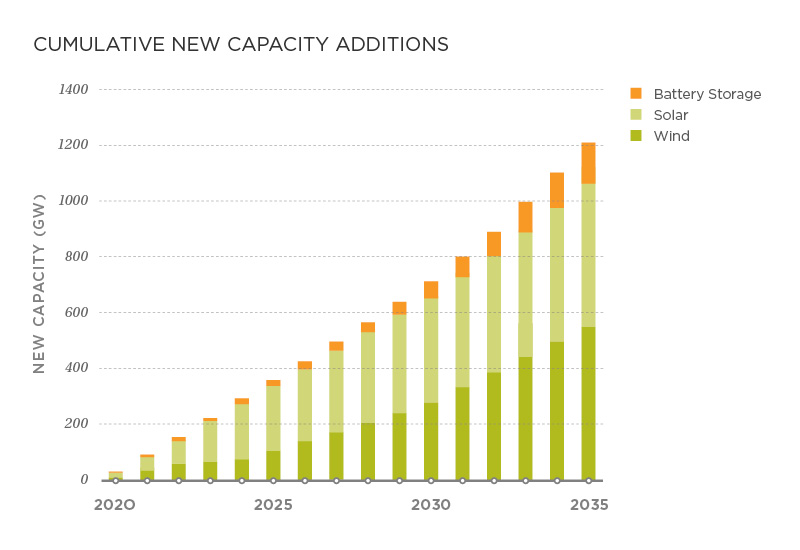
A recent report from the International Renewable Energy Agency (IRENA) highlights future trends in renewable energy, emphasizing the need for a shift towards clean energy sources. The report outlines the challenges and opportunities facing countries in this sector.
The report states that renewable energy has become a strategic choice for countries aiming to achieve sustainable development goals. It also notes a significant growth in investments in this sector, reflecting countries' commitment to transitioning to more sustainable energy sources.
Details of the Report
According to the report, the share of renewable energy in the global energy mix is expected to exceed 50% by 2030. This transition requires massive investments in infrastructure and technology. The report highlights that solar and wind energy will lead the way among renewable energy sources.
The report also addresses the challenges facing this transition, such as the need to improve electricity grids and develop storage technologies. It emphasizes the importance of international cooperation in promoting innovation and knowledge sharing in this field.
Background & Context
These developments come amid global efforts to combat climate change and reduce carbon emissions. Major countries like the United States, China, and the European Union are adopting ambitious policies to enhance the use of renewable energy. These policies aim to meet the goals of the Paris Climate Agreement.
In recent years, there has been a rise in public awareness regarding the importance of renewable energy, leading to greater support from governments and investors. This awareness coincides with technological advancements that have made renewable energy a more economically viable option.
Impact & Consequences
The report highlights that the transition to renewable energy could create millions of new jobs, contributing to the enhancement of the global economy. Additionally, this transition will help countries reduce their dependence on fossil fuels, thereby enhancing energy security.
However, challenges remain. Developing countries may face difficulties in securing the necessary funding to invest in renewable energy. Therefore, international support will be essential to ensure these goals are met.
Regional Significance
The Arab region possesses immense potential in renewable energy, particularly in solar energy. Many Arab countries have already begun implementing ambitious projects in this sector. For instance, the United Arab Emirates and Saudi Arabia are adopting national strategies to promote the use of renewable energy.
This trend could contribute to achieving sustainable development in the region and enhance Arab countries' ability to face environmental and economic challenges.
In conclusion, the IRENA report indicates that the shift towards renewable energy is not just an option but a necessity. Countries that invest in this sector will find themselves in a strong position in the future, while those that lag behind in this transition will face greater challenges.