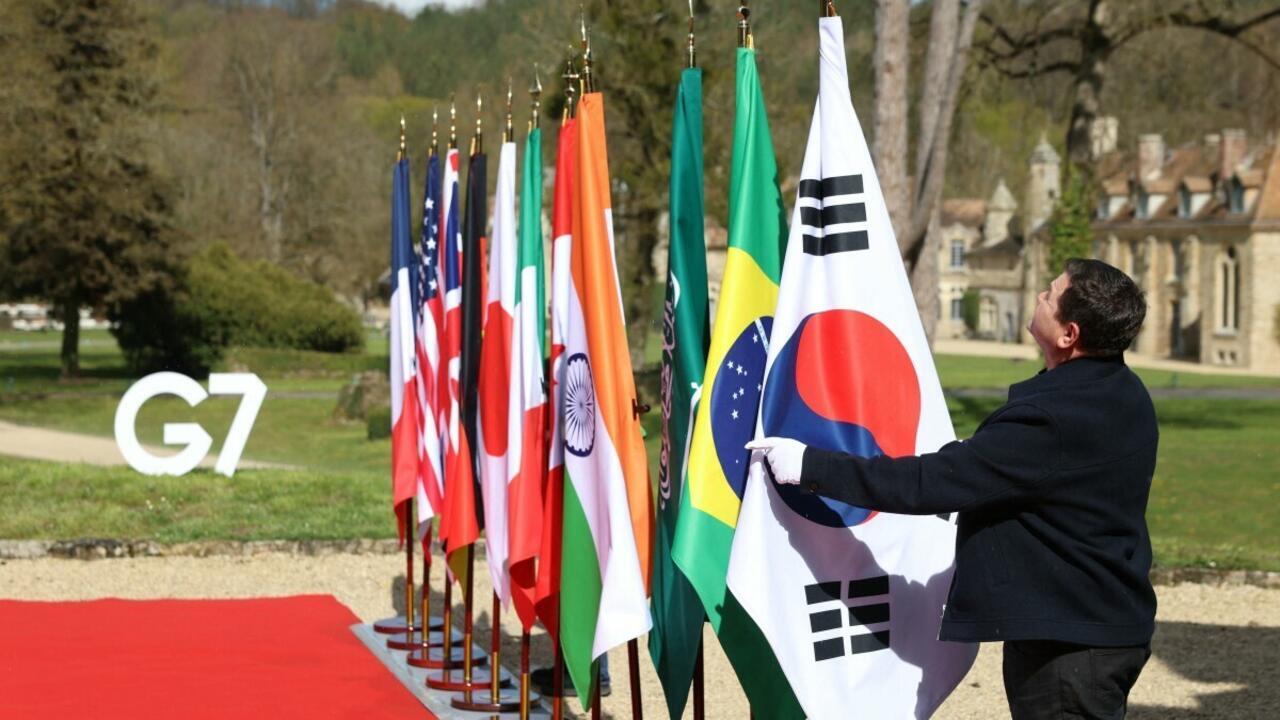
Foreign ministers of the G7 met near Paris in an effort to reduce tensions with Iran, amid growing concerns over potential military escalation. The meeting, which began on Thursday, took place without the presence of U.S. Secretary of State Marco Rubio, who is expected to join his counterparts from Germany, Britain, Canada, Italy, France, and Japan on Friday.
European countries are seeking to reach a consensus with the United States regarding the conflicts in the Middle East, especially following President Donald Trump's statements that confirmed the opening of diplomatic channels with Iran while threatening further military operations. The ministers expressed their concerns over escalating tensions in the region, focusing discussions on how to de-escalate and protect navigation in the Strait of Hormuz.
Details of the Meeting
Despite the significance of the meeting, no joint final statement was issued, which is considered a breach of protocol typically followed in such gatherings. Instead, the French presidency will issue a statement on behalf of the G7, reflecting the increasing divergences with Washington. German Foreign Minister Johan Waidvol expressed confidence in reaching a unified position, emphasizing the importance of understanding the intentions of American partners.
None of the G7 members explicitly supported the U.S.-Israeli attack on Iran, which displeased Trump. In this context, EU foreign policy chief Kaja Kallas stressed the need to end the conflict rather than escalate it, indicating that the situation requires collective action to protect navigation in the region.
Context and Background
These developments come at a sensitive time, as the region faces increasing tensions due to ongoing conflicts. The war in Ukraine casts a shadow over discussions, with Kallas warning of rising Russian attacks on civilian infrastructure, stressing the need to not overlook these violations. Moscow has also been accused of leaking intelligence to Tehran, complicating the situation further.
France aims to broaden the circle of participants in the discussions, having invited foreign ministers from Brazil, India, Ukraine, Saudi Arabia, and South Korea, reflecting Paris's desire to enhance international cooperation to address common challenges.
Impact and Consequences
Concerns are growing that escalating tensions with Iran could lead to military escalation that may affect the stability of the entire region. Additionally, the ongoing conflict in Ukraine could have negative economic repercussions for European countries, particularly regarding energy prices and maritime navigation.
These meetings represent an opportunity to strengthen coordination among major powers, but they also reflect deep divisions in positions regarding regional issues. The absence of a joint statement may indicate a lack of genuine consensus between the United States and its European allies.
Impact on the Arab Region
Arab countries are directly affected by these tensions, as any military escalation in the region could lead to negative consequences for security and stability. Protecting navigation in the Strait of Hormuz is a vital issue for Arab nations, given the importance of this waterway for transporting oil and gas.
Ultimately, the question of how to address these challenges remains ongoing, as the current situations demand collective action and effective coordination among major powers to ensure regional stability.