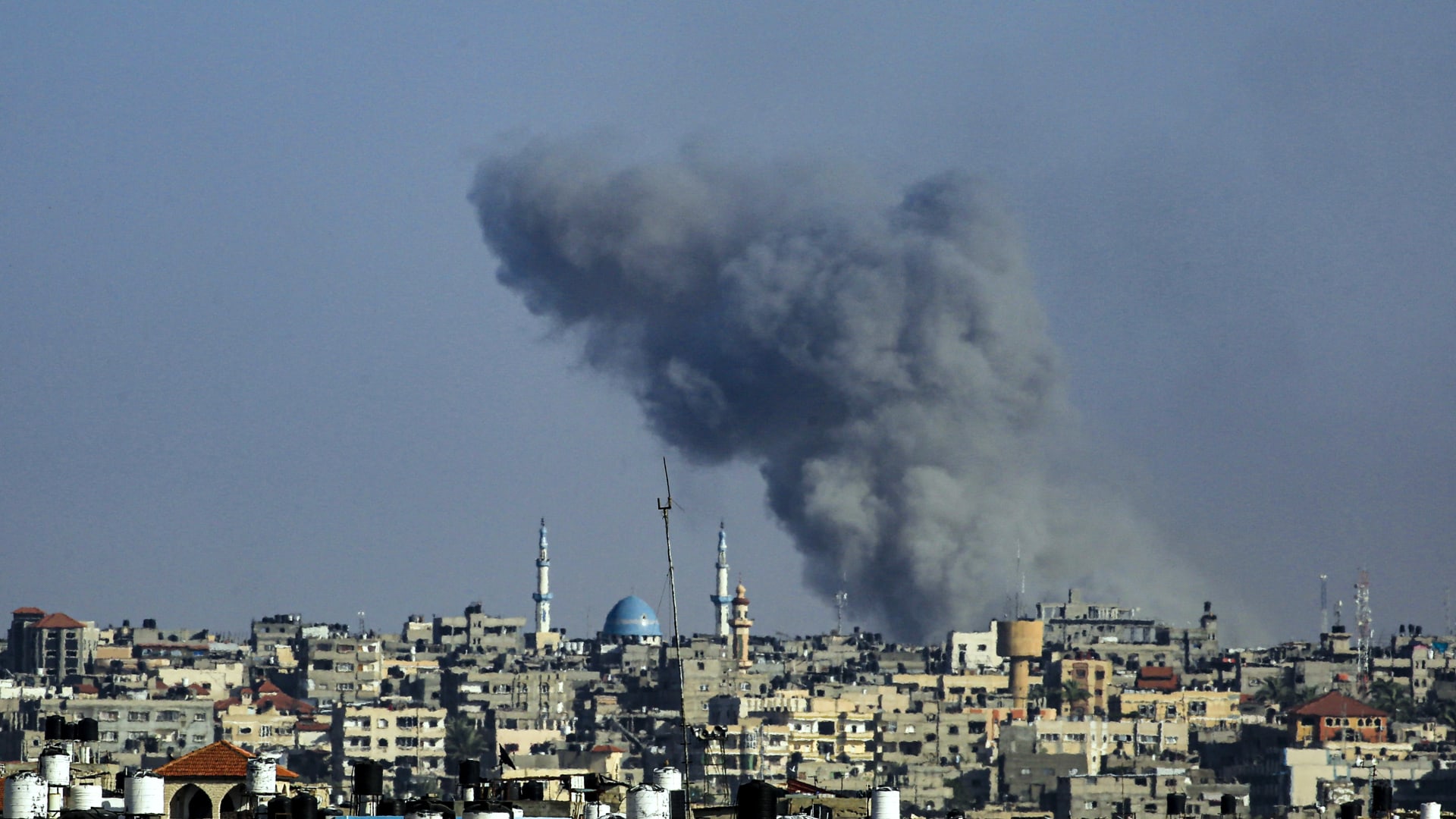
Six months after the ceasefire was declared in the Gaza Strip, the situation presents a complex reality. While there is no full-scale war as before, the truce has not led to genuine peace on the ground. The current reality combines ongoing violence, a deep humanitarian crisis, and political deadlock, as several media reports indicate.
In its report, the French newspaper Le Monde paints a grim picture of the situation in Gaza, confirming that the ceasefire has not held up effectively, with hundreds of casualties reported since the agreement came into effect. It quoted the United Nations High Commissioner for Human Rights stating that "the ongoing pattern of killings reflects a continued disregard for Palestinian lives," referring to the persistent targeting of civilians near what is known as the "yellow line."
Details of the Situation
Writer Marie Jo Sader in Le Monde emphasizes that the Israeli army has not withdrawn as stipulated in the second phase of the peace plan associated with former U.S. President Donald Trump. Instead, it has reinforced its control over approximately 60% of the territory, constructing military bases and infrastructure that indicate an intention to establish a permanent reality. In this context, the newspaper reported witnesses saying that movement itself has become a deadly activity due to repeated gunfire on civilians.
On the political front, Sader points out that negotiations have reached a deadlock, particularly regarding the disarmament of Hamas, which views this as "surrender without guarantees." The absence of an alternative civilian administration and delays in implementing transitional arrangements deepen the stalemate, while ongoing restrictions on humanitarian aid undermine any tangible improvement in conditions.
Health Crisis Context
From another angle, the newspaper L'Opinion, through a report by journalist Nagham Zbeidat, addresses the deteriorating health situation in Gaza, where the health crisis has surpassed emergency levels and reached catastrophic proportions. Zbeidat documents a widespread outbreak of diseases in a polluted environment, where waste accumulates and rodents and insects proliferate within displacement camps. One doctor confirmed that "the health system is on the brink of total collapse," pointing to a severe shortage of medicines and equipment.
The newspaper asserts that Israeli restrictions on the entry of dual-use materials hinder access to essential medical equipment, exacerbating the crisis. Residents' testimonies indicate that "diseases are everywhere," and life in the camps, where over one million displaced individuals reside, has become a fertile ground for the spread of infections amid the absence of basic infrastructure.
Historical Roots of the Crisis
Meanwhile, L'Obs provides a broader historical perspective through an article by journalist Dimitri Krier, tracing the roots of the crisis back to a long trajectory that began with the Nakba of 1948. The article reviews the evolution of the Palestinian national movement, from the rise of the late Palestinian leader Yasser Arafat to the emergence of Hamas, culminating in the stalled Oslo Accords. It concludes that what is happening today is an extension of historical accumulations, not merely an emergency crisis.
French historian Vincent Lemire is quoted saying, "Palestine was meant to be forgotten, erased, and buried, yet it still exists." This perspective reflects a view that the recurrence of cycles of violence is linked to the failure of political solutions and the rise of hardline currents on both sides, making any ceasefire susceptible to collapse.
Impact on the Arab Region
The three coverage pieces, despite their differing angles, reveal a single multifaceted reality. According to Le Monde, the ceasefire has not halted violence, while L'Opinion confirms that the humanitarian disaster is worsening day by day. Meanwhile, L'Obs argues that the roots of the crisis are too deep to be addressed by interim agreements.
In this context, Gaza remains trapped in a gray area, with no war concluding and no peace beginning, but a reality that reproduces itself, where human suffering takes precedence over any potential political horizon.